
Poligono del Giappone

Nome scientifico: Reynoutria japonica Houtt.

Famiglia: Polygonaceae 


MORFOLOGIA 


Portamento e dimensioni: pianta erbacea perenne, più o meno glabra, rizomatosa, volubile, con apparato radicale molto sviluppato e ispessito, che si estende più o meno fino 7 m dal ceppo e a circa 2 m di profondità. Alta da 70 cm fino a 3 m.


Fusto: fusto cavo, eretto, ramificato, papilloso, punteggiato di rosso o viola e di 2 cm di diametro.


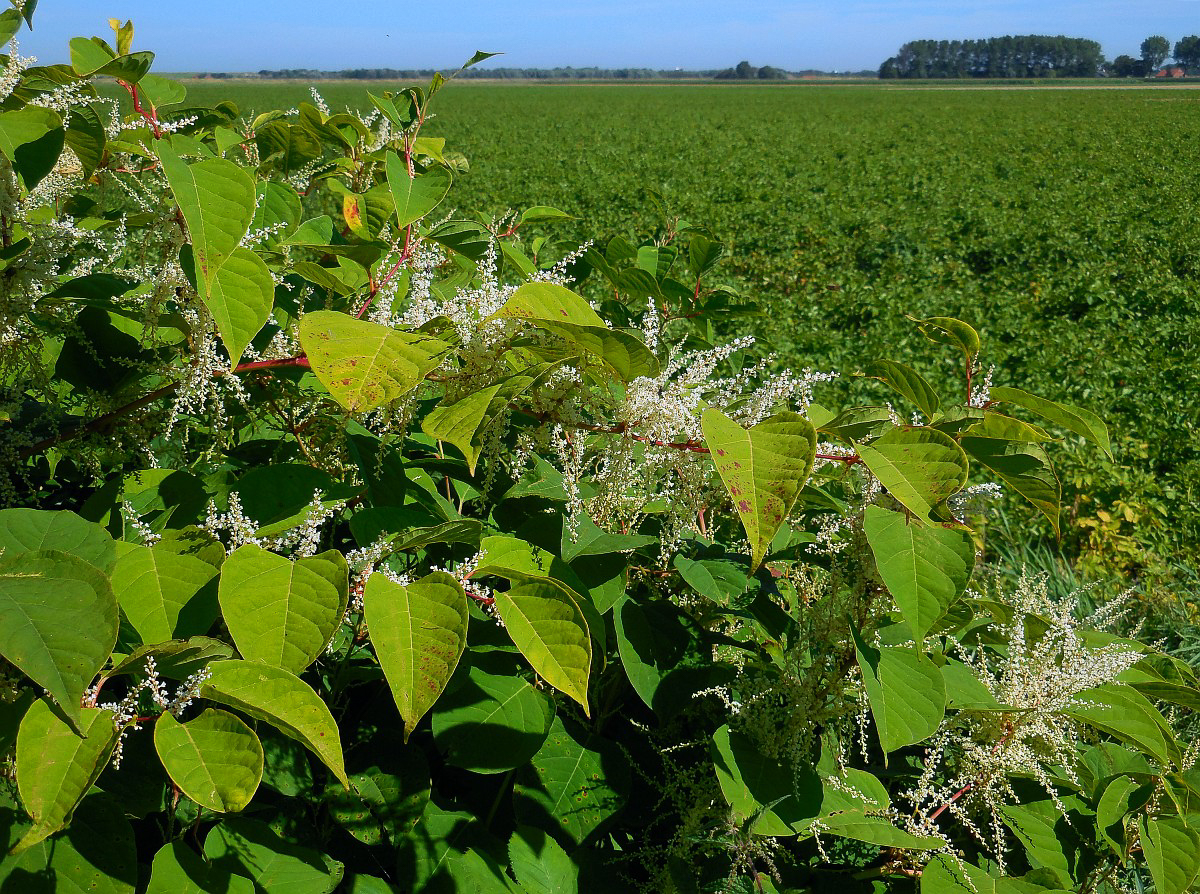
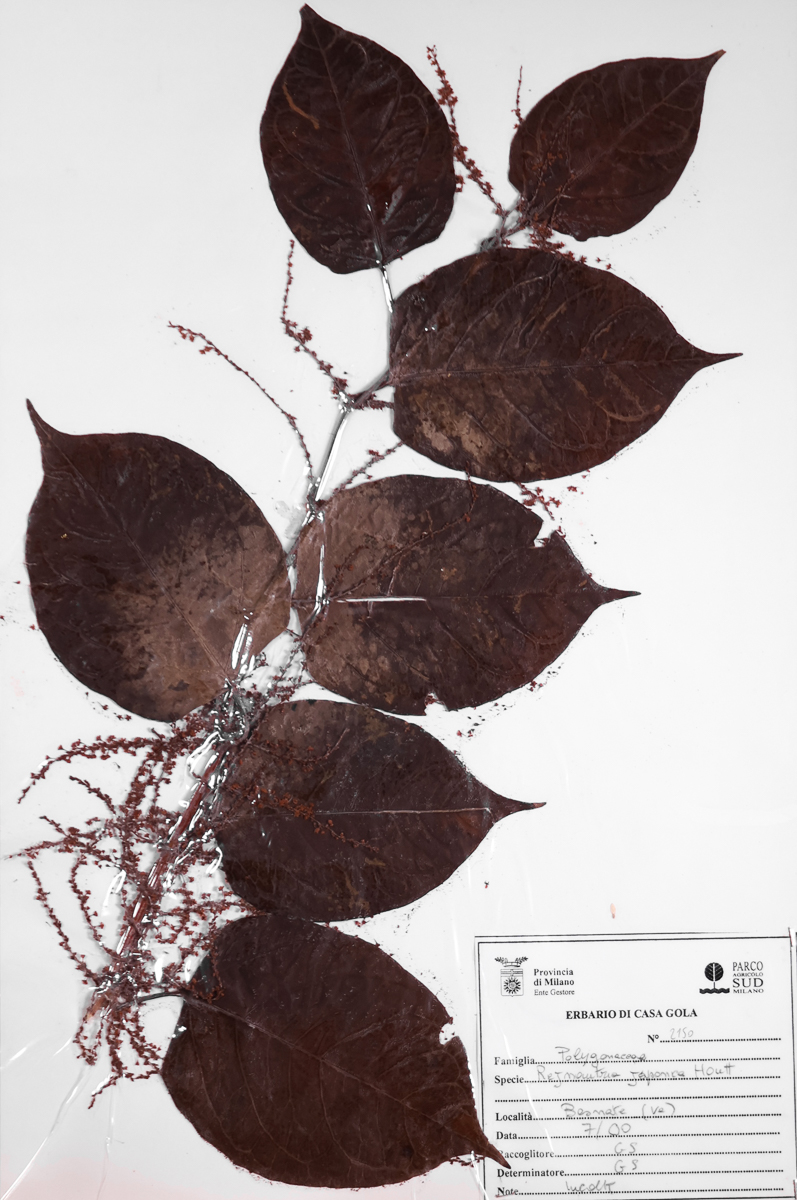
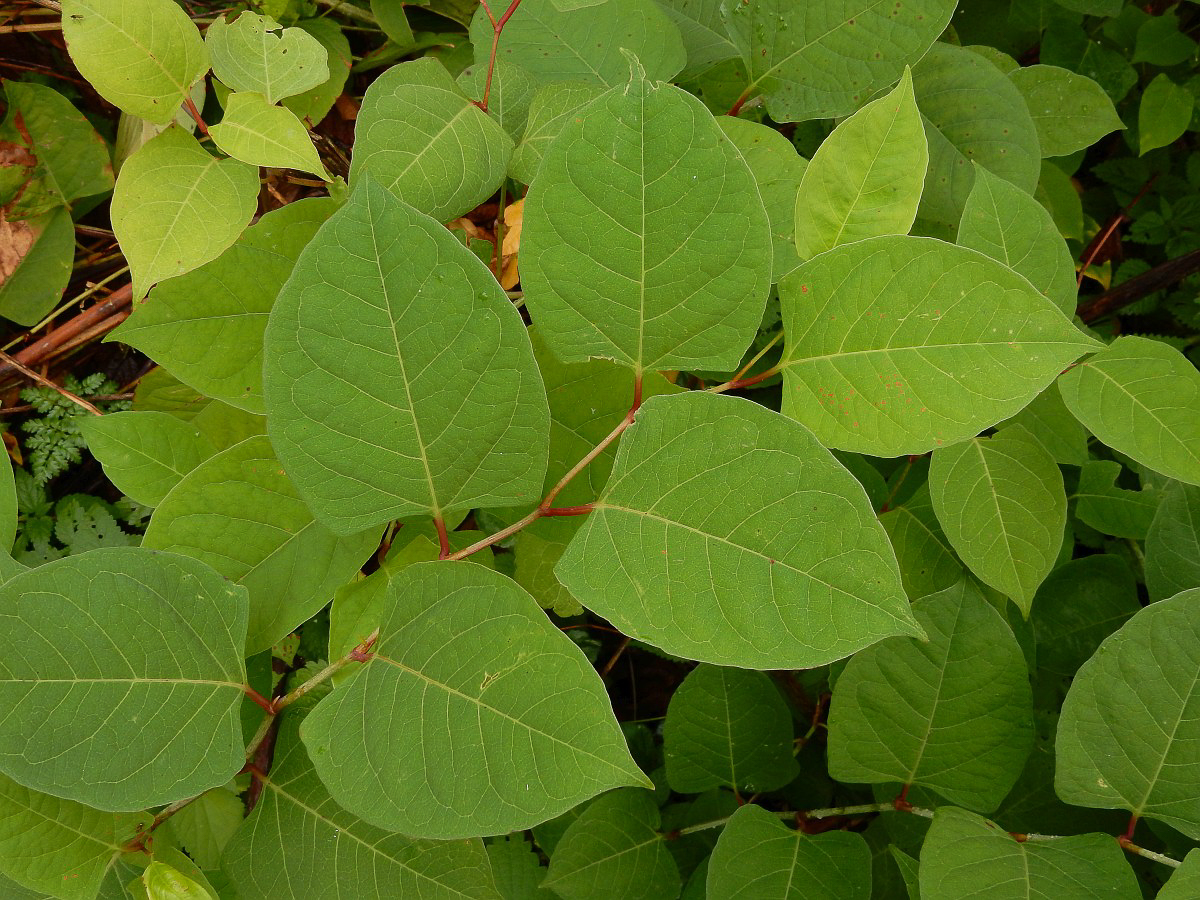
Foglie: foglie coriacee, alterne, decidue, picciolate (1 – 3 cm e papillosi), munite di guaina tubolare bruna non fimbriata (ocrea) prodotta dalla fusione delle stipole 4- 6 (10 mm); lamina ovata con base troncata, cuspidata, apice acuminato (5) 7 – 17 x 8-12 cm e margine non ciliato; nervatura centrale evidente nella pagina inferiore e ricoperta di piccoli peli rugosi (le secondarie poco evidenti); alla base del picciolo è riscontrabile una fossetta nettarifera.


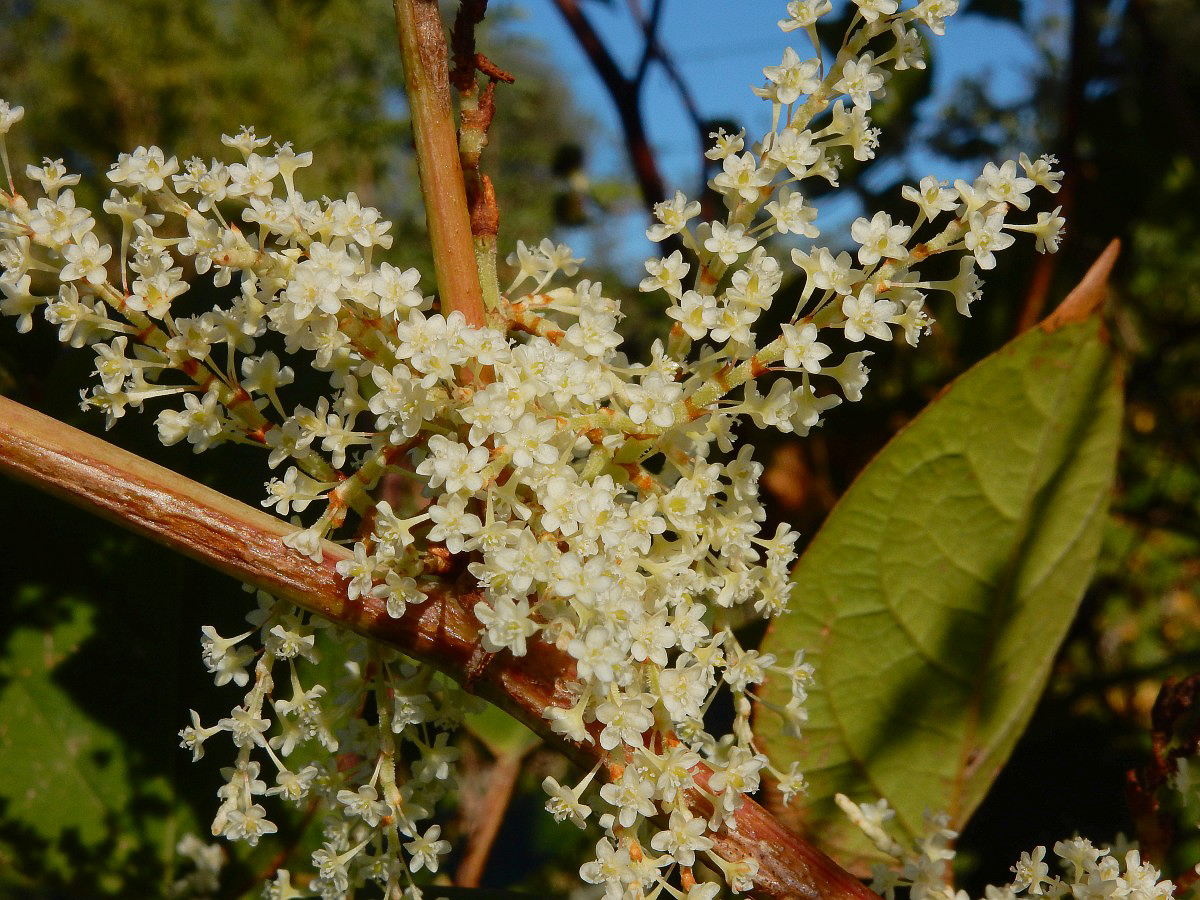
Fiori: infiorescenza posta alle ascelle fogliari, o terminale; paniculata, (3)4-8(12) cm; bratttee imbutiformi di 1-2 mm; pedicelli fiorali di 3 – 4 mm, Fiori formati da 5 tepali bianchi o verdi, unisessuali (sono presenti sia i fiori maschili che femminili) i maschili con 8 stami più lunghi dei tepali; quelli femminili con 3 tepali esterni aventi una lieve alatura (fino a 2 mm) e accrescenti anche dopo l’antesi Fiorisce da maggio a settembre.


Frutti e semi: il frutto è un diclesio con achenio ovoide o ellissoide, trigono di circa 4 (5) x 3 mm, incluso nel perianzio persistente, nerastro a maturazione.


DISTRIBUZIONE E HABITAT


Presente nel Nord Italia e ella parte occidentale del centro; rive fiumi e torrenti, terreni alluvionali umidi, incolti da 0 a 500 m


CURIOSITÀ


Fu introdotta in Inghilterra come pianta ornamentale nel secolo scorso (XIX)e poi diffusa in tutta l’Europa come pianta foraggera. In Italia le prime segnalazioni sono date dall’introduzione presso l’orto botanico dell’Università di Padova.

Risulta iscritta nella lista IUCN ( Unione Internazionale per la Conservazione della Natura) delle 100 specie più invasive al mondo perché, quando si afferma, colonizza l’ambiente e poi risulta anche difficile contenerla. Se si tenta l’estirpazione deve essere totale, basta un piccolo frammento per rivegetare a detrimento delle piante autoctone.


Foto: su licenza gratuita di Saxifraga e Ed Stikvoort, Rutger Barendse

Famiglia

Polygonaceae

Specie

Reynoutria japonica Houtt

Tipologia

Pianta erbacea

Habitat

Incolti, Rive

Japanese Knotweed


Scientific Name: Reynoutria japonica Houtt. 

Family: Polygonaceae


MORPHOLOGY


Habit and Size: Perennial herbaceous plant, more or less glabrous, rhizomatous, twining, with a highly developed and thickened root system, which extends up to about 7 m from the stump and to about 2 m in depth. It can grow from 70 cm up to 3 m tall.


Stem: Hollow, erect stem, branched, papillose, dotted with red or purple and about 2 cm in diameter.


Leaves: Leathery, alternate, deciduous leaves, petiolate (1 – 3 cm and papillose), provided with a non-fringed tubular brown sheath (ochrea) produced by the fusion of stipules 4- 6 (10 mm); ovate blade with truncated base, cuspidate, acuminate apex (5) 7 – 17 x 8-12 cm and margin not ciliated; central vein evident on the lower surface and covered with small rough hairs (secondary veins less evident); at the base of the petiole, a nectariferous pit is detectable.


Flowers: Inflorescence located at leaf axils, or terminal; paniculate, (3)4-8(12) cm; funnel-shaped bracts of 1-2 mm; floral pedicels 3 – 4 mm long, Flowers formed by 5 white or green tepals, unisexual (both male and female flowers are present) the male ones with 8 stamens longer than the tepals; the female ones with 3 outer tepals having a slight wing (up to 2 mm) and increasing even after anthesis. Blooms from May to September.


Fruits and Seeds: The fruit is a dikele with ovoid or ellipsoid achene, trigonous, about 4 (5) x 3 mm, included in the persistent perianth, becoming blackish at maturity.


DISTRIBUTION AND HABITAT


Present in Northern Italy and the western part of the center; river and stream banks, humid alluvial soils, fallow lands from 0 to 500 m.


INTERESTING FACTS


It was introduced to England as an ornamental plant in the last century (XIX) and then spread throughout Europe as a forage plant. In Italy, the first reports date back to its introduction at the botanical garden of the University of Padua. It is listed on the IUCN (International Union for Conservation of Nature) list of the 100 most invasive species in the world because, once established, it colonizes the environment and then it’s also difficult to contain. If eradication is attempted, it must be total; a small fragment is enough to revegetate to the detriment of native plants.


Photo: under a free license from Saxifraga and Ed Stikvoort, Rutger Barendse
Famiglia

Polygonaceae

Specie

Reynoutria japonica Houtt

Tipologia

Pianta erbacea

Habitat

Incolti, Rive