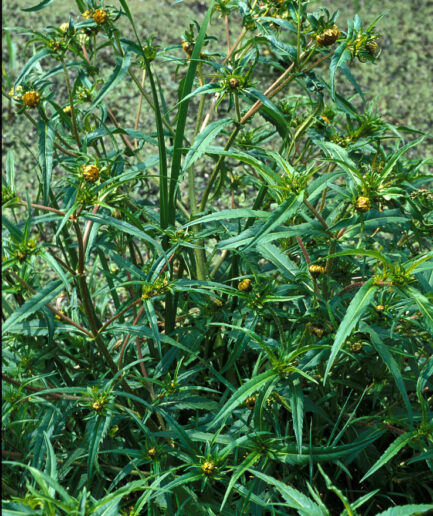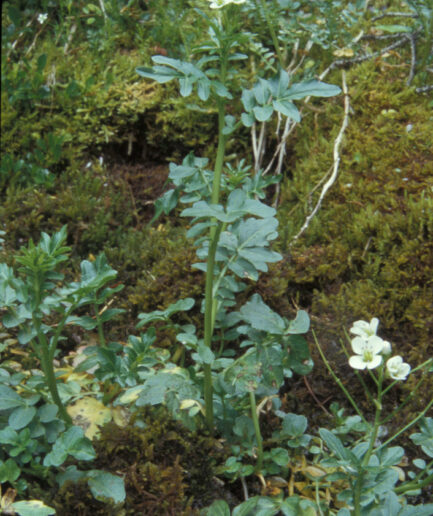

Piede di lupo

Nome scientifico: Lycopus europaeus L.

Famiglia: Lamiaceae


MORFOLOGIA 


Portamento e dimensioni: pianta perenne, erbacea, con rizoma stolonifero radicante ai nodi, alta tra 20 e 100 cm.


Fusto: fusti eretti, quadrangolari e ispidi.


Foglie: le foglie inferiori generalmente con lamina profondamente lobata o partita alla base, dentata o crenata nel resto; opposte, circa 3-5 volte + lunghe che larghe, glabre o sparsamente pelose.


Fiori: i fiori sono ermafroditi in verticilli multiflori, all’ascella delle foglie, calice con denti spinulosi più lunghi del tubo, corolla bianca o rosa-violacea con chiazze purpuree, a quattro lobi. Fiorisce da maggio a settembre.


Frutti e semi: il frutto è un microbasario, schizocarpo con 4 nucule  pelose, ghiandolose e appiccicose.


DISTRIBUZIONE E HABITAT


Presente in tutta Italia ai bordi dei fossi, nei canneti, nelle zone umide, da 0 a 1100 m.


UTILIZZI


Ha proprietà astringenti, toniche, febbrifughe, è un sedativo di provata efficacia e leggero narcotico. Agisce in maniera simile alla Digitale nel ridurre la velocità del polso, ma manca dei pericoli associati all’utilizzo di quella droga. Erba indicata nella cura dell’ipertiroidismo e nelle manifestazioni cardiache dell’ipertiroidismo.  Prima di assumere qualsiasi prodotto di origine vegetale (farmaco o non farmaco) per fini terapeutici o simil-terapeutici, è sempre opportuno rivolgersi preventivamente al proprio medico.

Un colorante nero è ottenuto dalla pianta.


Foto: su licenza gratuita di Saxifraga e Ed Stikvoort, Rutger Barendse

Famiglia

Lamiaceae

Specie

Lycopus europaeus L.

Tipologia

Pianta erbacea

Habitat

Fontanili, Zone umide

Gypsywort

Scientific Name: Lycopus europaeus L.

Family: Lamiaceae

MORPHOLOGY

Growth Habit and Size: Perennial herbaceous plant with creeping rhizomes rooting at the nodes, reaching heights of 20 to 100 cm.

Stems: Erect, quadrangular, and bristly stems.

Leaves: The lower leaves generally have a deeply lobed or divided blade at the base, toothed or crenate elsewhere; opposite, about 3-5 times longer than wide, glabrous or sparsely hairy.

Flowers: The flowers are hermaphroditic in multiflowered verticils, in the axils of the leaves, calyx with spinulose teeth longer than the tube, corolla white or pink-purple with purple spots, with four lobes. Blooms from May to September.

Fruits and Seeds: The fruit is a microbasarium, a schizocarp with 4 hairy, glandular, and sticky nutlets.

DISTRIBUTION AND HABITAT

Found throughout Italy at the edges of ditches, in reed beds, in wet areas, from sea level to 1100 m.

USES

It has astringent, tonic, and febrifuge properties, is a sedative of proven efficacy, and a mild narcotic. It acts similarly to Digitalis in reducing the pulse rate but lacks the dangers associated with the use of that drug. The herb is indicated in the treatment of hyperthyroidism and cardiac manifestations of hyperthyroidism. Before taking any plant-based product (medicinal or non-medicinal) for therapeutic or similar purposes, it is always advisable to consult your doctor first. A black dye is obtained from the plant.

Photo: Licensed for free use by Saxifraga and Ed Stikvoort, Rutger Barendse.


Famiglia

Lamiaceae

Specie

Lycopus europaeus L.

Tipologia

Pianta erbacea

Habitat

Fontanili, Zone umide