
Curly Waterweed
Scientific Name: Lagarosiphon major (Ridl.) Moss
Family: Hydrocharitaceae
MORPHOLOGY
Habit and size: An aquatic herbaceous plant, typically 2-5 dm tall.
Stem: Cylindrical stems, 2-3 mm in diameter, submerged and branched.
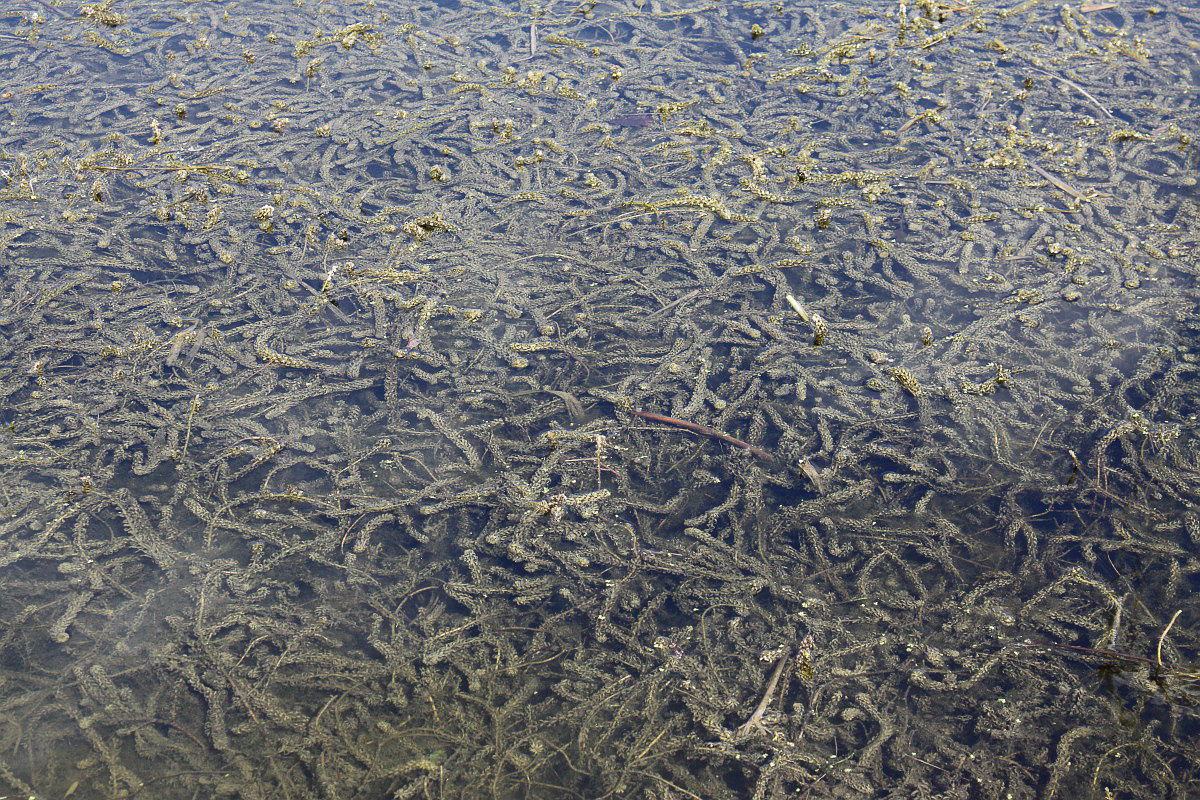
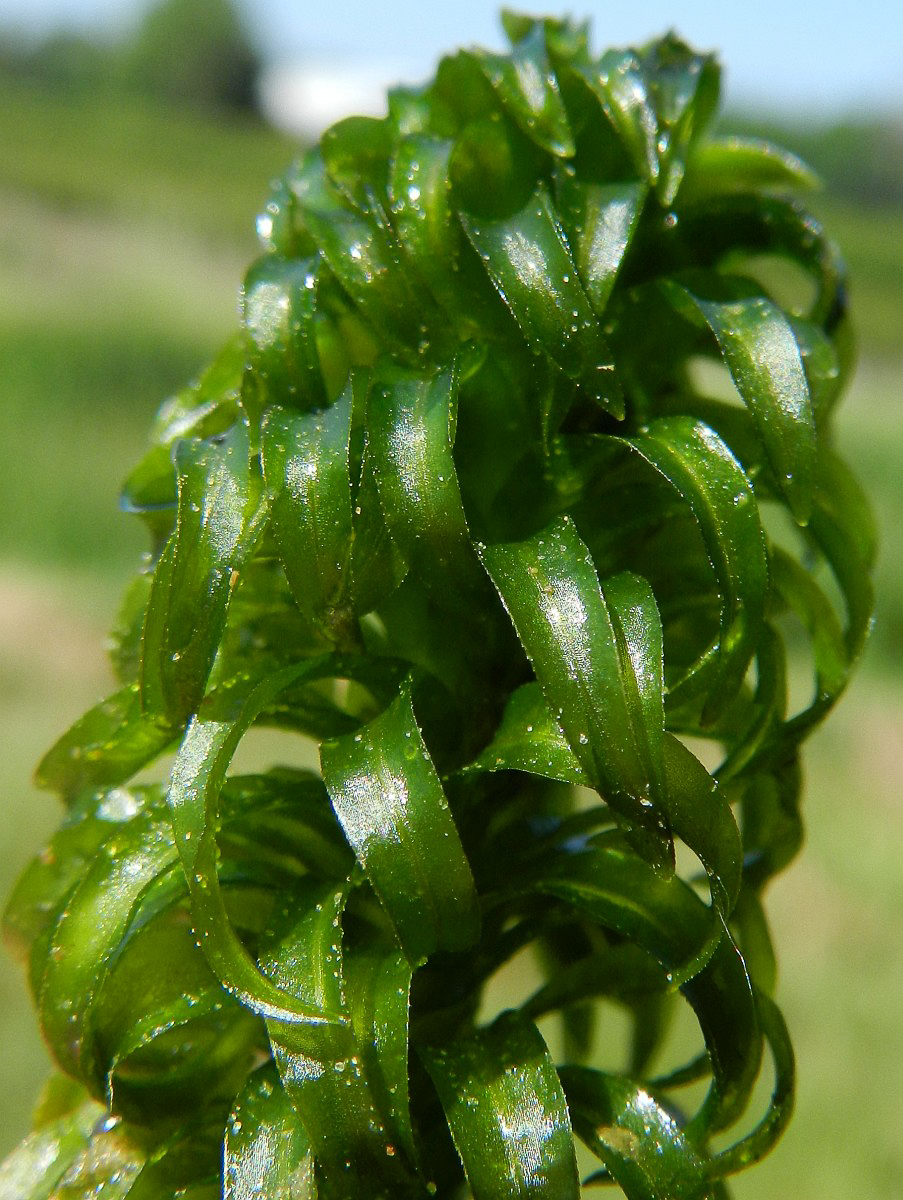
Leaves: The upper leaves are whorled in groups of 4 or more, while the lower ones are spirally arranged, singular, not whorled.
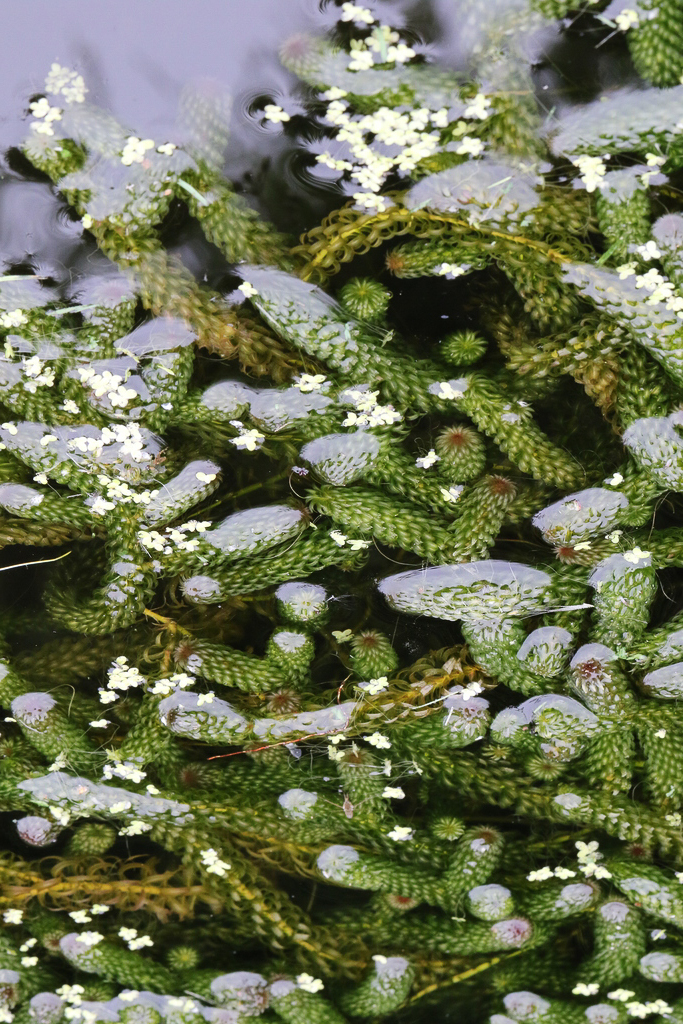
Flowers: Dioecious plant, with tiny flowers; female flowers are 2-3 mm, sessile, axillary, and male flowers with the base elongated into a peduncle-like structure of 3-6 cm; petals are white. Blooms from July to September.
Fruits and seeds: The fruits are beaked capsules containing about nine seeds.
DISTRIBUTION AND HABITAT
Native to southern Africa, it is present throughout Italy except for Valle d’Aosta, Liguria, and Friuli, in still waters, lakes, ponds, and slow-flowing channels, from sea level up to 500 m.
INTERESTING FACTS
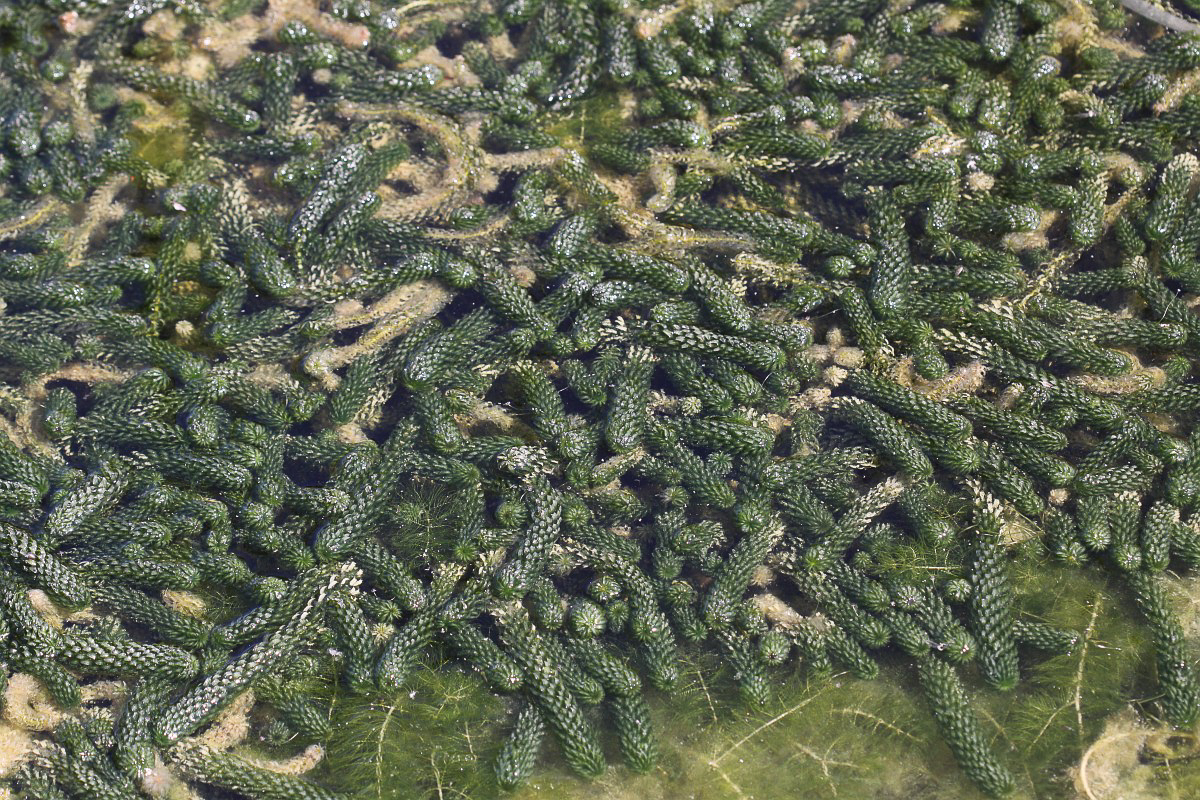
It requires plenty of light and thrives best in clear and calm waters, not too warm, with muddy or sandy bottoms. It is a pioneer species characterized by its high and rapid colonization capacity, fast growth, and resistance to high levels of disturbance. Introduced through the trade of aquatic plants as an oxygenating plant for aquariums and water gardens, it has spread transported by boats, boat trailers, sports equipment, and machinery for cutting aquatic vegetation. Dense growth can block the penetration of light into watercourses, hindering the growth of native aquatic plants, limiting boat passage, and recreational activities such as swimming and fishing.
Photo: Not subject to licensing by Saxifraga, Peter Meininger, Rutger Barendse, and iNaturalist.