
Common fleabane
Scientific name: Pulicaria dysenterica (L.) Bernh.
Family name: Asteraceae
MORPHOLOGY
Habit and dimensions: perennial rhizomatous herbaceous plant. It reaches a maximum height of 70 centimeters.
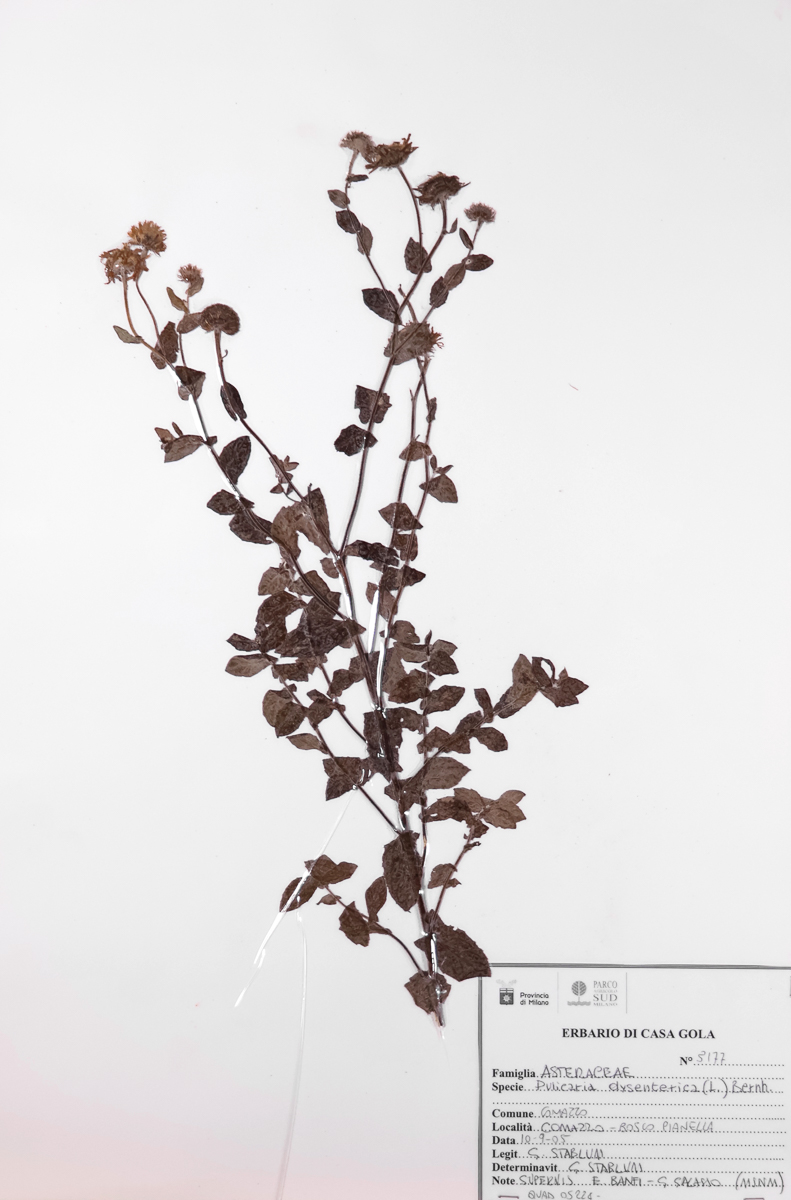
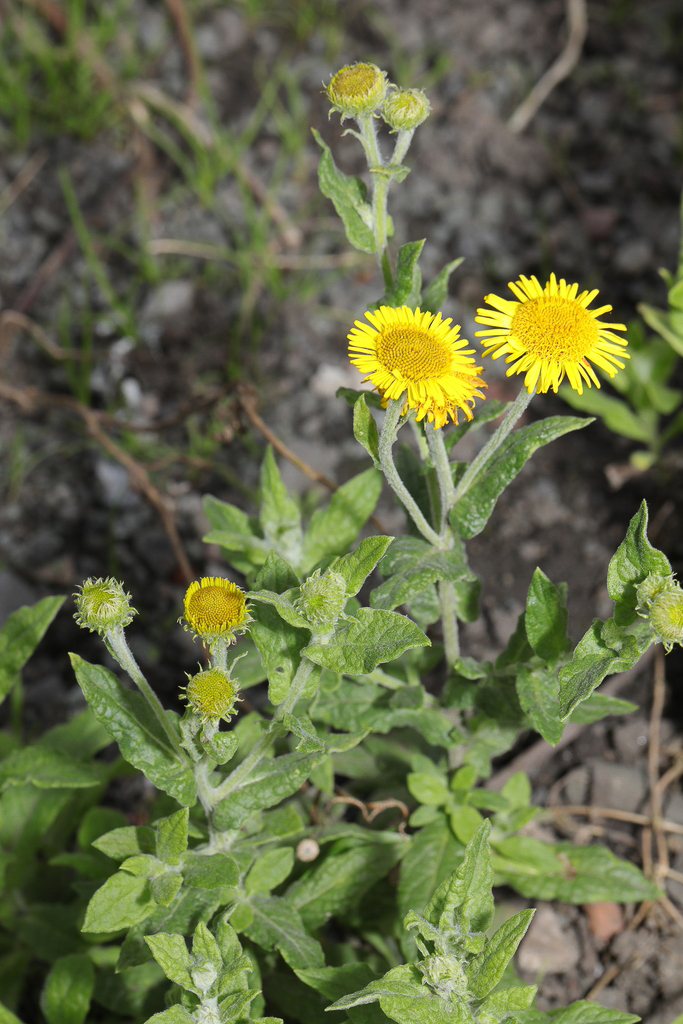
Stem: erect stem covered with woolly hairs.
Leaves: lanceolate, sessile, and pubescent, with undulating and often coarsely dentate lamina. The upper surface is rough and green, while the lower surface is grayish.
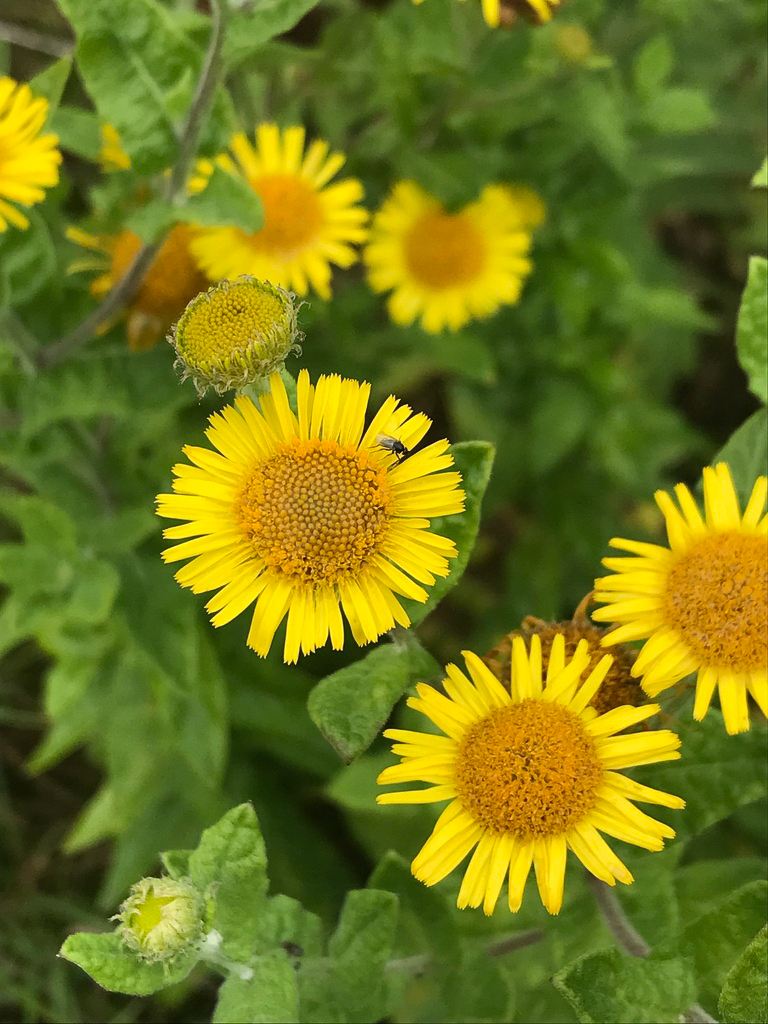
Flowers: flower heads grouped in corymbs borne at the apex of the stem. The flowers of the inner disk are tubular and yellow, those of the outer ray are also yellow but ligulate. Pollination occurs through insects.
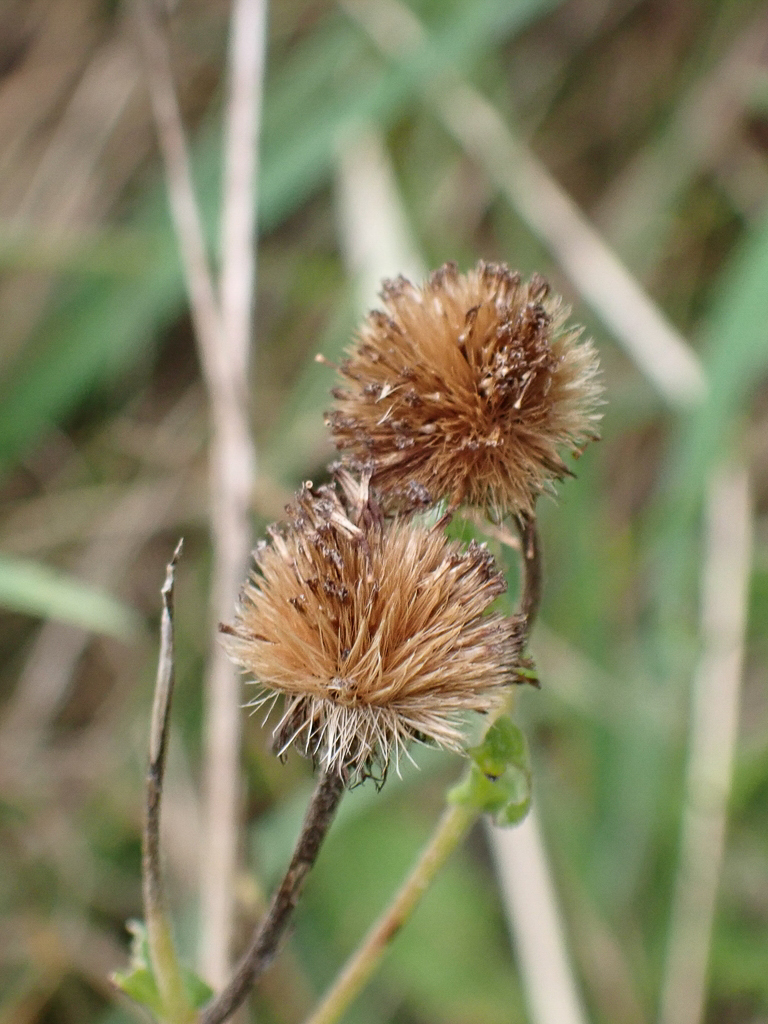
Fruits and seeds: hairy and cylindrical achenes, with a pappus consisting of 12-20 hairs.
DISTRIBUTION AND HABITAT
Plant native to the Mediterranean basin, present throughout the Italian peninsula up to 1,500 meters above sea level. It is often found in moist meadows, marshes, or along the banks of canals and ditches.
USE
The species is melliferous and widely used in therapeutic applications. It has astringent, anti-inflammatory, and antidiarrheal properties, hence the specific name “dysenterica” derived from its use against dysentery.
INTERESTING FACTS
The genus name, Pulicaria, comes from the Latin “pulex” (= flea) and refers to the insecticidal properties of the flowers and leaves when burned. The plant has a weak aromatic odor that is not very pleasant.
Photo: under a free license from INaturalist