
Giunco fiorito

Nome scientifico: Butomus umbellatus L.

Famiglia: Butomaceae


MORFOLOGIA


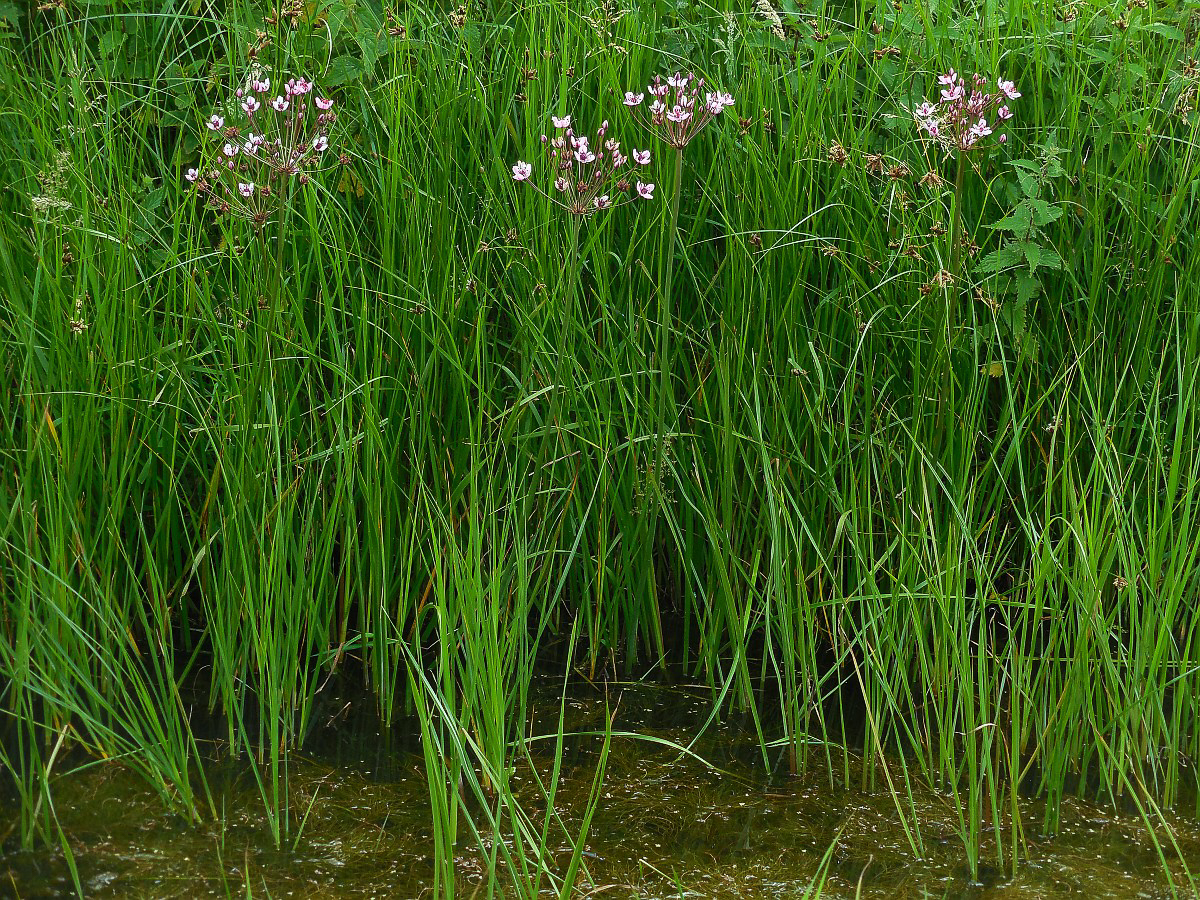
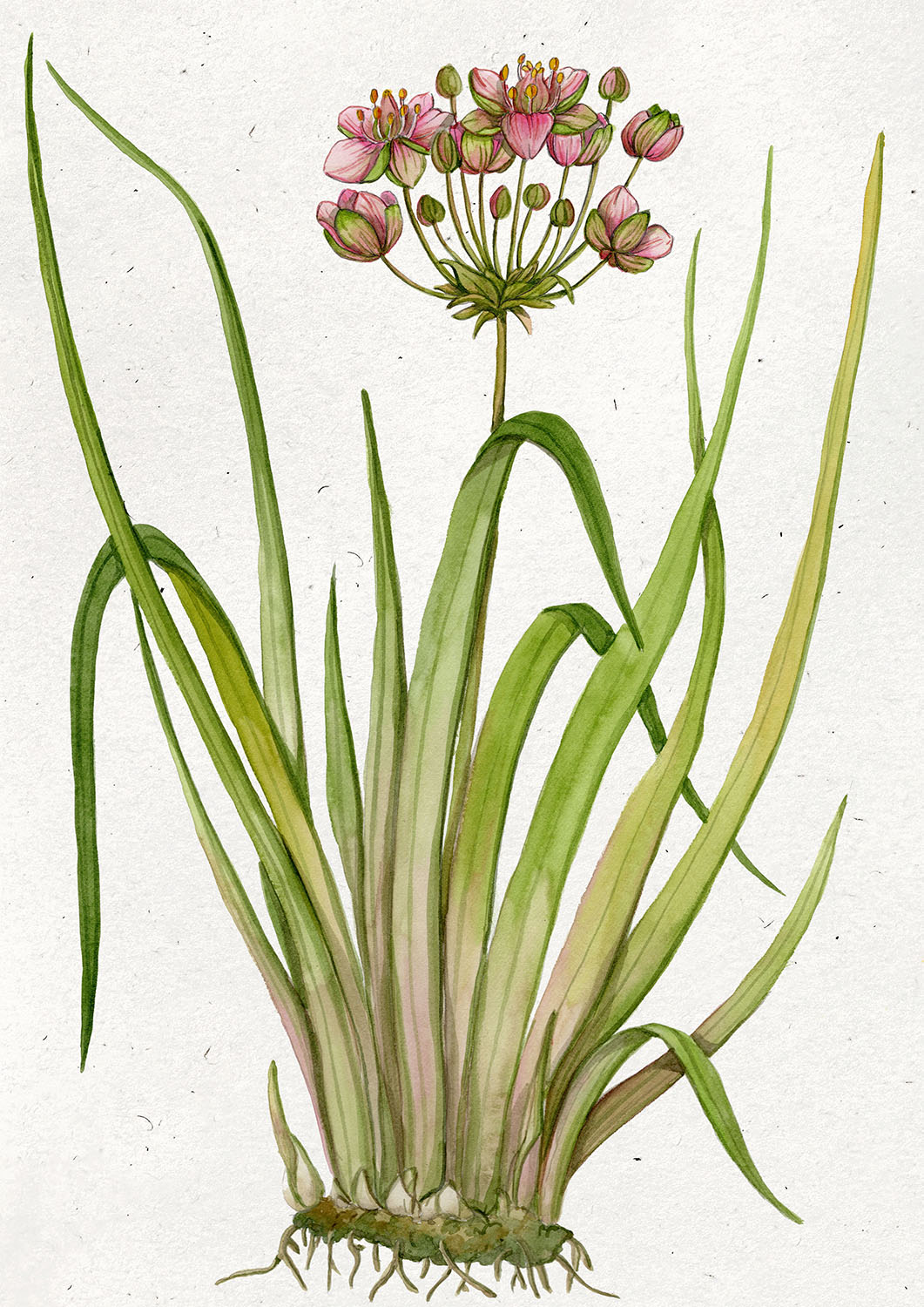
Portamento e dimensioni: pianta erbacea perenne, alta fino a 150 cm con un grosso rizoma strisciante, che rimane vivo nel periodo invernale, da cui poi in primavera germogliano i nuovi fusti fioriferi.


Fusto: fusto eretto, cilindrico, nudo, con una base di 12 mm di Ø che si assottiglia progressivamente verso l’alto fino 3-4mm.    


Foglie: Le foglie sono tutte basali allungate, intere, glabre, con base semiabbracciante il fusto, di consistenza spugnosa, a sezione trasversale trigona, larghe 5-10 mm lunghe 50-100 cm di un colore verde glauco, che si presentano avvolte ad elica, come un allungato cavatappi.


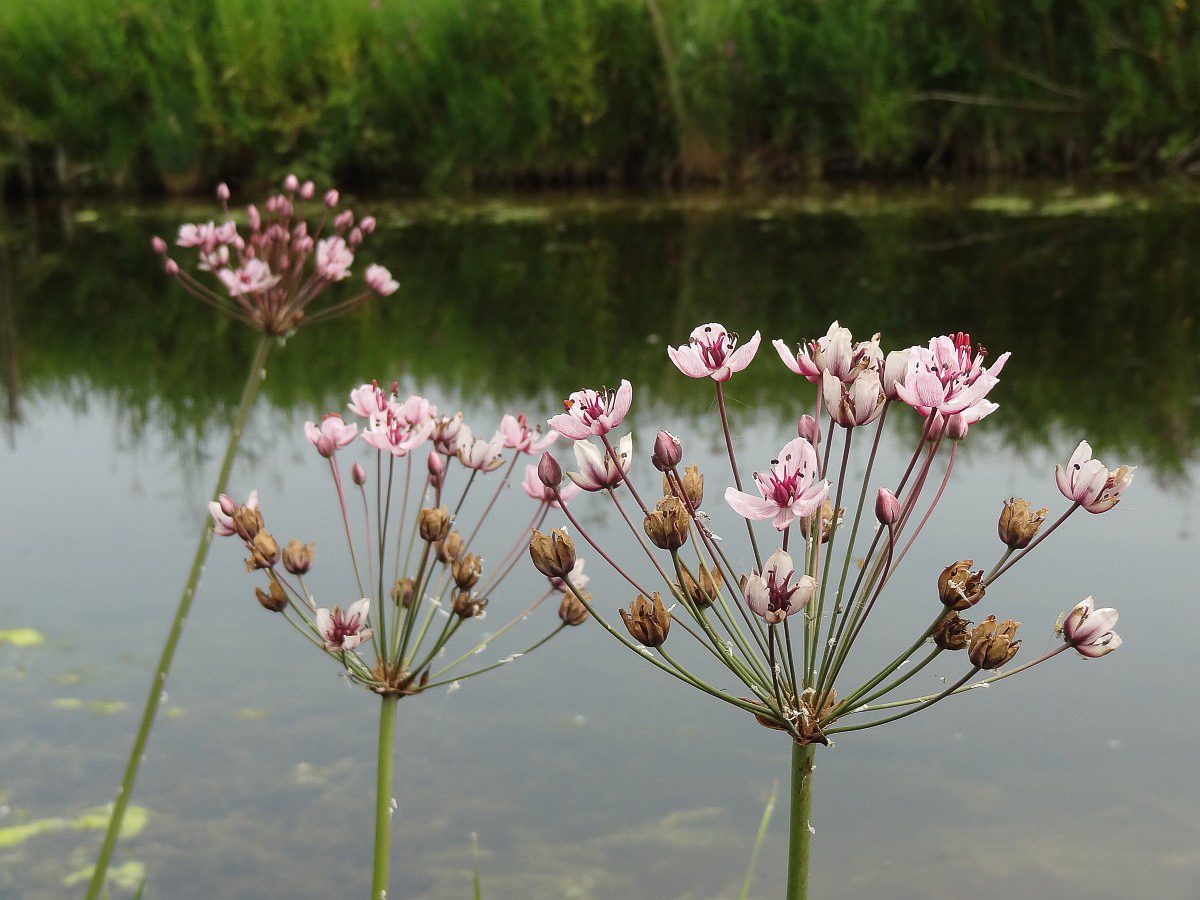
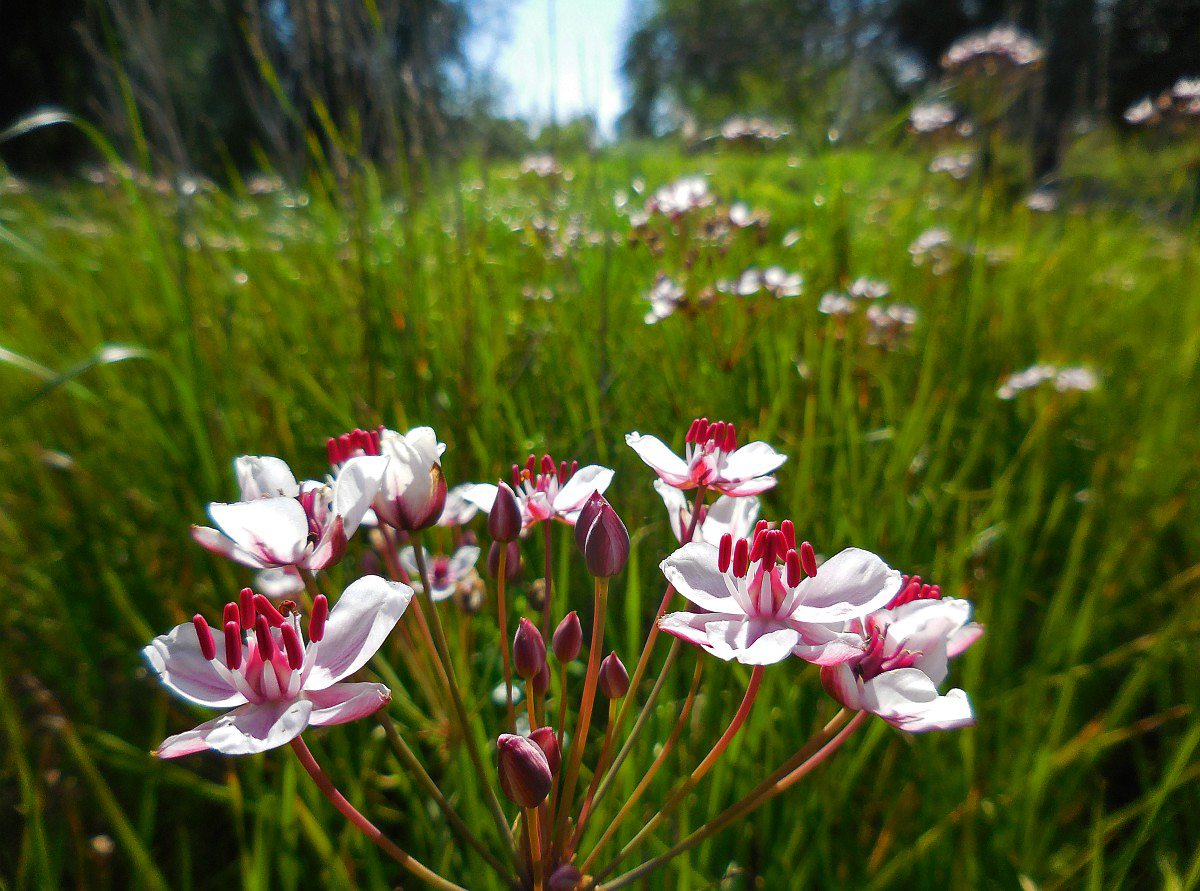
Fiori: fiori 25-30 riuniti in ombrella terminale, avvolta alla base da 2 brattee ovali, sono retti da peduncoli lunghi fino a 10 cm circa. Le corolle,grandi fino a 3 cm, sono formate da 6 tepali (perigonio) di forma obovata di cui i tre interni, più grandi e consistenti, i tre esterni calicini, persistenti poi nel frutto, tutti di un bel colore bianco-rosei, venati di un rosso violaceo scuro sulle nervature centrali. Fiori ermafroditi, attinomorfi  Fiorisce tra marzo e luglio.


Frutti e semi: pseudocapsula formata da 6 follicoli deiscenti per la sutura ventrale, uncinati all’apice, contenenti piccolissimi semi rosso-brunastri.  


DISTRIBUZIONE E HABITAT


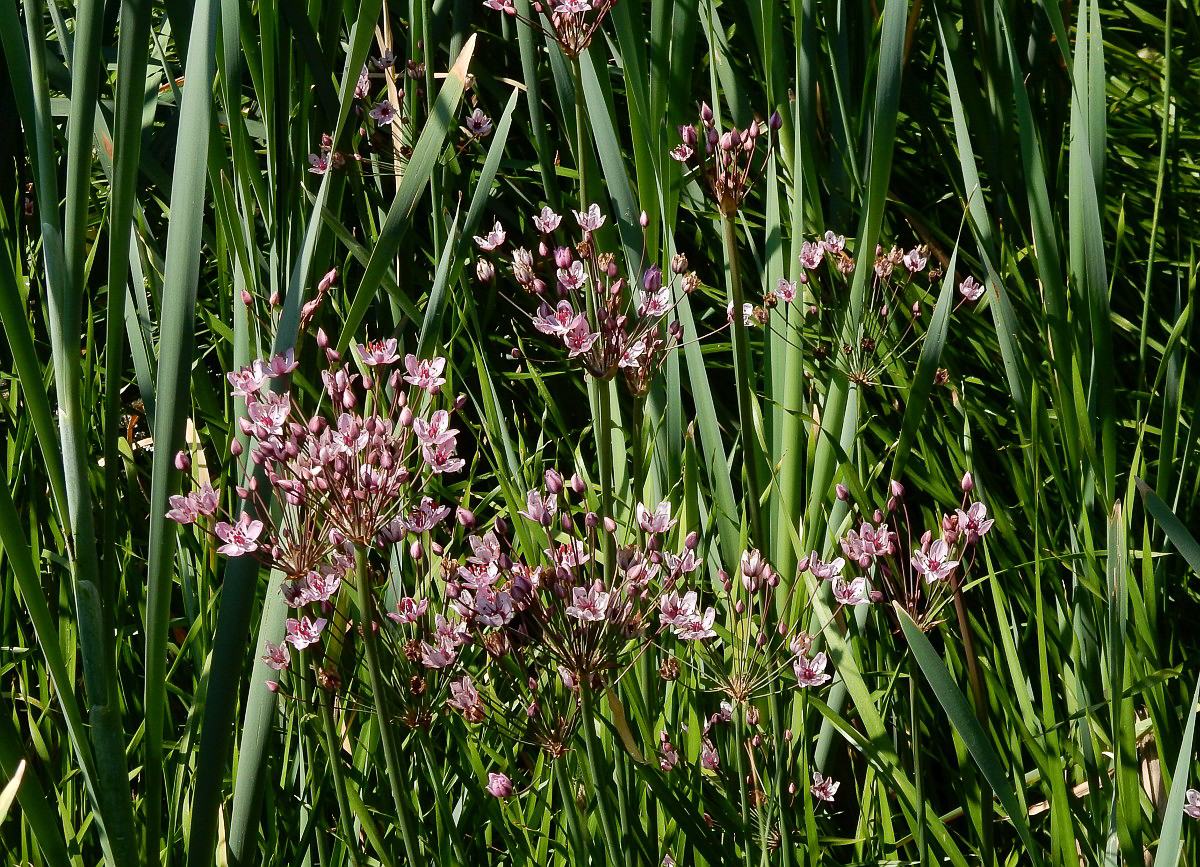
Presente in Italia del centro-Nord Sardegna compresa tranne la Val d’Aosta e le Marche. Cresce in luoghi molto umidi, allagati perennemente. E’ diffusa nei fossati, sulle sponde dei canali, stagni e zone acquitrinose, ma in acque dolci, stagnanti e poco profonde, prevalentemente in pianura.  da 0 a 1.000 m.


CURIOSITÀ


La specie è in forte regressione a seguito della meccanizzazione delle pulizie dei fossati e dei canali e dall’uso continuo di diserbanti usati soprattutto nelle risaie, perché considerata pianta infestante di queste colture.


Foto: su licenza gratuita di Saxifraga e Ed Stikvoort, Mark Zekhuis, Peter Meininger

Famiglia

Butomaceae

Specie

Butomus umbellatus L.

Tipologia

Pianta erbacea

Habitat

Zone umide

Flowering rush


Scientific name: Butomus umbellatus L. 

Family: Butomaceae


MORPHOLOGY


Habit and dimensions: Perennial herbaceous plant, can reach a height of up to 150 cm with a robust creeping rhizome, which remains active during the winter, giving rise to new flowering stems in spring.


Stems: Erect, cylindrical, leafless, with a base of about 12 mm in diameter that gradually tapers towards the top to 3-4 mm.


Leaves: All basal, long and narrow, entire, and hairless, with the base partially enveloping the stem. They have a spongy texture and a triangular cross-section. 50-100 cm long and 5-10 mm wide, they are glaucous green and spiral like a long corkscrew.


Flowers: The flowers, ranging from 25 to 30, are clustered in a terminal umbel wrapped at the base by 2 oval bracts. They are supported by peduncles up to about 10 cm long. The corollas, up to 3 cm wide, consist of 6 ovate tepals, with the inner three larger and more substantial than the outer three, which are persistent in the fruit. They exhibit a beautiful white-pink color, with dark red-violet veins on the central nerves. Hermaphroditic and actinomorphic flowers. Blooms from March to July.


Fruits and seeds: The pseudocapsule formed by 6 dehiscent follicles along the ventral suture, hooked at the apex, containing very small reddish-brown seeds.


DISTRIBUTION AND HABITAT


Present in Italy from central to northern regions including Sardinia, except for Valle d’Aosta and Marche. It grows in very wet, permanently flooded areas such as ditches, canal banks, ponds, and marshy areas, but in fresh, shallow waters, mainly in flatlands, from 0 to 1,000 m.


INTERESTING FACTS


The species is in strong decline due to the mechanization of ditch and canal cleaning and the continuous use of herbicides, especially in rice fields, as it is considered an invasive plant in these crops.


Photo: Used under a free license from Saxifraga, Ed Stikvoort, Mark Zekhuis, Peter Meininger
Famiglia

Butomaceae

Specie

Butomus umbellatus L.

Tipologia

Pianta erbacea

Habitat

Zone umide