

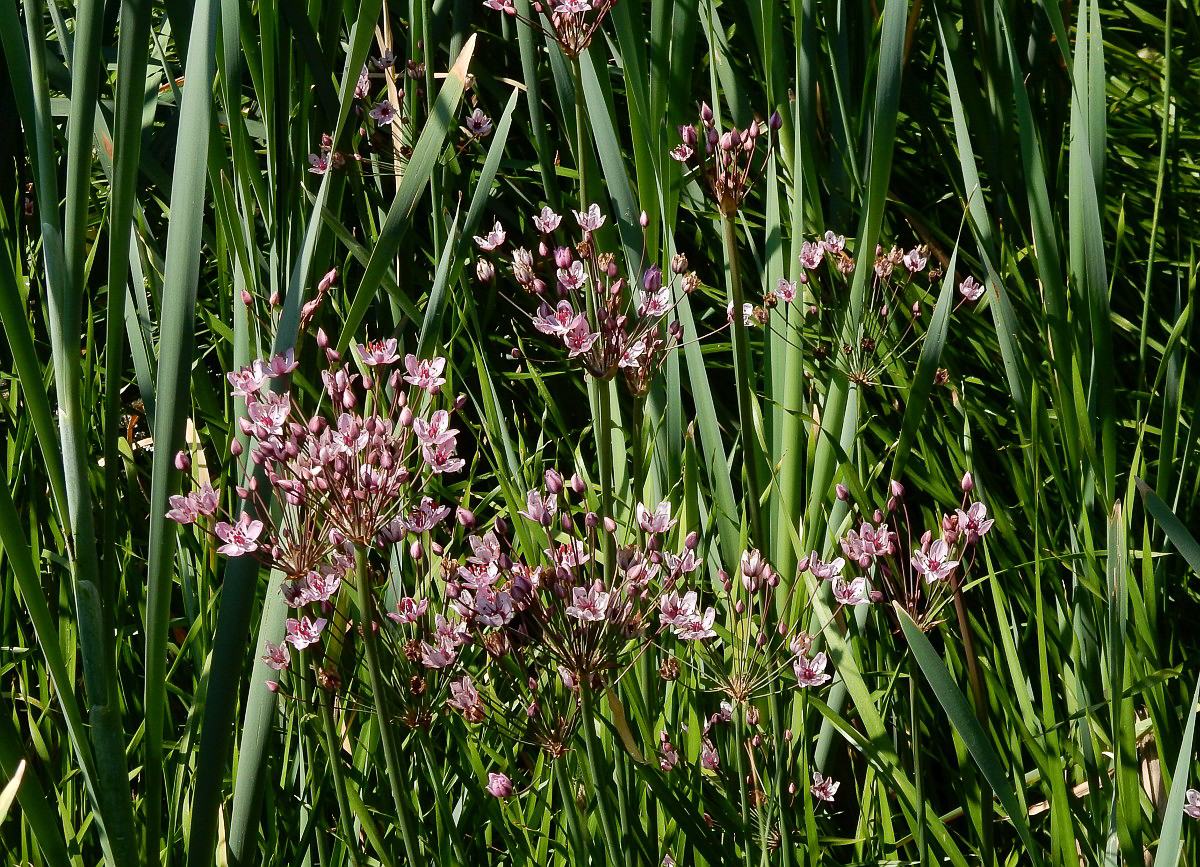
Flowering rush
Scientific name: Butomus umbellatus L.
Family: Butomaceae
MORPHOLOGY
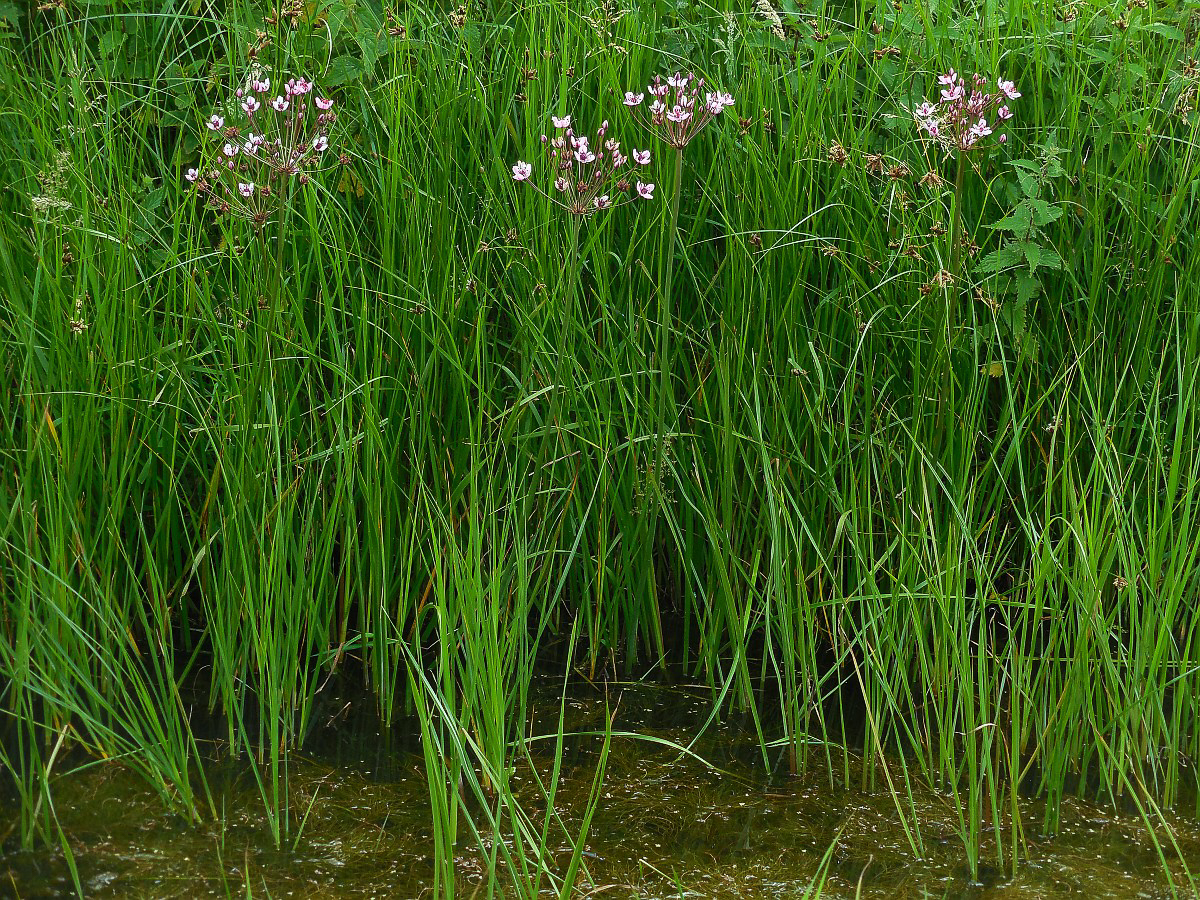
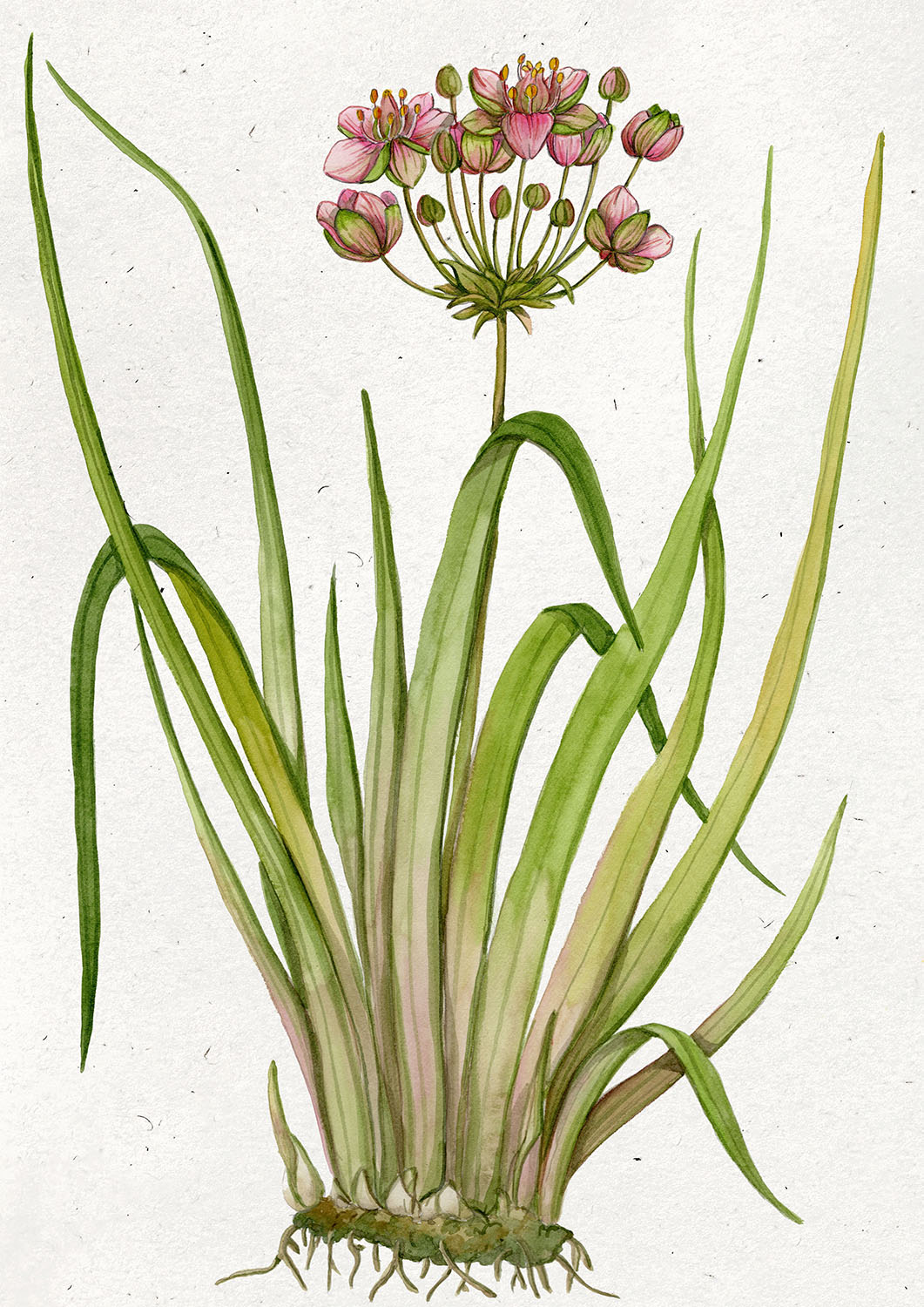
Habit and dimensions: Perennial herbaceous plant, can reach a height of up to 150 cm with a robust creeping rhizome, which remains active during the winter, giving rise to new flowering stems in spring.
Stems: Erect, cylindrical, leafless, with a base of about 12 mm in diameter that gradually tapers towards the top to 3-4 mm.
Leaves: All basal, long and narrow, entire, and hairless, with the base partially enveloping the stem. They have a spongy texture and a triangular cross-section. 50-100 cm long and 5-10 mm wide, they are glaucous green and spiral like a long corkscrew.
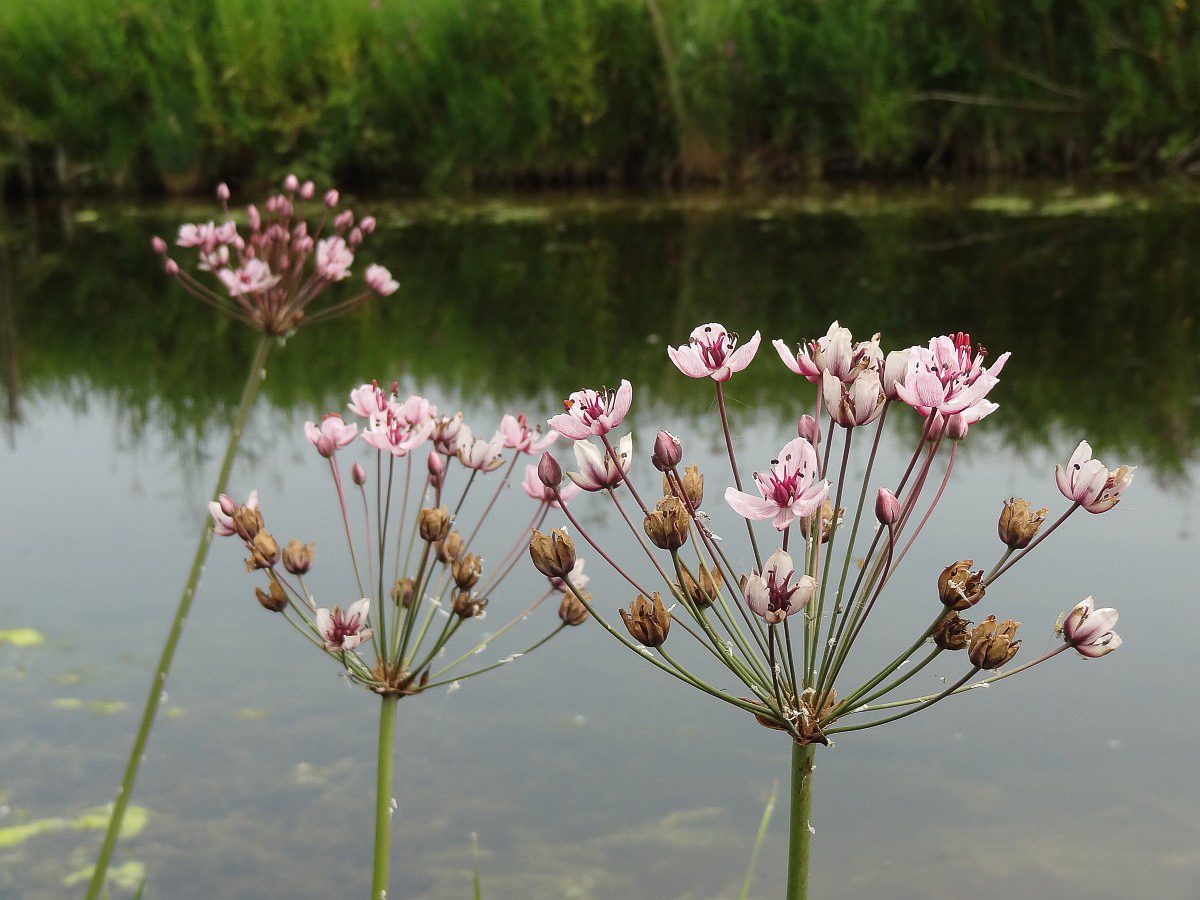
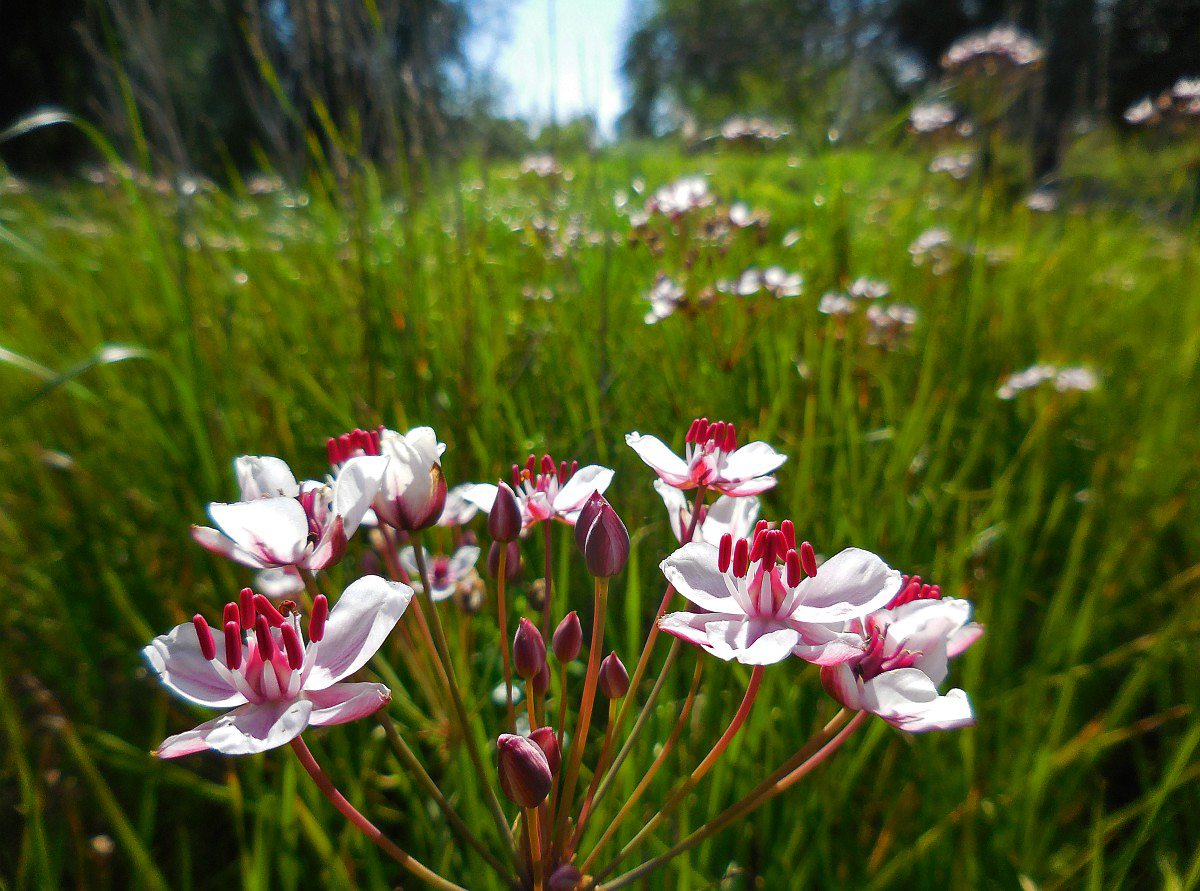
Flowers: The flowers, ranging from 25 to 30, are clustered in a terminal umbel wrapped at the base by 2 oval bracts. They are supported by peduncles up to about 10 cm long. The corollas, up to 3 cm wide, consist of 6 ovate tepals, with the inner three larger and more substantial than the outer three, which are persistent in the fruit. They exhibit a beautiful white-pink color, with dark red-violet veins on the central nerves. Hermaphroditic and actinomorphic flowers. Blooms from March to July.
Fruits and seeds: The pseudocapsule formed by 6 dehiscent follicles along the ventral suture, hooked at the apex, containing very small reddish-brown seeds.
DISTRIBUTION AND HABITAT
Present in Italy from central to northern regions including Sardinia, except for Valle d’Aosta and Marche. It grows in very wet, permanently flooded areas such as ditches, canal banks, ponds, and marshy areas, but in fresh, shallow waters, mainly in flatlands, from 0 to 1,000 m.
INTERESTING FACTS
The species is in strong decline due to the mechanization of ditch and canal cleaning and the continuous use of herbicides, especially in rice fields, as it is considered an invasive plant in these crops.
Photo: Used under a free license from Saxifraga, Ed Stikvoort, Mark Zekhuis, Peter Meininger