

Wild Ground Elder
Scientific Name: Aegopodium podagraria L.
Family: Umbelliferae
MORPHOLOGY
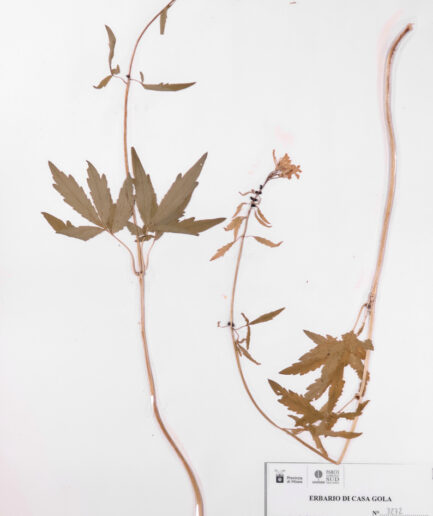
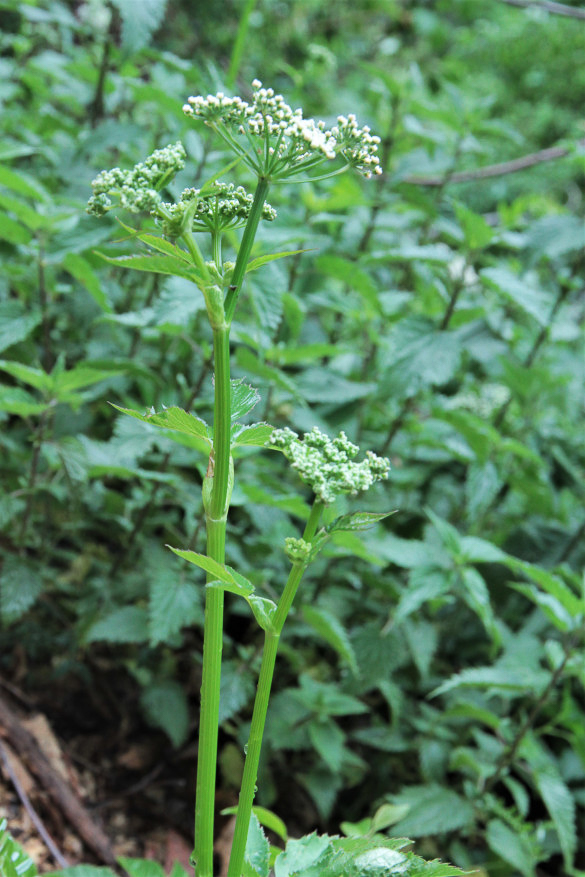
Growth habit and size: A perennial, glabrous herbaceous plant, 40-80 cm tall, equipped with a long creeping rhizome, that is brown on the outside and white on the inside, and smells like parsley.
Stem: Erect, hollow, pubescent-papillous, and striated stems, simple or branched only at the top.
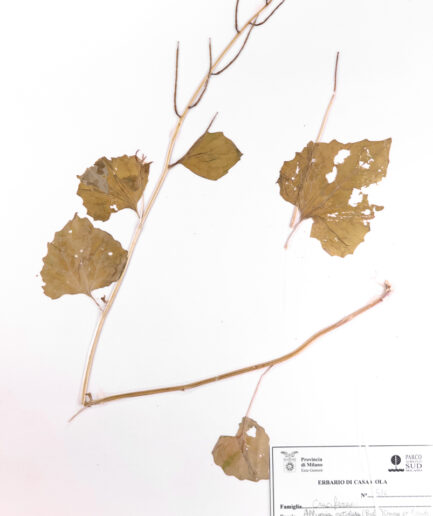
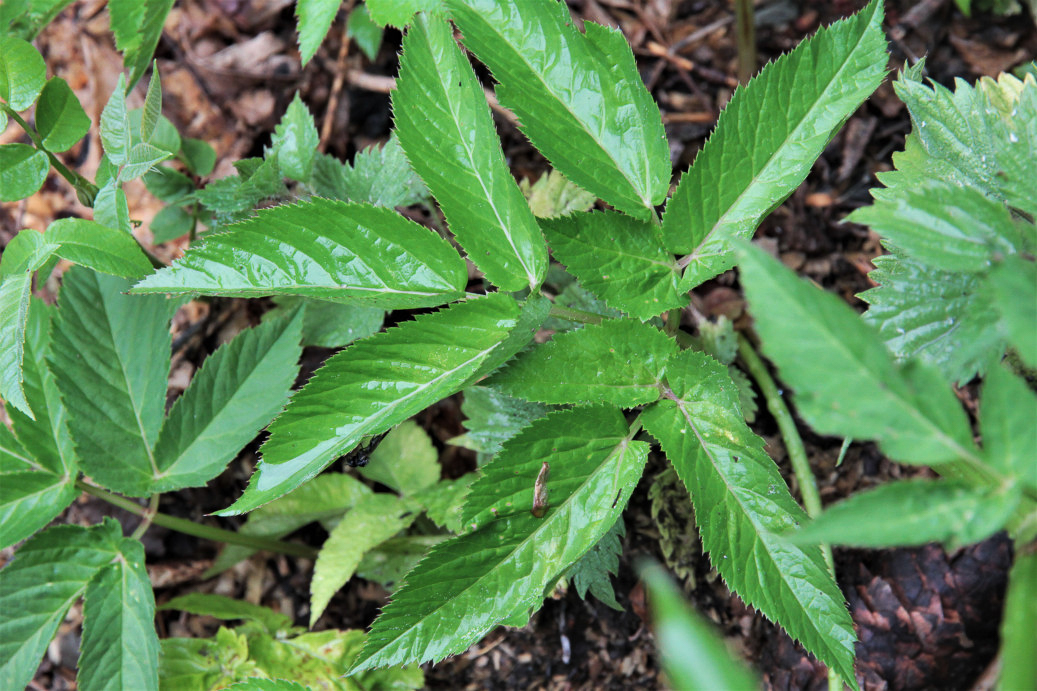
Leaves: Green-grayish leaves, the basal ones with a long petiole (20-30 cm) that are keeled, grooved and triangular, with a short sheath; compound blade, biternate or triternate with a triangular outline, divided into large segments, 3-4 cm wide, ovate-lanceolate, with an asymmetric heart-shaped base and acuminate apex, unevenly serrated at the margin; the cauline leaves are ternate, sessile, with the petiole reduced to a 2-3 cm sheath.
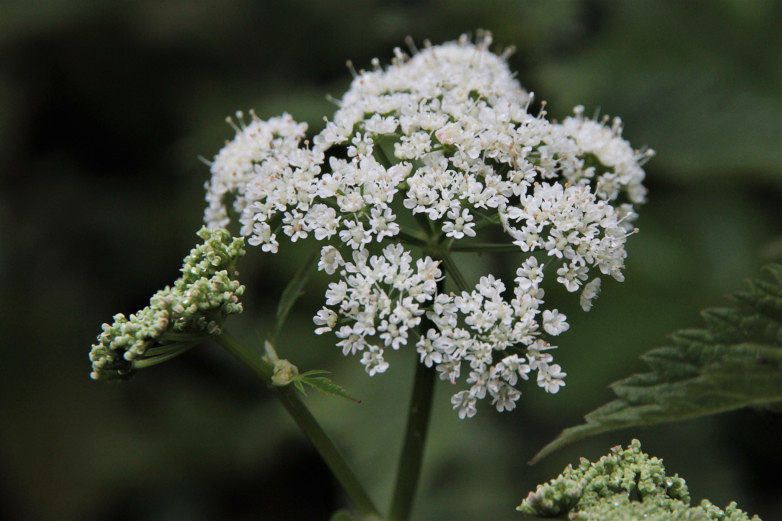
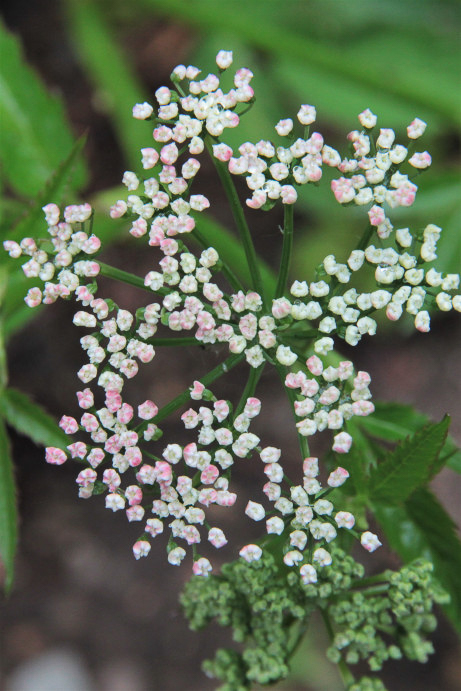
Flowers: The inflorescence is a compound umbel on long (8-10 cm) axillary peduncles with 10-20 rays of 2-3 cm. Umbels and umbellets lack involucres. The corolla has 5 white or slightly pink, obovate and bifid petals, extended into a curved tongue.
Fruits and seeds: The fruit is a diachene (schizocarp), composed of 2 brown, oblong, glabrous, compressed mericarps, about 3 mm long, with 5 filamentous ribs.
DISTRIBUTION AND HABITAT
Found in shady wastelands, gardens, edges of deciduous forests, hedges, and ravines, on a fresh substrate rich in nitrogenous nutrients with a pH from basic to slightly acidic, from 0 to 1,800 m above sea level. It is widespread throughout Italy except for the major islands, Calabria, and Basilicata.
USE
It has diuretic, depurative, vulnerary, and aromatic properties. It contains small amounts of essential oils, carotene (in the root), and a saponin (in the fruits), vitamin C, and calcium. Folk medicine attributes eminent diuretic and antigout properties to the root of Aegopodium Podagraria. A famous 19th century herbalist suggested it for arthritis, sciatica, and gout. For external use, especially when fresh, Aegopodium Podagraria, especially when fresh, has been recommended for insect bites, small wounds, and abrasions. The fruits are diuretic, and the tender leaves are sometimes added to salads as a depurative. Boiled like spinach and seasoned with butter, they were once considered a delicacy. Before taking any plant-based product (medicinal or non-medicinal) for therapeutic or similar purposes, it is always advisable to consult a doctor.
Photo: Kindly provided by Claudio Farinati