
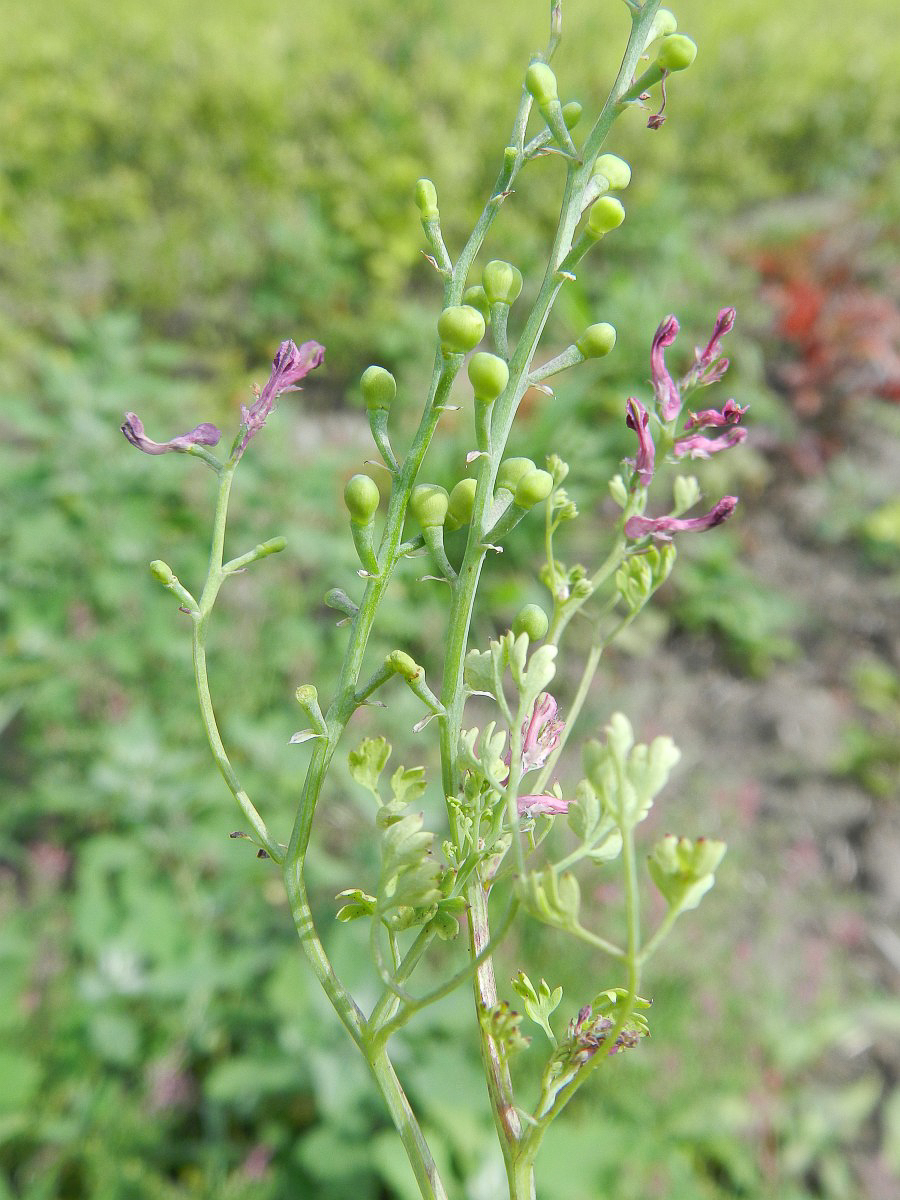
Common fumitory
Scientific Name: Fumaria officinalis L.
Family: Papaveraceae
MORPHOLOGY
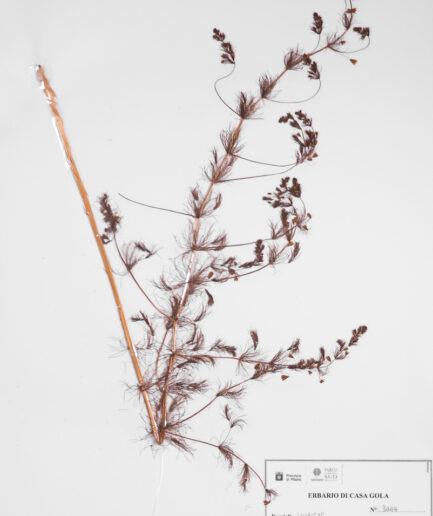
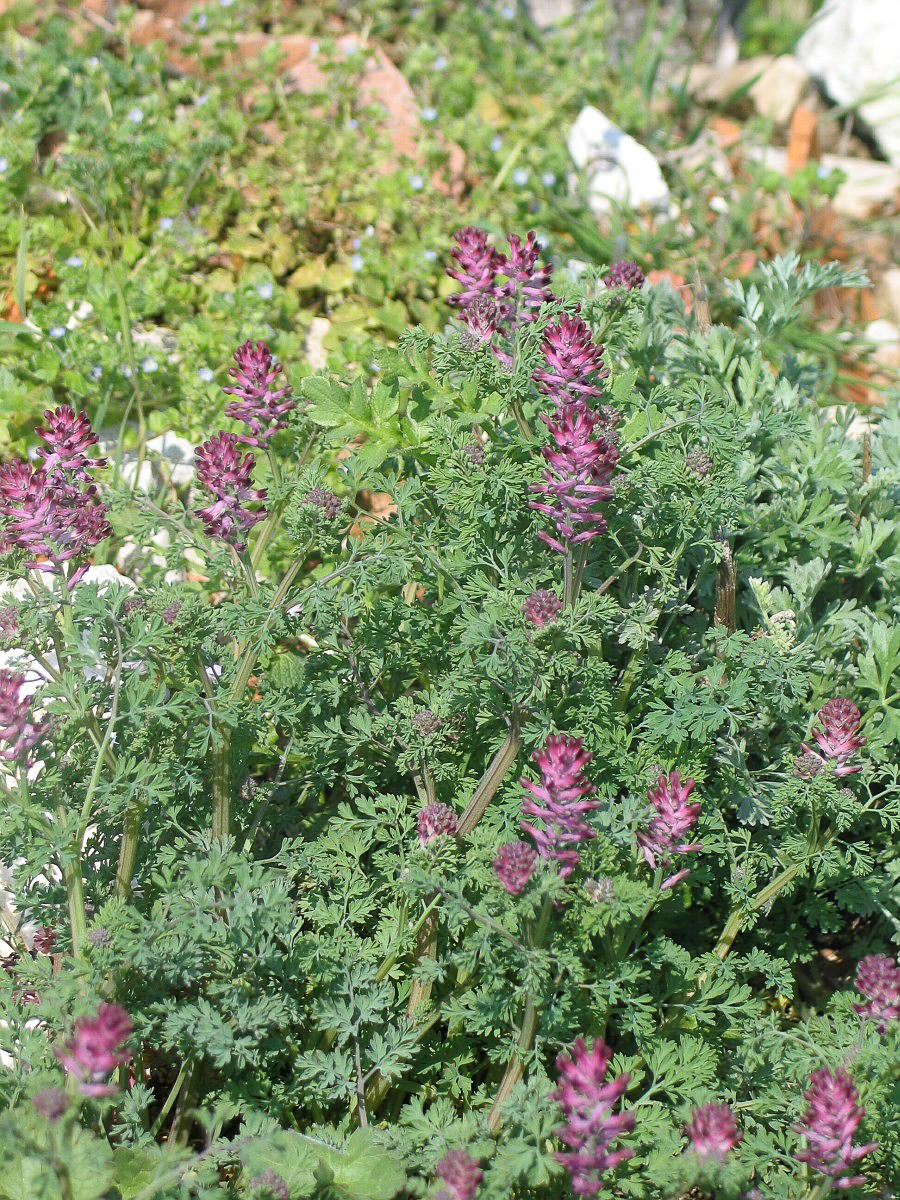
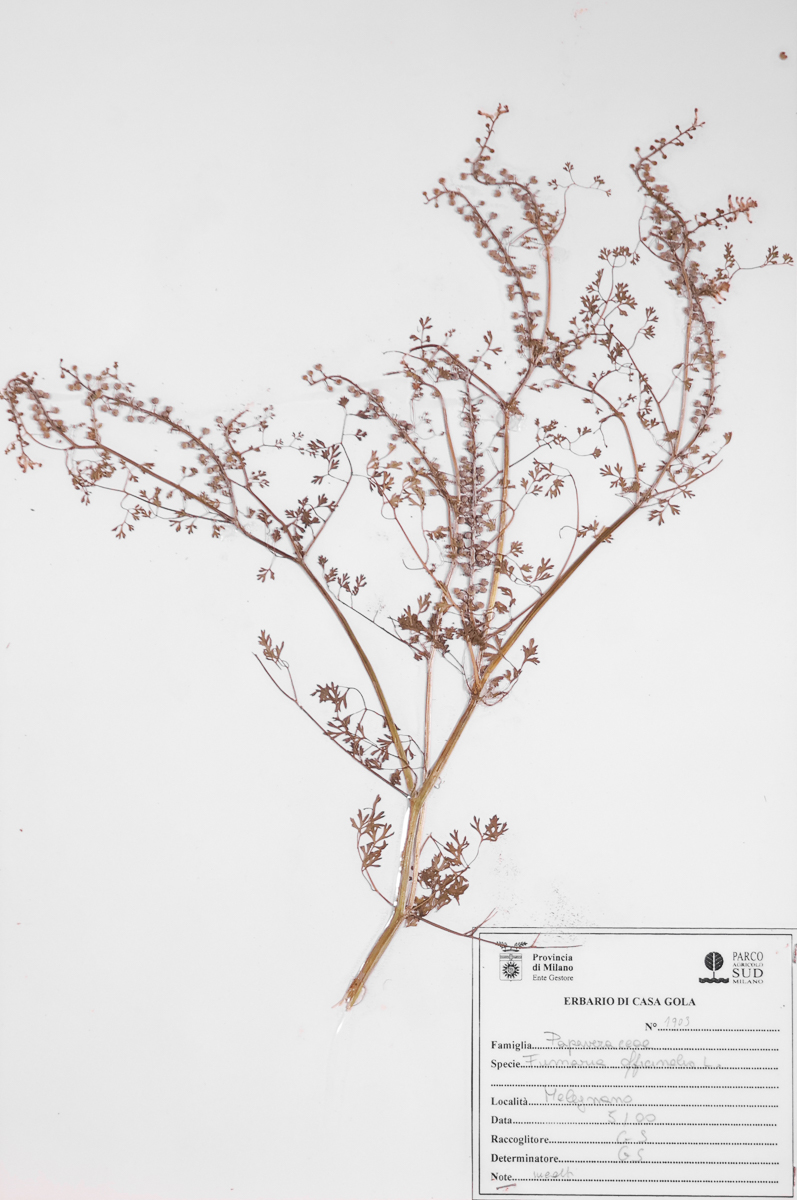
Habit and size: Annual herbaceous plant with a fibrous white-yellowish taproot, reaching heights between 10 and 30 cm.
Stem: Branching, sprawling, erect stems, slender, greenish with often purplish hues.
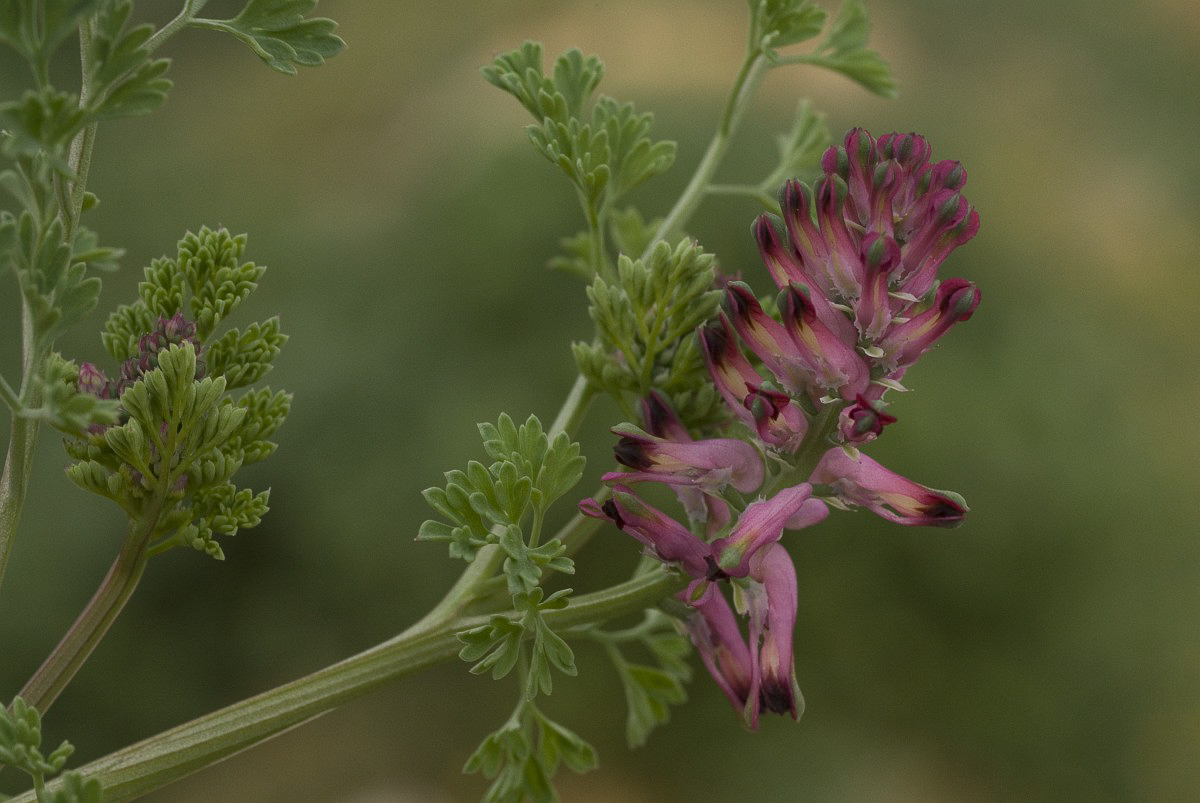
Leaves: The 2-3 pinnate leaves have incisions reaching the main vein, and the resulting segments are also incised 1-2 times. They are alternate, thin, glaucous, glabrous, and long-petioled, with a brownish-green color.
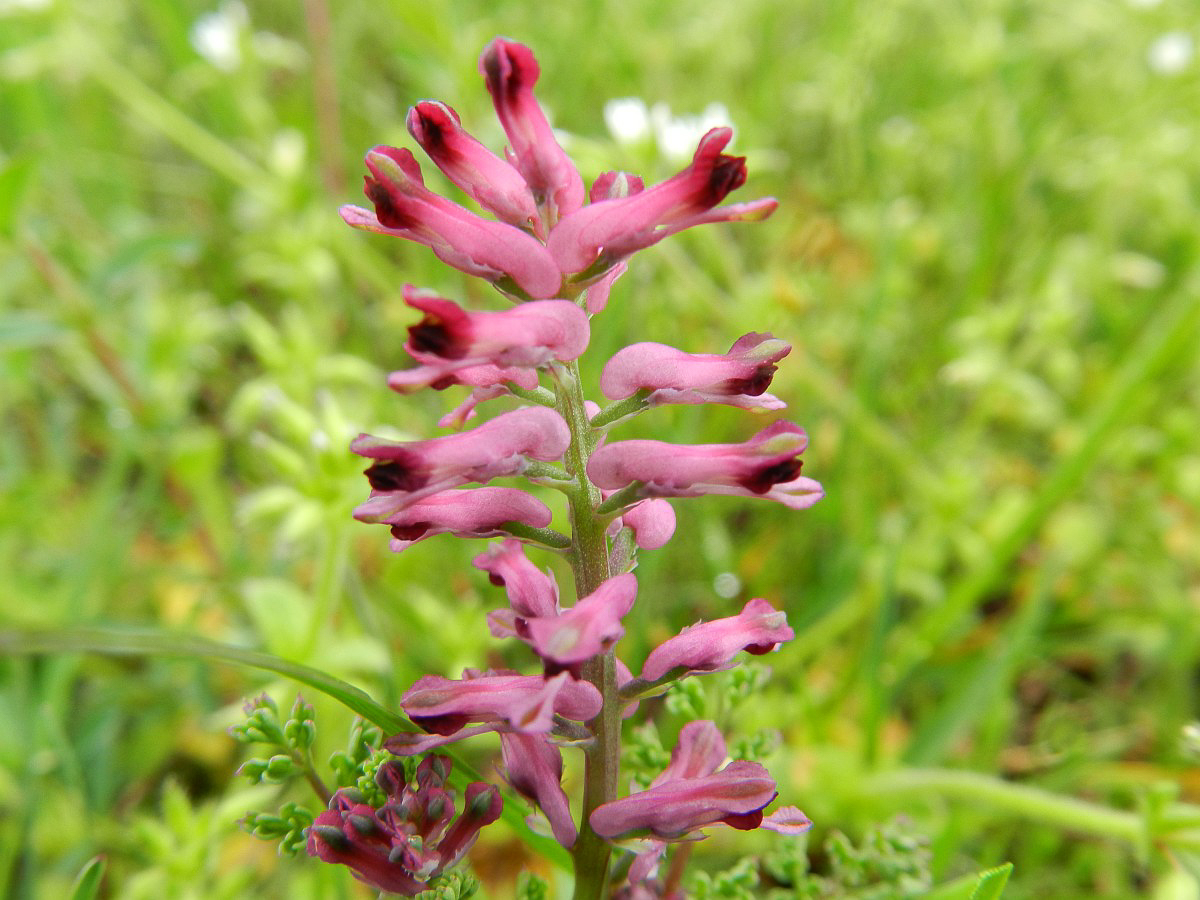
Flowers: The flowers are clustered in terminal racemose inflorescences, opposite to the leaves. The dense racemes expand during flowering and typically consist of 20-30 small flowers, irregularly shaped and pink or dark red at the throat. They have 4 petals, with the inner 2 being oblanceolate and fused at the apex, the upper outer one bearing a spur posteriorly, and the lower one being simple. The oval calyx consists of 2 toothed sepals, which quickly fall off, narrower than the corolla. Blooms from February to August.
Fruits and seeds: The fruits are roundish achenes, slightly flattened at the apex, with a green and rough surface, each producing a single seed.
DISTRIBUTION AND HABITAT
Found throughout Italy in fields, fallow lands, along paths, and among ruins, from 0 to 1,600 m.
USE
Bitter herb, slightly diuretic and laxative tonic, vermifuge, anti-inflammatory; it improves the function of the liver and gallbladder. Internally used in medicine for biliary colic and migraine associated with digestive disorders. Externally used in case of conjunctivitis and skin diseases such as eczema and dermatitis. Excessive consumption may cause drowsiness. Before taking any plant-based product (medicine or non-medicine) for therapeutic or similar purposes, it is always advisable to consult a medical professional.
INTERESTING FACTS
In the past, it was used to treat a large number of disorders. The syrup made from the herb’s juice, mixed with Damask Rose and Peach or Senna flowers, was “the most singular remedy against the melancholy of hypochondriacs” (M. Grieve in A Modern Herbal, 1931). It is considered in many countries around the world as a plant that helps to become “centenarians.” The French Republican calendar (Calendrier de la République universelle et indivisibile) dedicated a day to this flower, as the 13th of Ventose, corresponding to March 3rd, was called Fumeterre (which is the French name for Fumaria).
Photo: Courtesy of Saxifraga, Jasenka Topic, Willem van Kruijsbergen, Rutger Barendse