
Fragola matta


Nome scientifico: Potentilla indica (Andrews) Th.Wolf

Famiglia: Rosaceae


MORFOLOGIA 


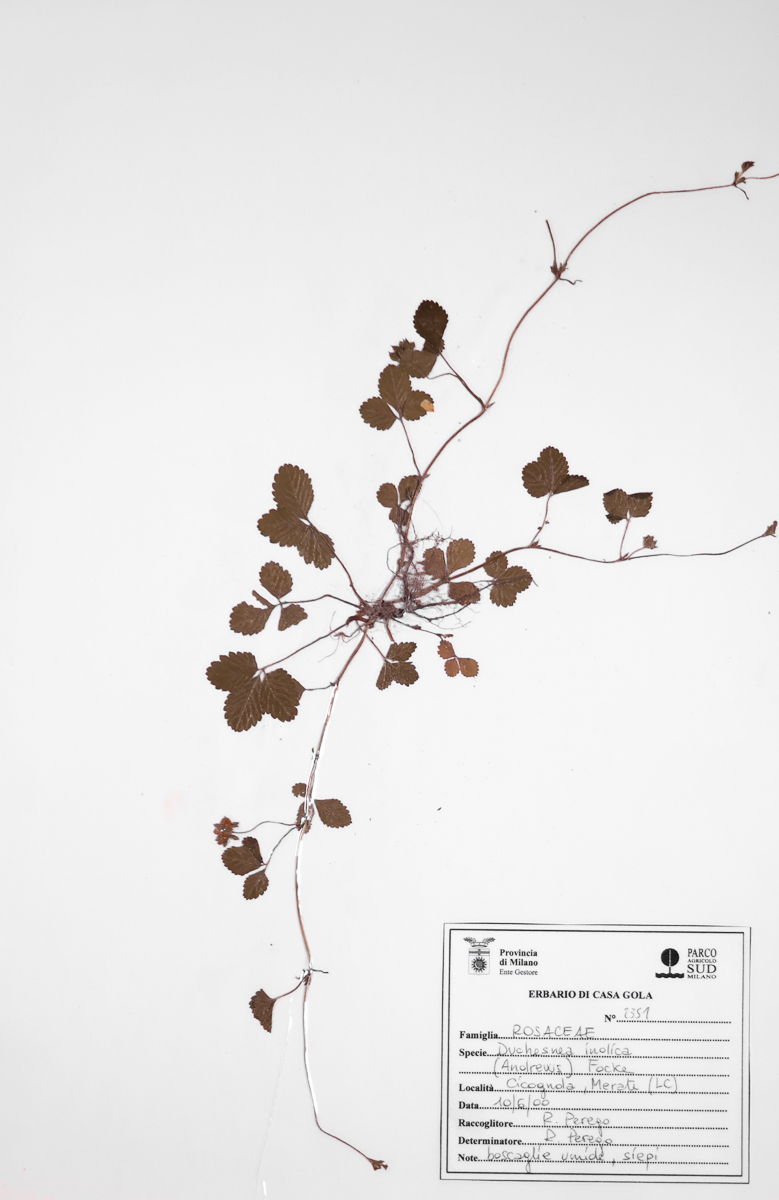
Portamento e dimensioni: pianta erbacea perenne, alta 10-50 cm, rizoma breve.


Fusto: stoloni aerei, nascenti a lato della rosetta fogliare, irsuti, striscianti al suolo e radicanti ai nodi.


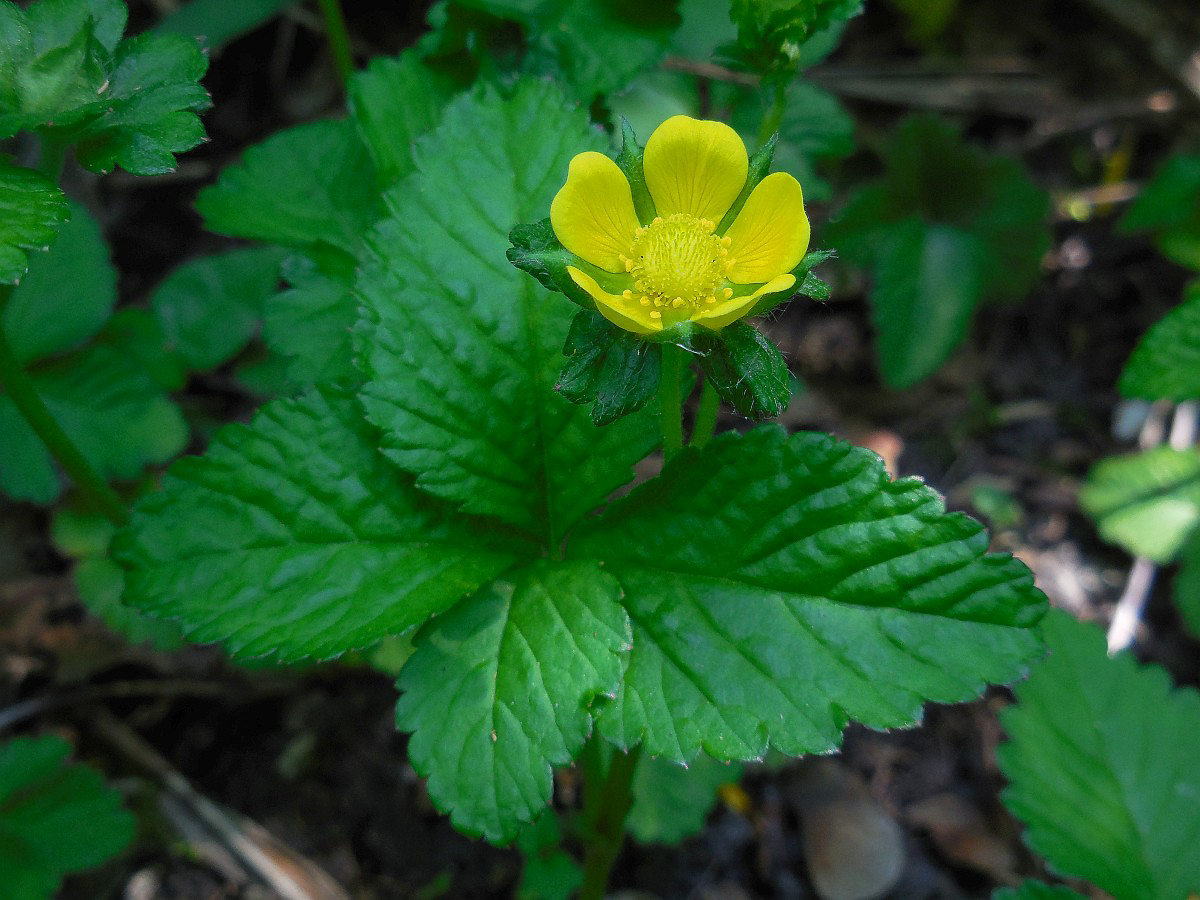
Foglie:  foglie verdi e pubescenti sulle due facce, spesso soffuse di rosso, palmate a tre segmenti brevemente picciolati, obovati e dentati sul margine.


Fiori: fiori isolati, ermafroditi, dialipetali con diametro di 3 cm; lacinie dell’epicalice tridentate; petali 5 gialli (8mm), obovati. Fiorisce da aprile a luglio.


Frutti e semi: i frutti sono acheni interni con pappo, esterni senza pappo.


DISTRIBUZIONE E HABITAT


Alloctona asiatica presente in tutta Italia tranne la Sicilia, Calabria, Basilicata, Puglia e Molise. Vegeta neboscaglie umide e fra le siepi da 0 a 800 m


CURIOSITÀ


Coltivata all’Orto Botanico di Torino dal 1816, fu osservata spontanea in Piemonte e Lombardia ancora nel corso dell’Ottocento.


Foto: su licenza gratuita di Saxifraga e Ed Stikvoort, Ab H Baas

Famiglia

Rosaceae

Specie

Potentilla indica (Andrews) Th.Wolf

Tipologia

Pianta erbacea

Habitat

Boschi e boscaglie

False strawberry


Scientific Name: Potentilla indica (Andrews) Th.Wolf
Family: Rosaceae


MORPHOLOGY


Habit and Size: Perennial herbaceous plant, 10-50 cm tall, with a short rhizome.


Stems: Aerial stolons, emerging from the side of the leaf rosette, hairy, trailing on the ground, and rooting at the nodes.


Leaves: Green and pubescent leaves on both sides, often tinged with red, palmate with three shortly petiolate, obovate, and dentate segments.


Flowers: Isolated hermaphrodite flowers, dialypetalous with a diameter of 3 cm; tridentate lobes of the epicalyx; 5 yellow petals (8mm), obovate. Blooms from April to July.

Fruits and Seeds: The fruits are inner achenes with pappus, outer ones without pappus.


DISTRIBUTION AND HABITAT


An Asian allochthonous species present throughout Italy except Sicily, Calabria, Basilicata, Puglia, and Molise. It grows in damp woodlands and among hedges from sea level to 800 m.


INTERESTING FACTS


Cultivated at the Botanical Garden of Turin since 1816, it was observed growing wild in Piedmont and Lombardy even during the nineteenth century.


Photo: Under a free license by Saxifraga, Ed Stikvoort, Ab H Baas.
 

Famiglia

Rosaceae

Specie

Potentilla indica (Andrews) Th.Wolf

Tipologia

Pianta erbacea

Habitat

Boschi e boscaglie