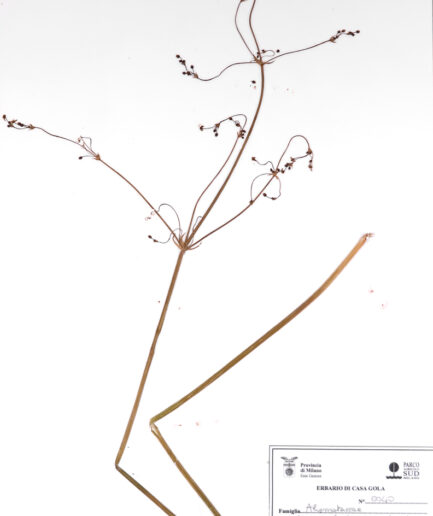



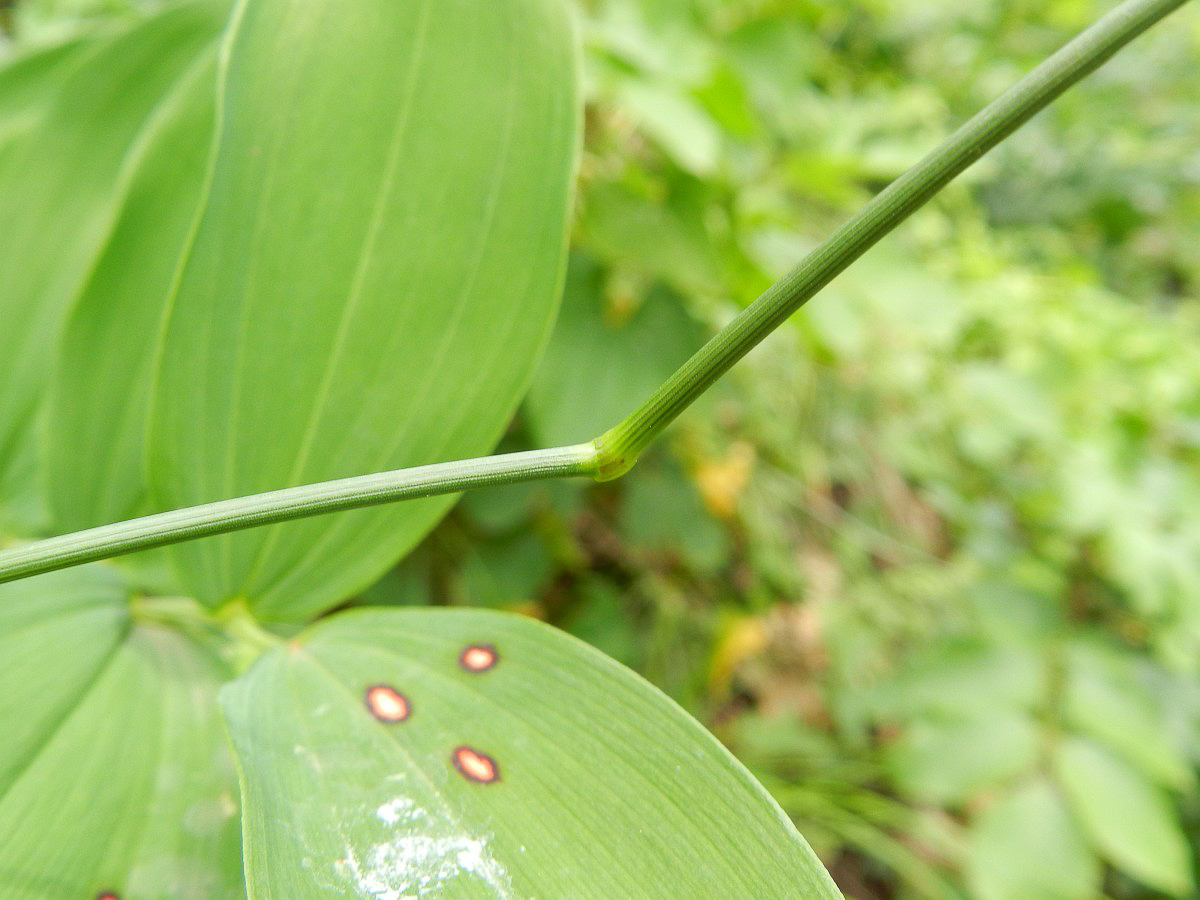
Upright Brome
Scientific name: Bromopsis erecta (Huds.) Fourr.
Family: Poaceae
MORPHOLOGY
Habit and dimensions: Herbaceous plants, biennial or perennial, forming dense tufts of leaves emerging from the ground. They can reach a height of 40 – 80 cm (maximum 2 m).
Stem: The stem is knotty at the base, then ascending and erect, hollow with a more or less round cross-section and robust consistency. The surface is generally smooth and hairless.
Leaves: The leaves are arranged alternately, emerging from various nodes along the stem. They consist of a sheath that encloses the stem, a ligule, and a blade. The veins are parallel-veined. They typically have a linear and flat shape; the margins are ciliate while the surface may be densely hairy. Leaf dimensions: width 2 – 4 mm; length 20 – 35 cm.
Flowers: The inflorescence is a terminal and branched spike, composed of several spikelets, resembling an erect and compact panicle. The fertile flowers are actinomorphic and formed by 3 whorls. It blooms from April to July.
Fruits and Seeds: The fruits are caryopses, small indehiscent dark-colored grains, ovoid in shape, with a pericarp consisting of a thin wall surrounding the individual seed.
DISTRIBUTION AND HABITAT
Widespread throughout Italy with numerous subspecies present in various areas, in meadows and grasslands, from 0 to 1,600 m altitude.
Photo: Used under free license from Saxifraga and Rutger Barendse