
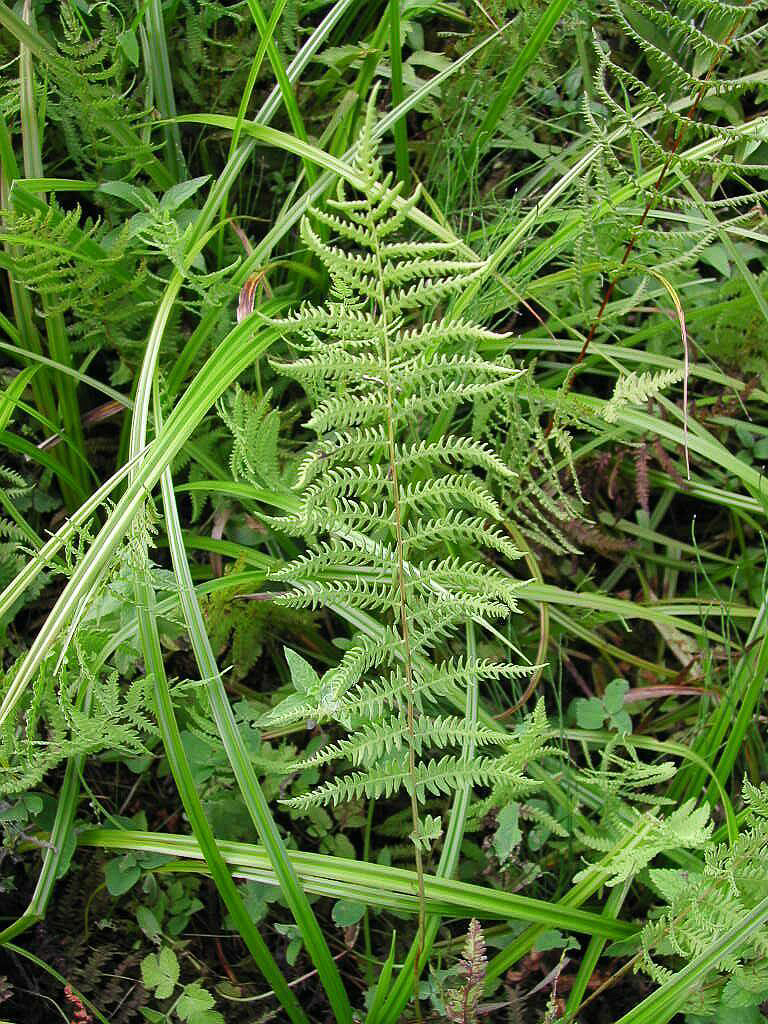
Felce palustre

Nome scientifico: Thelypteris palustris Schott                                                                
Famiglia: Thelypteridaceae


MORFOLOGIA


Portamento e dimensioni: pteridofita con rizoma strisciante. Da qui dipartono allineate le fronde, che si presentano erette o lievemente ricadenti, raggiungendo un’altezza tra i 30 e gli 80 centimetri.


Fusto: fusto sotterraneo, detto rizoma, che ogni anno emette radici e fusti avventizi.


Foglie: fronde fertili più strette rispetto a quelle sterili, più grandi e coriacee. Hanno lamina lanceolata o strettamente ovata e pinnule intere con margini revoluti.


Fiori: non essendo angiosperme, le felci non producono fiori.


Frutti e semi: a differenza di angiosperme e gimnosperme, le felci non sono dotate di semi, ma si diffondono nell’ambiente mediante spore. Nella felce palustre le spore ellissoidi sono portate da sori di colore nerastro, densi ed equidistanti dal margine e dalla nervatura centrale.


DISTRIBUZIONE E HABITAT


Felce igroacidofila presente in quasi tutte le regioni italiane. Vegeta fino a 1.400 metri di quota, prediligendo aree umide, torbiere e rive di corsi d’acqua. Formano stazioni distanti l’una dall’altra con conseguenti difficoltà negli scambi genetici.

Negli ultimi anni la specie è minacciata dalla riduzione degli ambienti palustri dovuta alle bonifiche.


UTILIZZO


Pianta usata a scopo ornamentale, anche per ambienti interni. In commercio ne esistono diverse varietà che cambiano per il colore delle fronde o per il portamento.

La felce palustre può essere presa in considerazione per alcune tipologie di bonifiche: è stato infatti dimostrato che la specie è in grado di tollerare e assorbire l’arsenico presente nel terreno.


CURIOSITÀ


Il nome del genere deriva dal greco “thély” (= femmina) e “ptéris” (= felce), per l’aspetto più delicato rispetto alle altre felci, mentre l’epiteto della specie deriva da “pàlus” (= palude), in riferimento all’ambiente che predilige.


Foto: Su licenza gratuita di Saxifraga – Branko Bakan e Jasenka Topic

Famiglia

Thelypteridaceae

Specie

Thelypteris palustris Schott

Tipologia

Felce

Habitat

Prati, Rive, Zone umide

Marsh fern

Scientific name: Thelypteris palustris Schott
Family name: Thelypteridaceae


MORPHOLOGY


Habit and dimensions: a pteridophyte with a creeping rhizome. From here, the fronds arise in alignment, appearing erect or slightly drooping, reaching a height between 30 and 80 centimeters.


Stem: underground stem, called rhizome, which emits roots and adventitious stems every year.


Leaves: fertile fronds are narrower than sterile ones, larger and leathery. They have lanceolate or narrowly ovate blades and entire pinnules with revolute margins.


Flowers: as ferns are not angiosperms, they do not produce flowers.


Fruits and seeds: unlike angiosperms and gymnosperms, ferns do not have seeds but spread in the environment through spores. In marsh ferns, ellipsoid spores are carried by blackish, dense sori equidistant from the margin and central vein.


DISTRIBUTION AND HABITAT

Hygroacidophilic fern present in almost all Italian regions. It grows up to 1,400 meters above sea level, preferring wet areas, bogs, and riverbanks. They form distant stations from each other, leading to difficulties in genetic exchange.

In recent years, the species has been threatened by the reduction of marshy habitats due to reclamation projects.


USE

The plant is used for ornamental purposes, even for indoor environments. There are several varieties available commercially, differing in the color of the fronds or habit. Marsh fern can be considered for certain types of reclamation projects: it has been demonstrated that the species can tolerate and absorb arsenic present in the soil.


INTERESTING FACTS


The genus name derives from the Greek “thély” (= female) and “ptéris” (= fern), referring to its more delicate appearance compared to other ferns, while the species epithet derives from “pàlus” (= marsh), referring to its preferred habitat.

Photo: Used under a free license by Saxifraga – Branko Bakan and Jasenka Topic


Famiglia

Thelypteridaceae

Specie

Thelypteris palustris Schott

Tipologia

Felce

Habitat

Prati, Rive, Zone umide