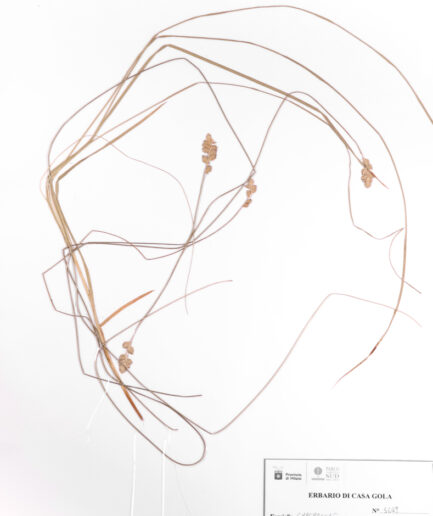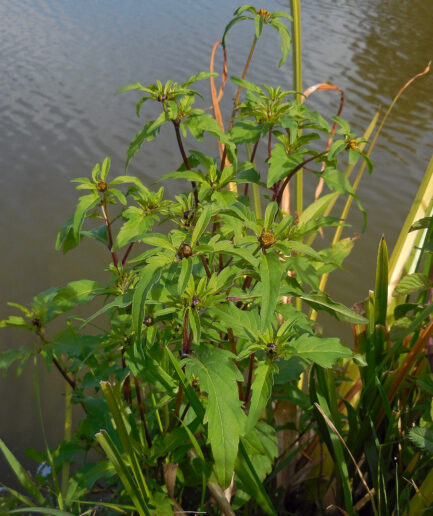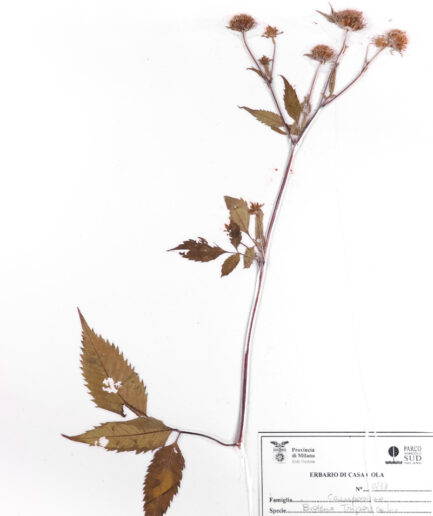

Farfaraccio maggiore

Nome scientifico: Petasites hybridus (L.) Gaertn, Meyer et Seh.

Famiglia: Asteraceae


MORFOLOGIA

Portamento e dimensioni: pianta perenne, erbacea, con grosso rizoma carnoso, lungo e ramificato da cui in primavera si sviluppa il fusto senza foglie che appaiono soltanto al termine della fioritura. Altezza 15-120 cm.

Fusto:  fusto cavo e semplice, eretto, rossastro e ricoperto di scaglie dello stesso colore.

Foglie: foglie sorrette da un lungo e solido picciolo scanalato, color porporino; molto grandi (anche 80 x 40 cm), reniformi o arrotondate con il margine leggermente e irregolarmente dentato, hanno la pagina inferiore ricoperta da una lanugine biancastra che sparisce con l’età e solo le nervature rimangono coperte di peli glandulari.

Fiori: I capolini a fiori poligami, sono raggruppati in un racemo terminale, allungato, l’infiorescenza è fitta, cilindrica più allungata dopo la fioritura, di colore rosso rosato, con brattee dello stesso colore. I fiori sono tubulosi, rossastri; i capolini femminili maggiori di quelli maschili , sono i più grandi del genere.  Fiorisce da febbraio a maggio.

Frutti e semi: i frutti sono acheni lisci di 2-3 mm, solcati, con un pappo di setole candide di 10 mm.

DISTRIBUZIONE E HABITAT


Cresce in tutta Italia tranne la Sardegna dal livello del mare fino a 1.700 m. Cresce  in luoghi umidi, lungo i fossi, sponde dei corsi d’acqua nei prati freschi e ombrosi.

UTILIZZO


Ha proprietà antispastiche e analgesiche, agisce come tranquillante e regolatore del sistema neurovegetativo. Nella medicina popolare è ancora talvolta utilizzato come diuretico, sudorifero, e in caso di malattie delle vie respiratorie. E’ stato in passato usato come rimedio contro la peste, il colera, l’epilessia e le febbri in genere e più recentemente la sua azione sedativa lo ha consigliato contro l’insonnia, gli stati ansiosi ed asmatici, l’ ipertensione e l’ arteriosclerosi.

Per uso esterno è adatto in caso di infiammazione della pelle e delle mucose della bocca, nella cura delle varici, emorroidi e piaghe che cicatrizzano con difficoltà, le foglie fresche sono usate nel trattamento delle ferite. Prima di assumere qualsiasi prodotto di origine vegetale (medicinale o non medicinale) a fini terapeutici o simili, è sempre consigliabile consultare preventivamente il medico.

CURIOSITÀ


Tutta la pianta emana un odore fetido che ricorda quello delle cimici.


Foto: su licenza gratuita di Saxifraga e Ed Stikvoort e gentilmente offerte da Claudio Farinati

Famiglia

Asteraceae

Specie

Petasites hybridus (L.) Gaertn, Meyer et Seh.

Tipologia

Pianta erbacea

Habitat

Prati, Rive, Zone umide

Butterbur


Scientific Name: Petasites hybridus (L.) Gaertn, Meyer et Seh.

Family: Asteraceae


MORPHOLOGY


Growth habit and size: Perennial, herbaceous plant with a large, fleshy, long, and branched rhizome from which the stem develops in the spring without leaves, which only appear at the end of the flowering. Height 15-120 cm.


Stem: Hollow and simple, erect, reddish, covered with scales of the same color.


Leaves: Supported by a long and sturdy grooved petiole, purplish in color; very large (up to 80 x 40 cm), kidney-shaped or rounded with a slightly and irregularly toothed margin, with the underside covered with a whitish down that disappears with age, leaving only the veins covered with glandular hairs.


Flowers: The polygamous flower heads are grouped in an elongated terminal raceme; the inflorescence is dense, cylindrical, and more elongated after flowering, pinkish-red in color, with bracts of the same color. The flowers are tubular, reddish; the female flower heads are larger than the male ones and are the largest of the genus. It blooms from February to May.


Fruits and seeds: The fruits are smooth achenes of 2-3 mm, furrowed, with a pappus of 10 mm white bristles.


DISTRIBUTION AND HABITAT


It grows throughout Italy except Sardinia, from sea level to 1,700 m. It grows in humid places, along ditches, riverbanks, and cool shady meadows.


USE


It has antispasmodic and analgesic properties and acts as a tranquilizer and regulator of the neurovegetative system. In folk medicine, it is still sometimes used as a diuretic, diaphoretic, and to treat respiratory tract diseases. It was once used as a remedy against plague, cholera, epilepsy, and fevers in general. More recently, it has been recommended for insomnia, anxiety, asthma, hypertension, and arteriosclerosis due to its sedative properties. For external use, it is suitable in case of inflammation of the skin and mucous membranes of the mouth, in the treatment of varicose veins, hemorrhoids, and wounds that are difficult to heal. Fresh leaves are used in treating wounds. Before taking any plant-based product (medicinal or non-medicinal) for therapeutic or similar purposes, it is always advisable to consult a doctor.


INTERESTING FACTS


The whole plant emits a foul odor reminiscent of that of bedbugs.


Photo: freely licensed by Saxifraga and Ed Stikvoort and kindly provided by Claudio Farinati

Famiglia

Asteraceae

Specie

Petasites hybridus (L.) Gaertn, Meyer et Seh.

Tipologia

Pianta erbacea

Habitat

Prati, Rive, Zone umide