


Spring draba
Scientific Name: Draba verna L.
Family: Brassicaceae
MORPHOLOGY
Habit and dimensions: An annual plant, small, reaching 2-5 (15) cm in height.
Stems: Flowering stems without leaves, reddish and pubescent at the base.
Leaves: All leaves form a rosette, lanceolate-spatulate, ciliate on the edge, with abundant stellate hairs and rare or absent simple hairs.
Flowers: Flowers in elongated racemose clusters. Peduncles are 2-3 mm long. Sepals keeled, acute, often reddish on the back and hyaline on the edge. Petals are white, 2-3 mm long, deeply bilobed. Blooms from December to May.
Fruits and seeds: The fruit is an elliptical or oblanceolate silicle, glabrous, erect.
DISTRIBUTION AND HABITAT
Present throughout Italy in arid fallow lands from 0 to 1,300 m.
USE
The plant is said to have astringent and vulnerary properties. It was also used for the treatment of whitlows. Before consuming any plant-based product (medicinal or non-medicinal) for therapeutic or similar purposes, it is always advisable to consult a physician. It appears that the leaves are used in British folk cuisine.
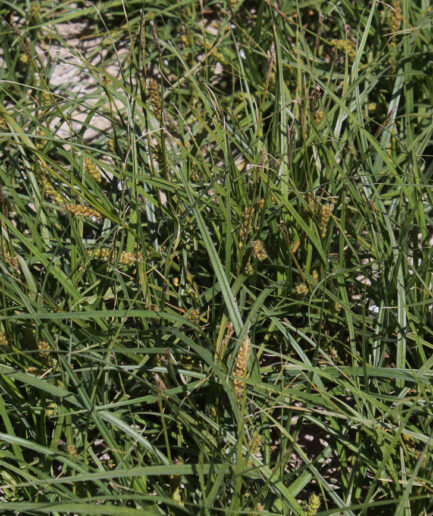
Photo: under a free license from Saxifraga and Willem van Kruijsbergen, Rutger Barendse