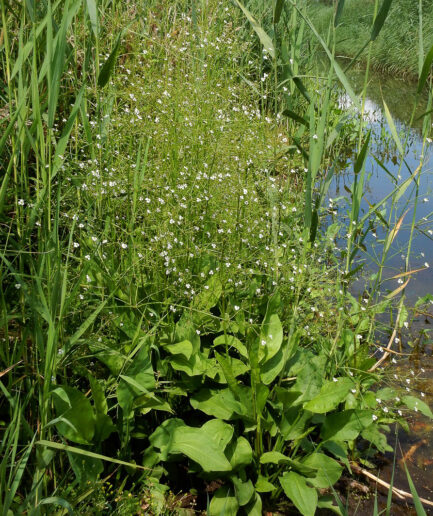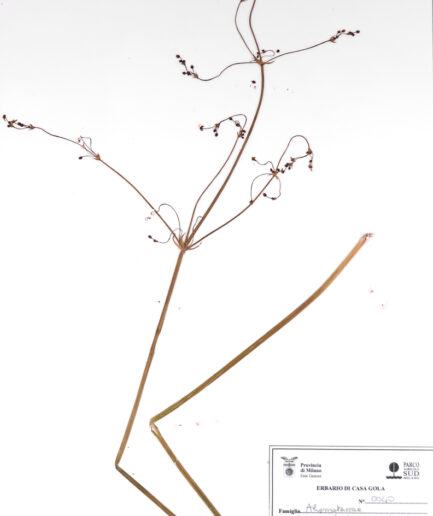

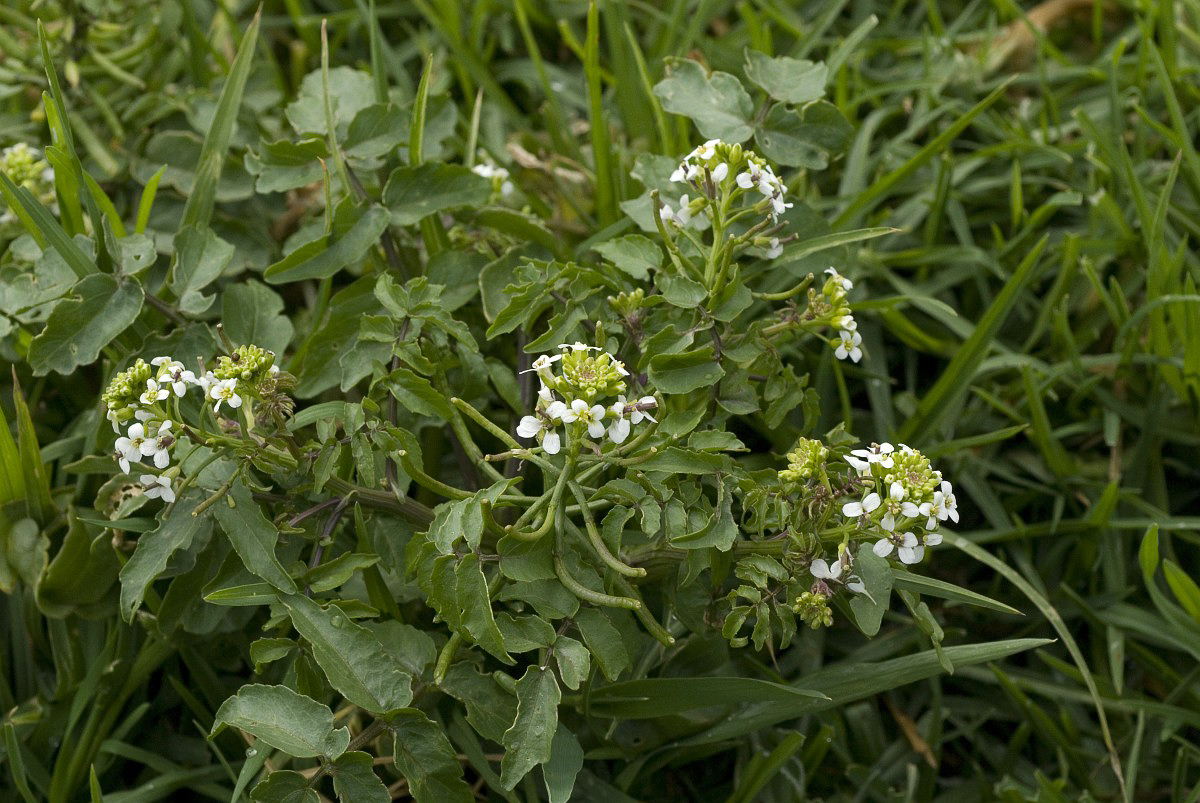
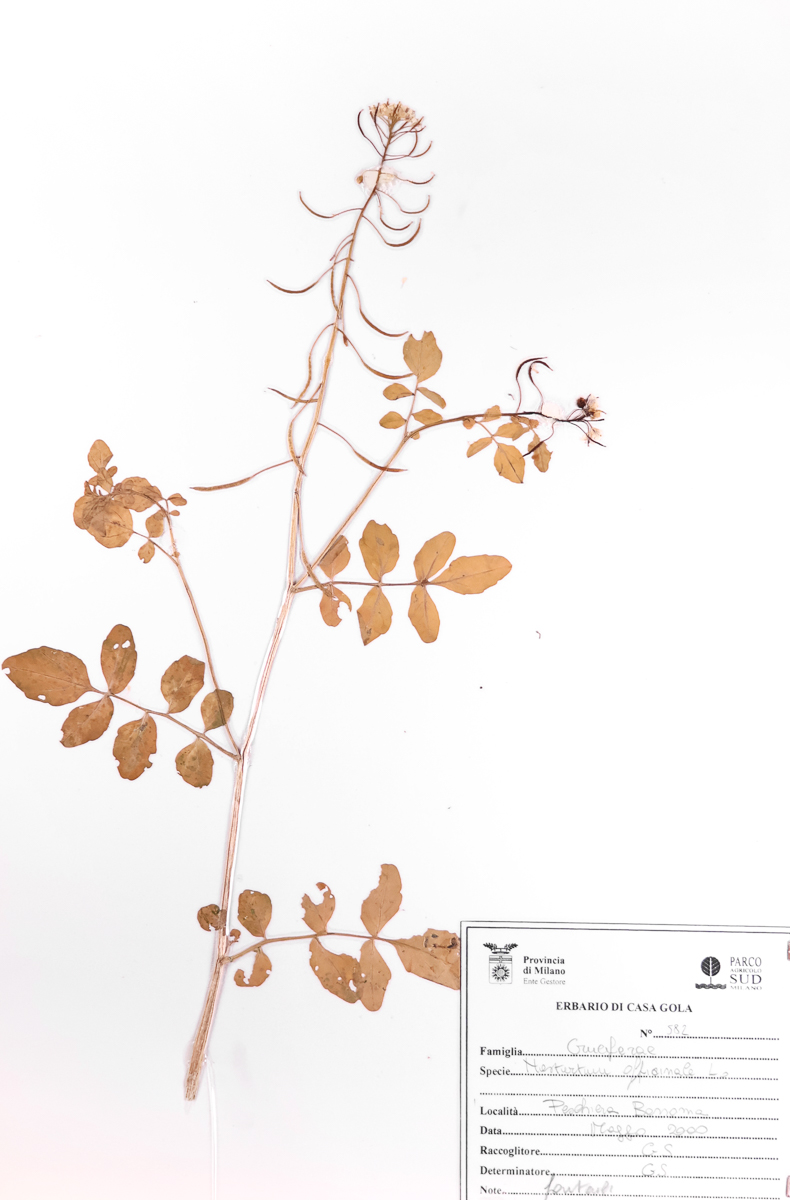
Watercress
Scientific Name: Nasturtium officinale W.T.Aiton
Family: Brassicaceae
MORPHOLOGY
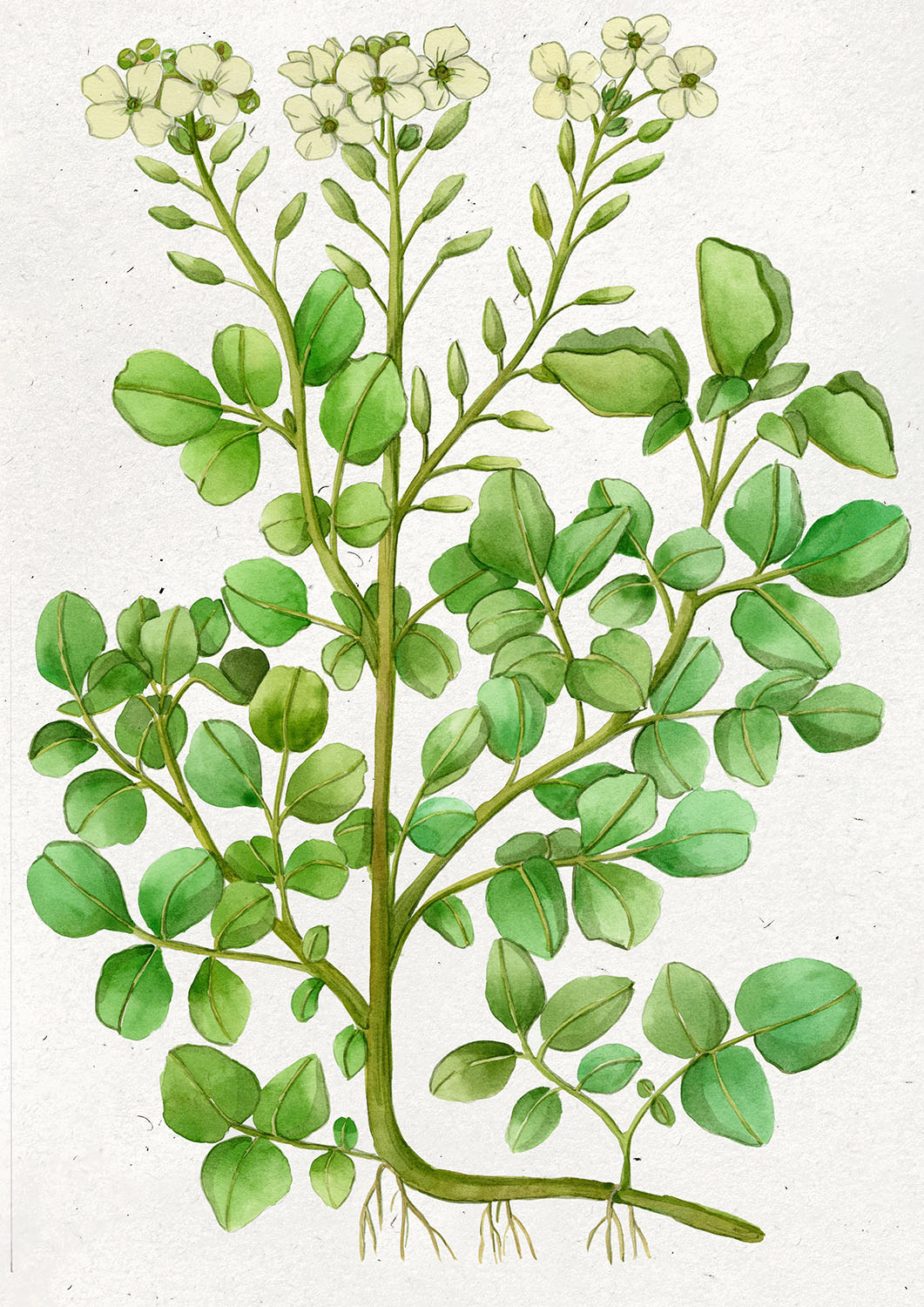
Habit and dimensions: Perennial herbaceous plant, 30-90 cm tall.
Stem: Ascending stem, glabrous, branching at the top.
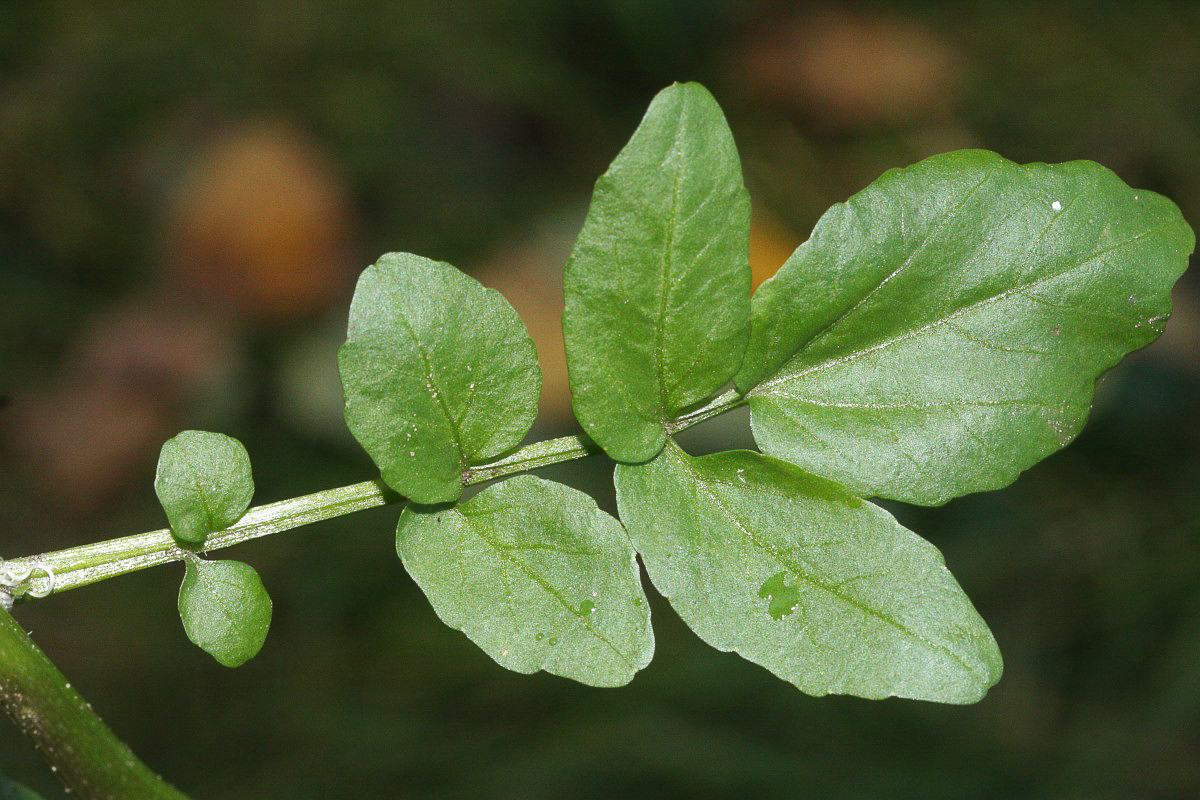
Leaves: Basal leaves with a 3-5 cm petiole, 2-3 pairs of progressively enlarged lateral segments, the larger ones spreading or more or less connivent, oval, darkly dentate at the margin. Terminal segment larger and kidney-shaped. Cauline leaves with shorter petiole and sub-rounded or oval terminal segment.
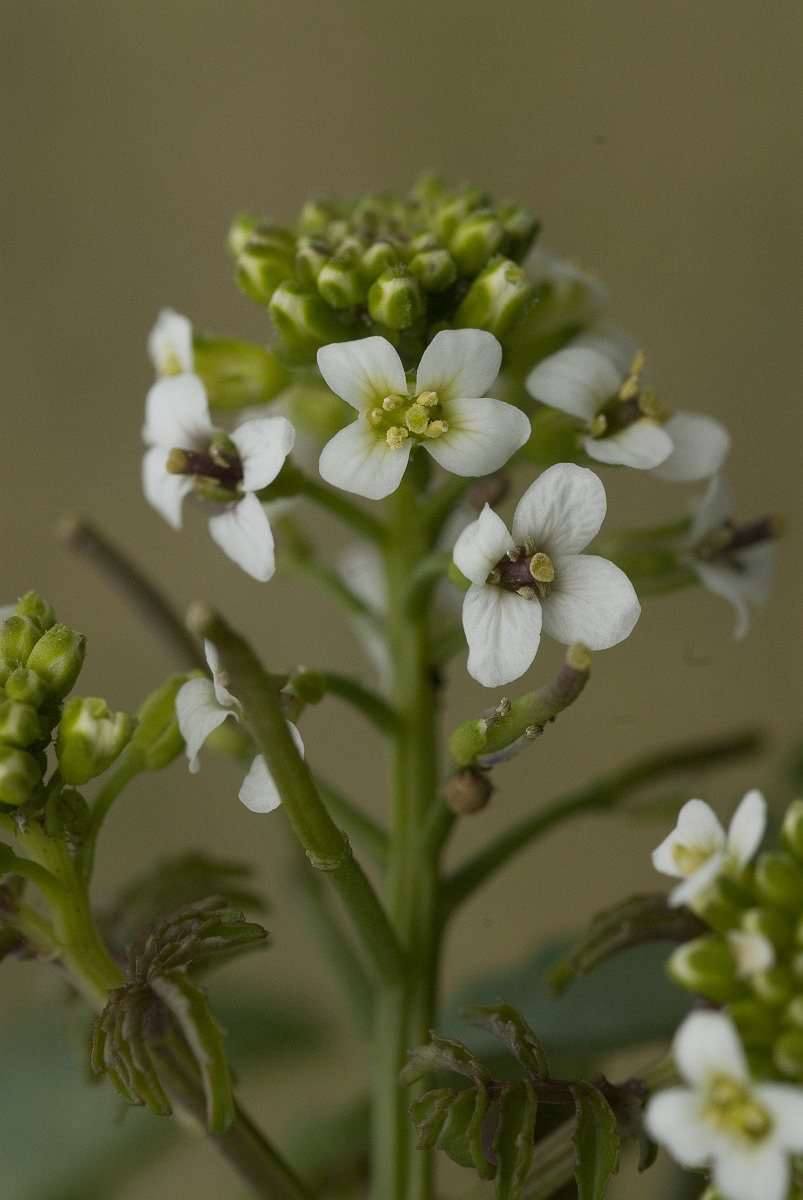
Flowers: Shortened racemes, brownish sepals, the inner two sac-like at the base, white-milky petals, more or less spreading. Blooms from April to July.
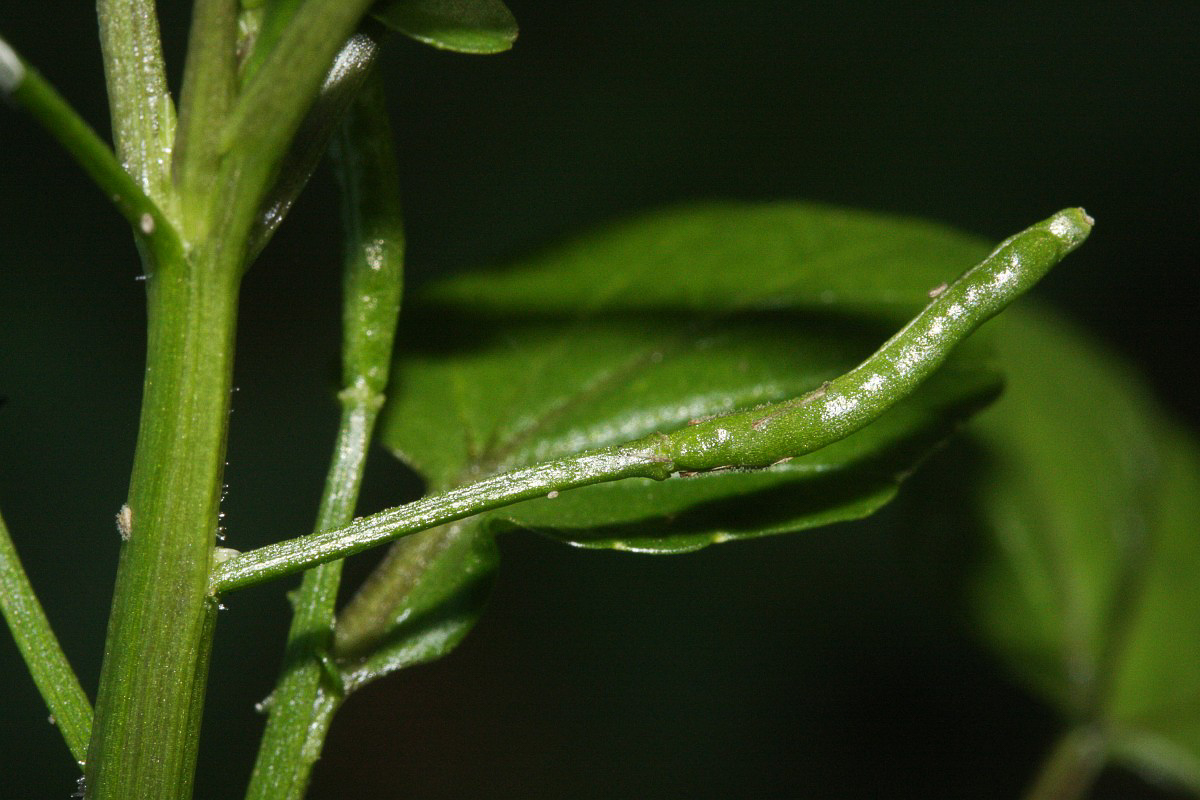
Fruits and seeds: The fruits are siliques 2 x 13-18 mm with reticulate-foveolate seeds in two rows.
DISTRIBUTION AND HABITAT
Present throughout Italy in still and flowing water, on the banks, between 0 and 1,500 m, but also found up to 2,500 m.
USE
A plant known since ancient times for its multiple virtues. Rich in vitamins and minerals, it is a valuable antianemic, antiscorbutic, and liver decongestant. Before taking any plant-based product (medicinal or non-medicinal) for therapeutic or similar purposes, it is always advisable to consult your doctor. Commonly used in salads, watercress should be used fresh because cooking or drying deprives it of all its purifying, diuretic, and invigorating qualities.
INTERESTING FACTS
According to Greek mythology, watercress was among the various useful gifts and multiple misfortunes in the jar given by the gods to Pandora for her wedding.
Photo: Not subject to licensing by Saxifraga and Jan van der Straaten, Rutger Barendse