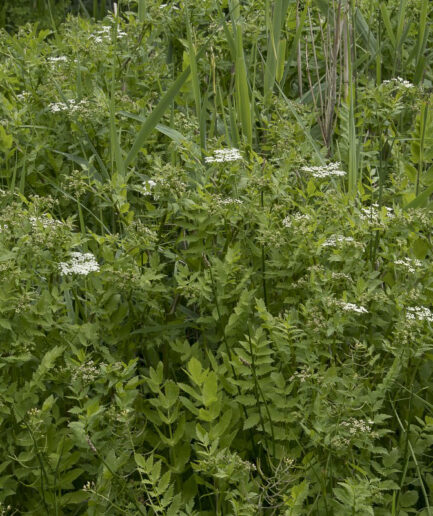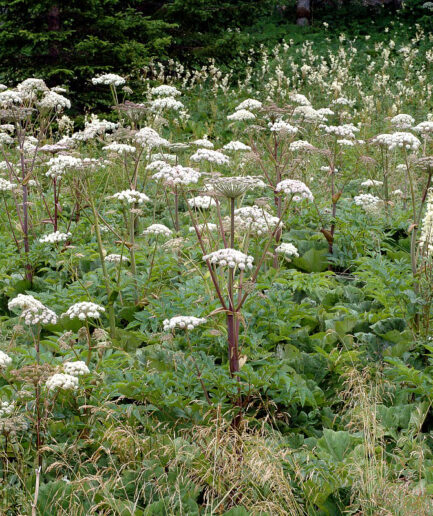

Crescione anfibio

Nome scientifico: Rorippa amphibia (L.) Besser 

Famiglia: Brassicaceae  


MORFOLOGIA 


Portamento e dimensioni: pianta perenne, erbacea, con rizoma stolonifero; altezza 30÷100 (200) cm


Fusto:  i fusti sono ascendenti, striati, ramosi.


Foglie: le foglie hanno lamina lanceolata, nelle inferiori generalmente è lobato-partita, nelle cauline intera; il margine è seghettato e la base auriculata.


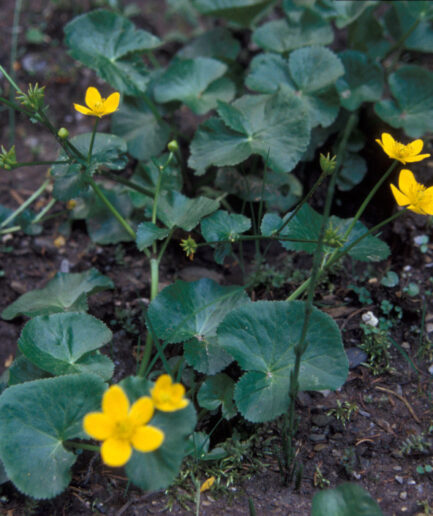
Fiori: le infiorescenze in racemi allungati e densi, sono composte da fiori tetrameri, con sepali oblunghi eretti di 2 mm e petali obovati gialli di 4÷5 mm. Fiorisce da aprile a luglio.


Frutti e semi: i frutti sono siliquette peduncolate, glabre, ovoidali-oblunghe, di 3-5,5(7) x 1-2 mm, patenti alla fruttificazione; contengono semi biseriati, ovoidali, foveolato-reticolati, bruno-rossastri.


DISTRIBUZIONE E HABITAT


Presente in tutta Italia tranne la Calabria; in ambienti umidi, diffusa nei fossi, lungo i corsi d’acqua, sui bordi di stagni e dei laghi, solitamente la base è immersa. Cresce tra 0 e 800 m 


Foto: su licenza gratuita di Saxifraga e Peter Meininger, Jan van der Straaten, Rutger Barendse, Ed Stikvoort

Famiglia

Brassicaceae

Specie

Rorippa amphibia (L.) Besser

Tipologia

Pianta erbacea

Habitat

Fontanili, Rive, Zone umide

Great yellow cress


Scientific Name: Rorippa amphibia (L.) Besser 

Family: Brassicaceae


MORPHOLOGY


Habit and Size: Perennial herbaceous plant, with stoloniferous rhizome; height 30÷100 (200) cm.

Stem: The stems are ascending, striated, and branched.


Leaves: The leaves have a lanceolate blade, generally lobed-partite in the lower ones, and entire in the cauline ones; the margin is serrated, and the base is auriculate.


Flowers: The elongated and dense racemose inflorescences are composed of tetramerous flowers, with erect oblong sepals of 2 mm and yellow obovate petals of 4÷5 mm. Blooms from April to July.


Fruits and Seeds: The fruits are pedunculate siliques, glabrous, ovoid-oblong, 3-5.5(7) x 1-2 mm, spreading at fruiting; they contain biseriate seeds, ovoid, foveolate-reticulate, brown-reddish.


DISTRIBUTION AND HABITAT


Present throughout Italy except Calabria; in humid environments, widespread in ditches, along watercourses, on the edges of ponds and lakes, usually with the base immersed. It grows between 0 and 800 m.


Photo: under a free license from Saxifraga and Peter Meininger, Jan van der Straaten, Rutger Barendse, Ed Stikvoort
Famiglia

Brassicaceae

Specie

Rorippa amphibia (L.) Besser

Tipologia

Pianta erbacea

Habitat

Fontanili, Rive, Zone umide