
Costolina giuncolina

Nome scientifico: Hypochaeris radicata L.

Famiglia: Asteraceae 


MORFOLOGIA 


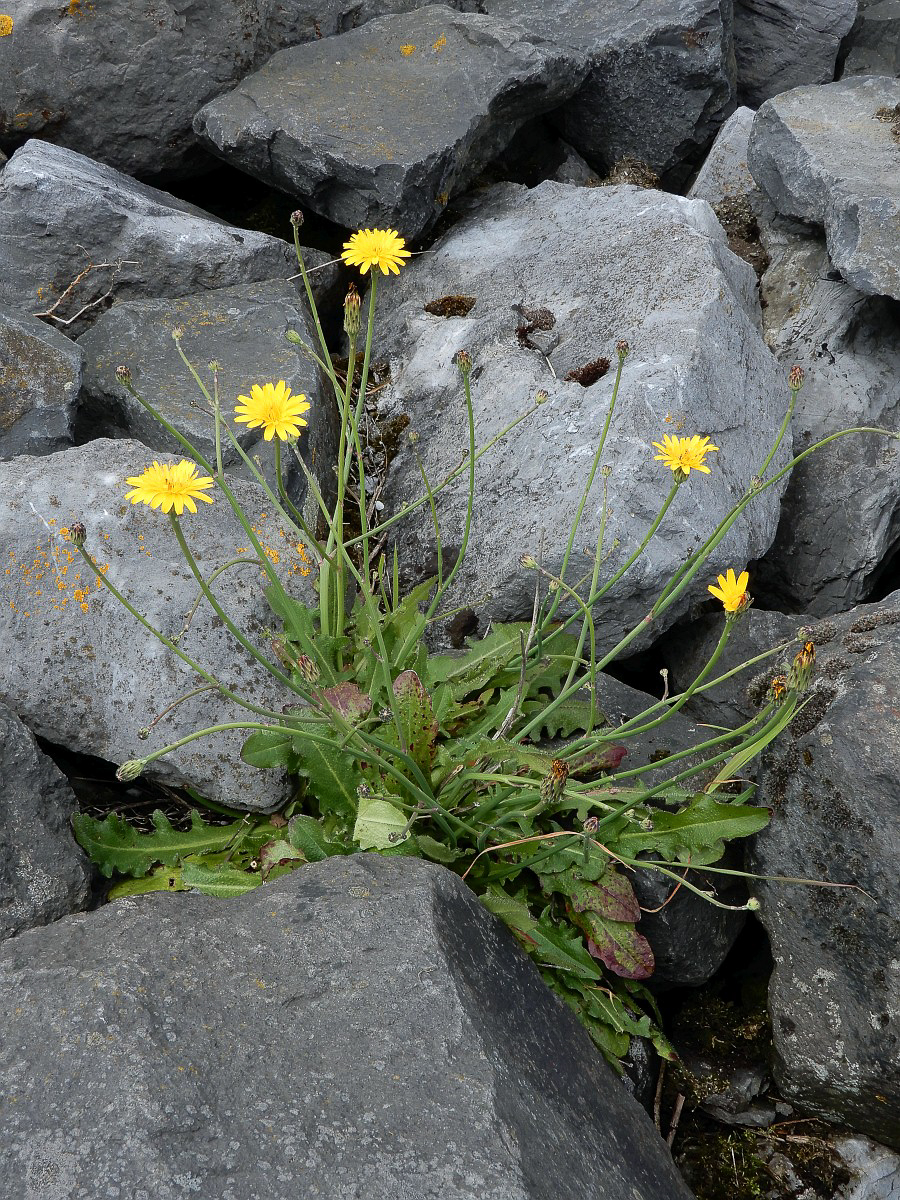
Portamento e dimensioni: pianta erbacea perennante, alta 30-50(90) cm, munita di un robusto rizoma carnoso, più o meno ramificato e contenente latice bianco.


Fusto: fusti afilli eretti, glauchi e glabri, o ispidi alla base, semplici o scarsamente ramosi in alto, un po’ ingrossati all’apice sotto i capolini e con sparse brattee squamiformi di 1-3 mm disposte a spirale.


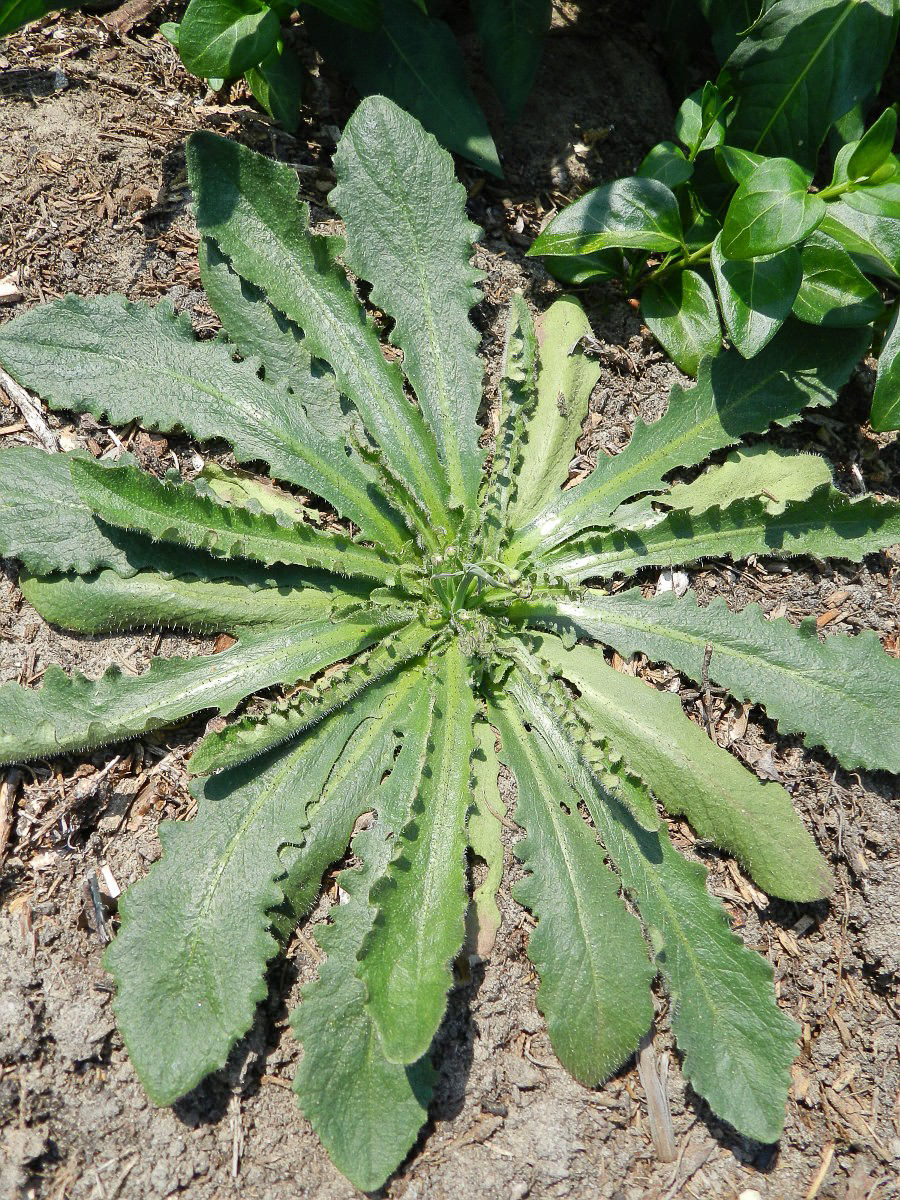
Foglie: foglie tutte in rosetta basale, sessili, aderenti al suolo, di colore verde brillante, piuttosto consistenti e assai polimorfe, con contorno spatolato (1,5-2 x 5-10 cm), pennato-lobate o pennatifide o sinuato-dentate con lobi triangolari, quasi glabre o più o meno peloso-setolose e irsute. 


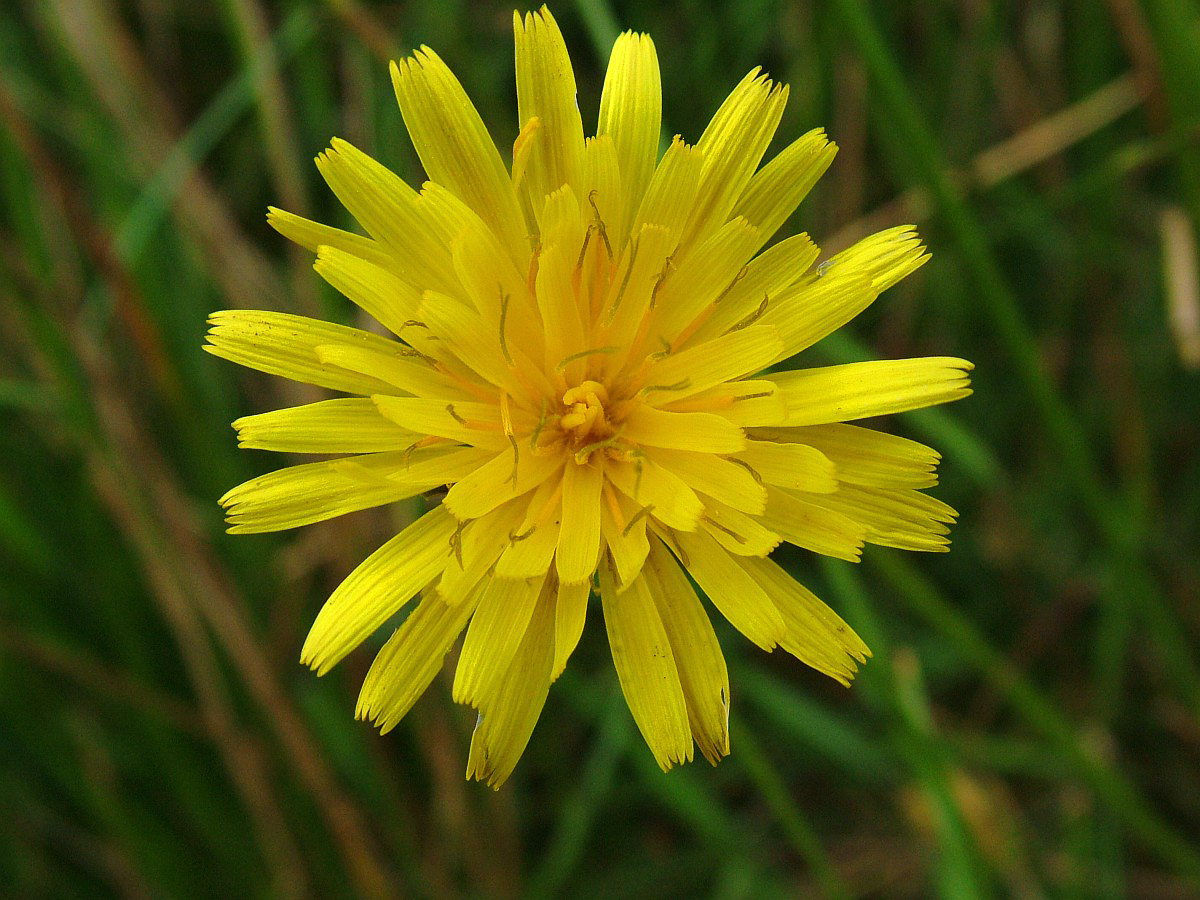
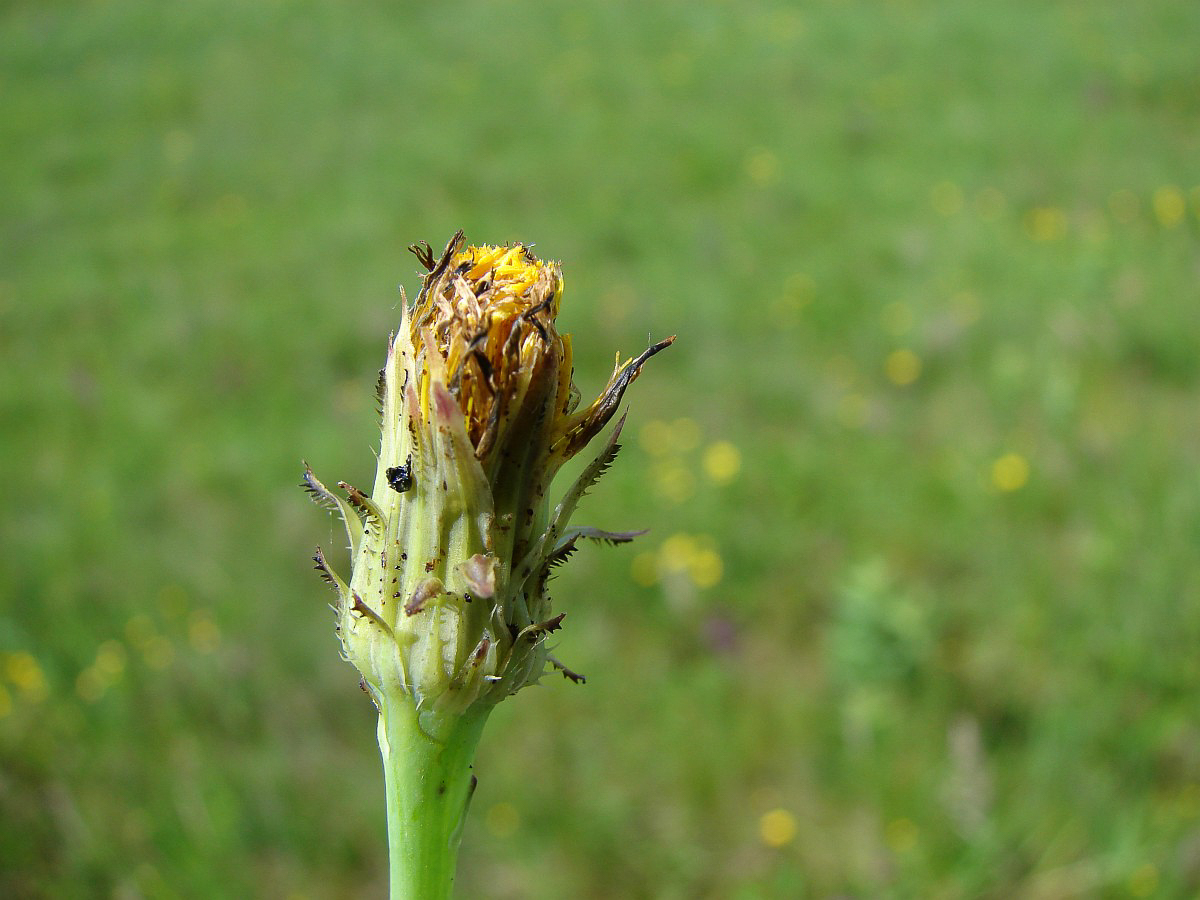
Fiori: capolini terminali (2-4 cm) con involucro cilindrico di 30-35 squame embricate, generalmente glabre, scariose sui bordi, con altre piccolissime alla base. Fiori tutti ligulati ermafroditi, di giallo brillante, i periferici verde-rossicci esternamente. Ricettacolo con pagliette alla base dei fiori. Fiorisce da aprile a luglio.


Frutti e semi: il frutto è una cipsela (achenio) scabra, bruna, con lungo becco (talvolta troncato e ± mancante); pappo con setole biseriate: le esterne più brevi e denticolate, le interne lunghe (1 cm) e piumose.


DISTRIBUZIONE E HABITAT


Presente in tutta Italia in prati aridi, incolti, bordi stradali da 0 a 1.500 m


UTILIZZI


In medicina popolare veniva utilizzato come depurativo, ma soprattutto come antidiabetico, sotto forma di decotto della parte aerea da bersi al mattino a digiuno. Prima di assumere qualsiasi prodotto di origine vegetale (farmaco o non farmaco) per fini terapeutici o simil-terapeutici, è sempre opportuno rivolgersi preventivamente al proprio medico.

Le giovani rosette vengono spesso consumate sia cotte che crude e le radici tostate utilizzate come surrogato del caffè come quelle del Taraxacum.


Foto: su licenza gratuita di Saxifraga e Ed Stikvoort, Hans Dekker, Rutger Barendse, Jasenka Topic

Famiglia

Asteraceae

Specie

Hypochaeris radicata L.

Tipologia

Pianta erbacea

Habitat

Incolti, Prati

Cat’s ear


Scientific name: Hypochaeris radicata L. 

Family: Asteraceae


MORPHOLOGY


Habit and size: Perennial herbaceous plant, 30-50(90) cm tall, with a robust fleshy rhizome, more or less branched and containing white latex.


Stem: Erect, glaucous, and glabrous, or rough at the base, simple or sparsely branched upwards, somewhat swollen at the apex under the flower heads, with scattered scale-like bracts of 1-3 mm arranged spirally.


Leaves: All basal leaves, sessile, close to the ground, bright green, rather firm, and highly polymorphic, with a spatulate outline (1.5-2 x 5-10 cm), pinnately lobed or pinnatifid or sinuate-dentate with triangular lobes, nearly glabrous or more or less hairy-setulose and hirsute.


Flowers: Terminal flower heads (2-4 cm) with a cylindrical involucre of 30-35 imbricate scales, generally glabrous, scarious on the edges, with other very small scales at the base. All ligulate flowers hermaphroditic, bright yellow, the peripheral ones externally green-reddish. Receptacle with chaff at the base of the flowers. Blooms from April to July.


Fruits and seeds: The fruit is a rough, brown cypsela (achene) with a long beak (sometimes truncated and ± absent); pappus with biserrate setae: the outer ones shorter and denticulate, the inner ones long (1 cm) and plumose.


DISTRIBUTION AND HABITAT


Present throughout Italy in dry meadows, uncultivated land, roadside edges, from 0 to 1,500 m.


USE


In folk medicine, it was used as a purifier, but especially as an antidiabetic, in the form of a decoction of the aerial part to be drunk in the morning on an empty stomach. Before taking any plant-based product (medicinal or non-medicinal) for therapeutic or similar purposes, it is always advisable to consult your doctor. The young rosettes are often consumed both cooked and raw, and the roasted roots are used as a coffee substitute like those of Taraxacum.


Photo: Not subject to license from Saxifraga and Ed Stikvoort, Hans Dekker, Rutger Barendse, Jasenka Topic
Famiglia

Asteraceae

Specie

Hypochaeris radicata L.

Tipologia

Pianta erbacea

Habitat

Incolti, Prati