

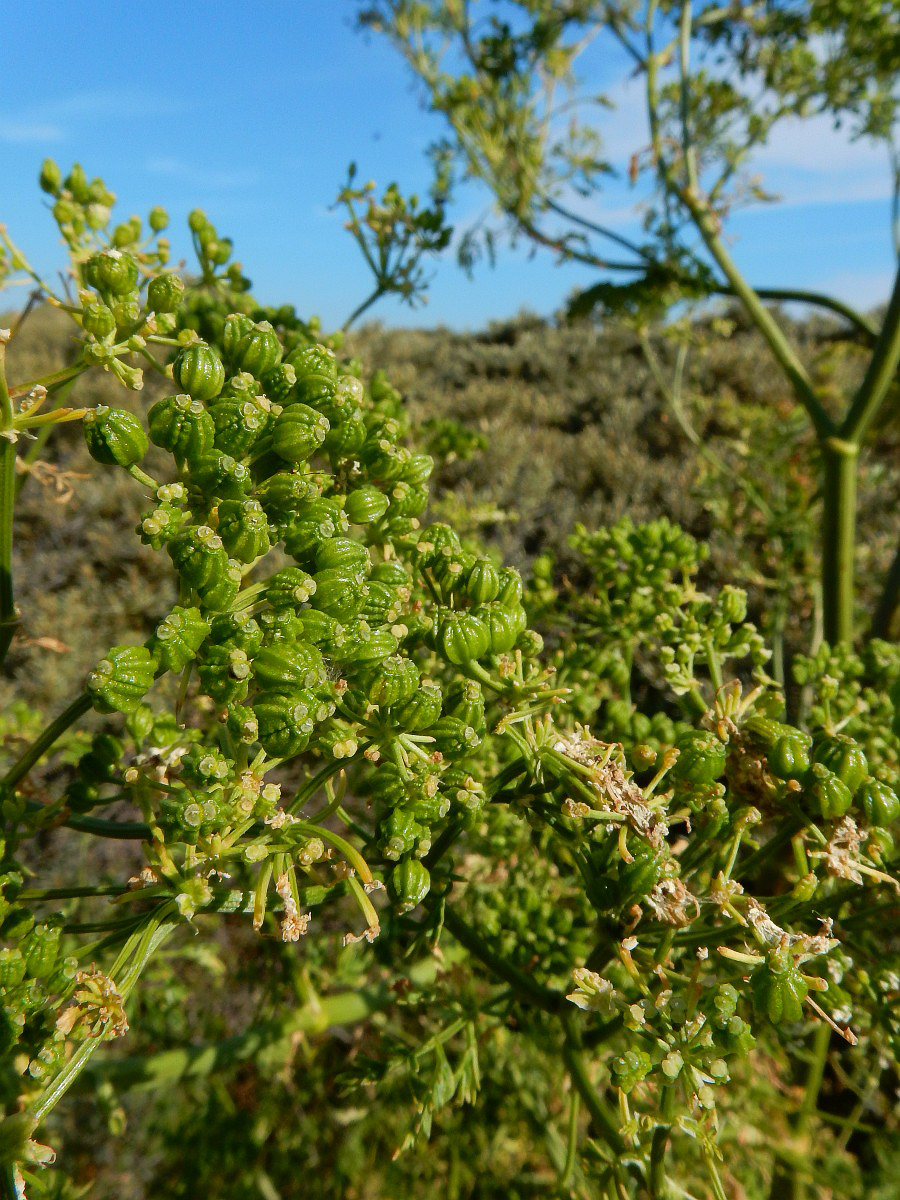
Hemlock
Scientific name: Conium maculatum L.
Family: Apiaceae
MORPHOLOGY
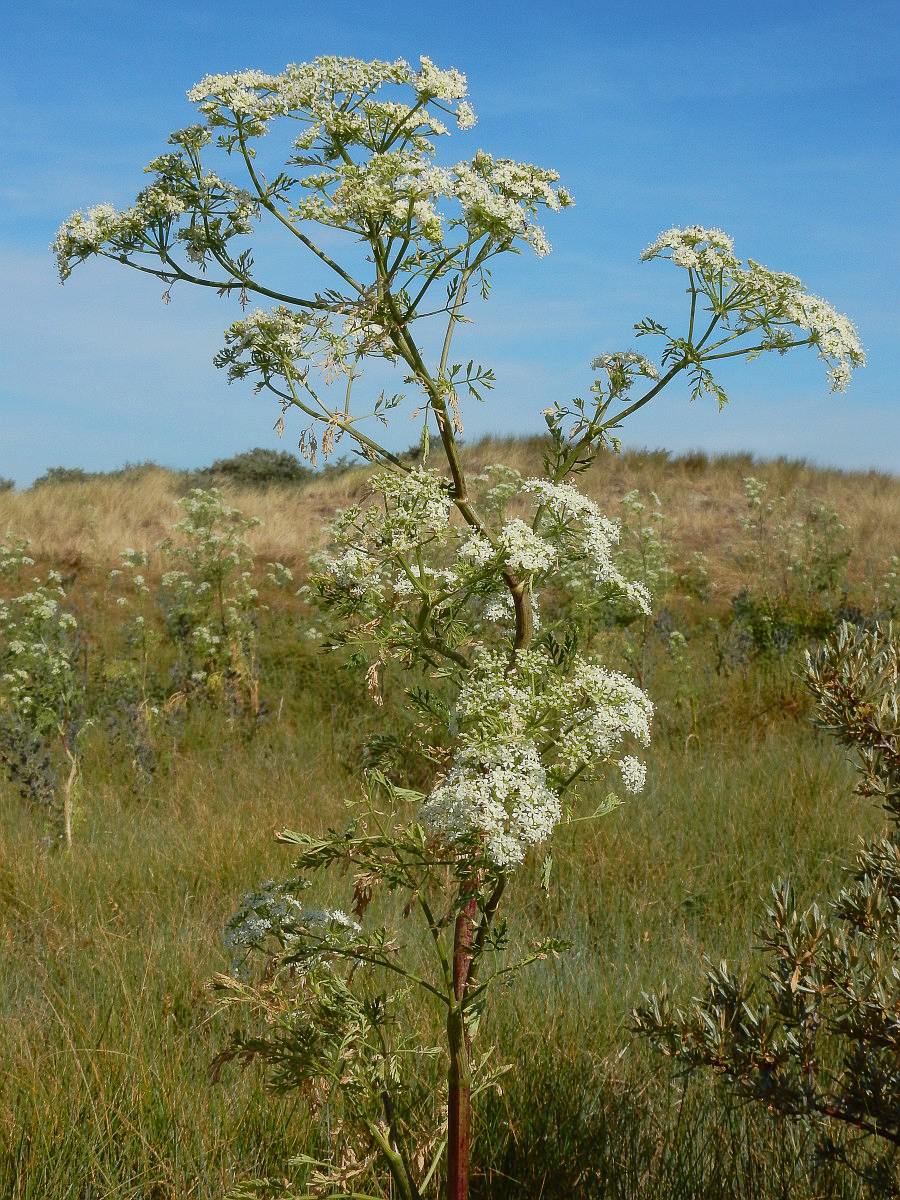
Habit and dimensions: A glabrous plant with a fetid odor, white horizontally striped roots, reaching heights from 50 to 200 cm.
Stems: Erect, hollow, pruinose stems, often spotted and reddened in the lower part, with numerous branches in the upper part.
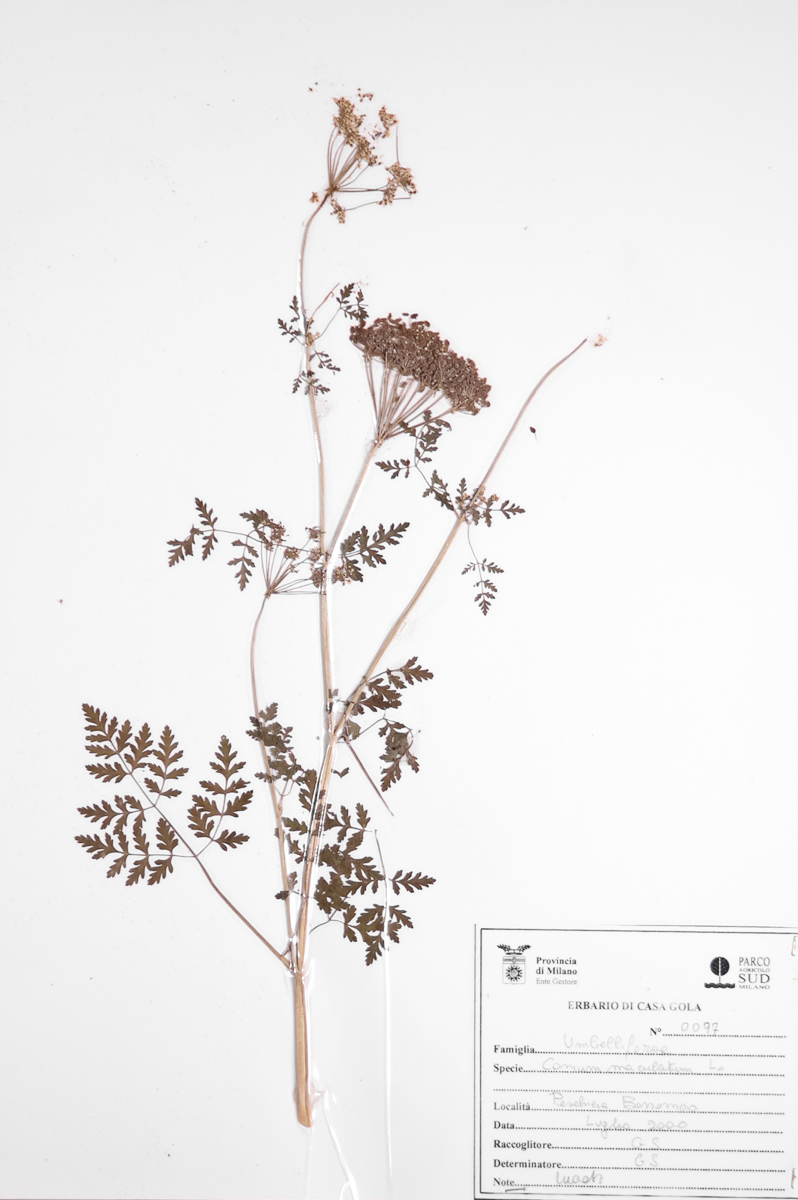
Leaves: Upper leaves glabrous, 3-4 pinnate with the terminal incisions pinnatifid, short petioles, light green color; basal leaves with broad sheathing petioles, presence of red-violet spots, the blade 2-3 x 1-2 dm.
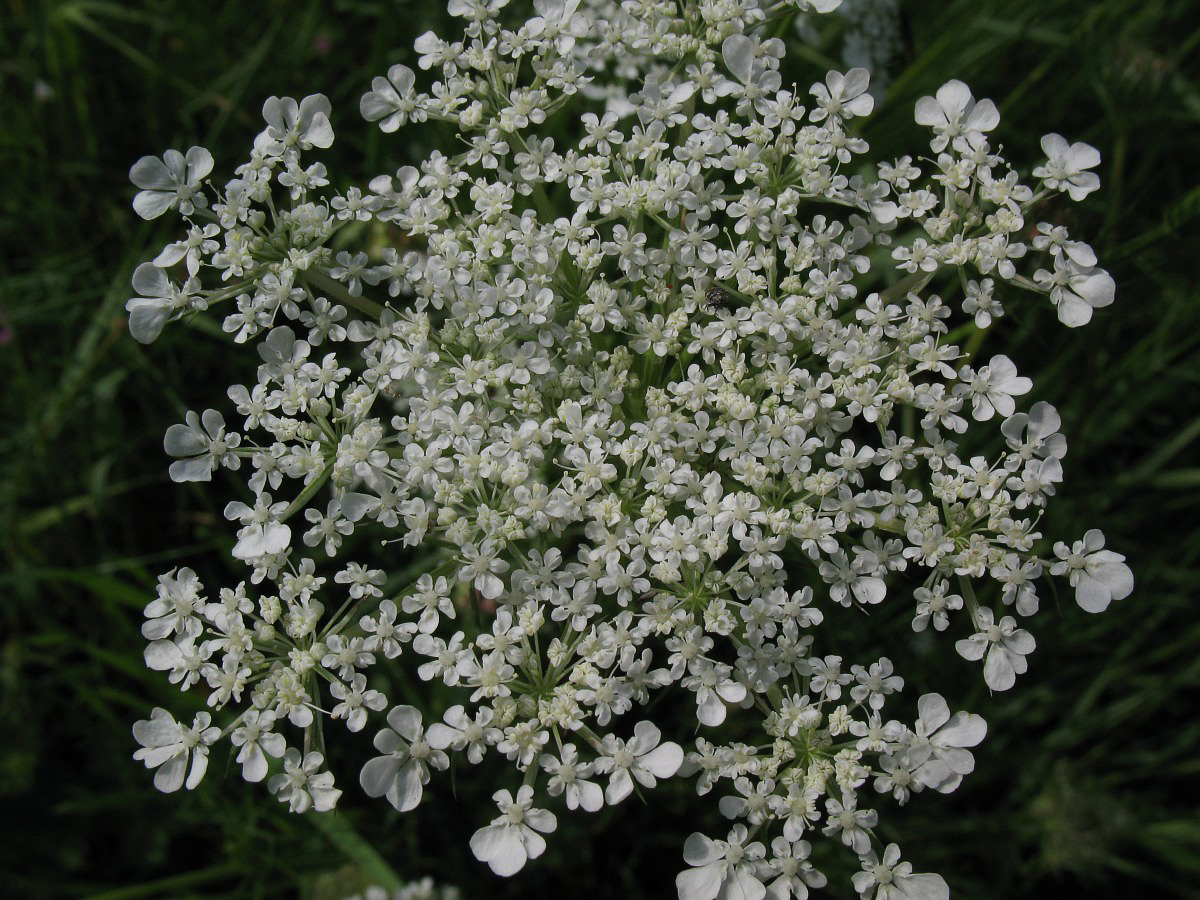
Flowers: Inflorescence with hermaphrodite flowers (with both male and female sexual organs) forming an umbel with (6)8-20 rays, scabrous, subequal, emerging from an involucre with several triangular bracts (0)5-6 and from an involucel with 3 bracteoles connate at the base, lanceolate, bordered whitish; calyx with subnull lobes and heart-shaped, inverted white petals. Blooms from May to September.
Fruits and seeds: Diachenia composed of ovoid, flattened seeds (2-3 mm) irregularly furrowed with prominent ribs.
DISTRIBUTION AND HABITAT
Present throughout Italy. Grows among rubble, hedges, farmyards, gardens, meadows, from sea level up to 1500 m.
USE
In medicine, it is called “herba conii”. In pharmacopeia, the leaves are used, harvested at the beginning of flowering and dried in the shade away from humidity. The seeds are collected in early autumn and stored in the dark in boxes. It is strongly discouraged in home medicine due to its high toxicity. Ingestion of a potion of this plant, complex and not dosed, causes paralysis of the neuromuscular system (a reaction similar to ingesting curare) and the spinal cord, leading to death from respiratory arrest. It is used in the form of poultices, plasters, and ointments as an antispasmodic, neuralgia sedative, calming sexual desire, and for some of its components as a breast cancer preventive. Before taking any plant-based product (medicinal or non-medicinal) for therapeutic or similar purposes, it is always advisable to consult with a doctor.
INTERESTING FACTS
Although it can be easily mistaken for parsley or chervil, nature has given it unmistakable signals such as the bad odor and the immediate burning sensation felt on the tongue upon chewing. Known since ancient times, the Greeks used the plant juice and seeds to prepare the potion for the condemned to death. The death of the great philosopher Socrates, which occurred in 399 B.C., is described in Plato’s work “Phaedo”, where Socrates recounts step by step all the symptoms that progressively led him to death. It is said that on the Greek island of Ceos, it was customary among the elderly, to avoid being a burden on their children, to organize lavish banquets using a hemlock beverage to carry out collective suicide. Shakespeare also introduces the plant in “Macbeth”, where it is used by the witches to prepare potions in the dark.
Photo: under the free license of Saxifraga and Ed Stikvoort, Rutger Barendse