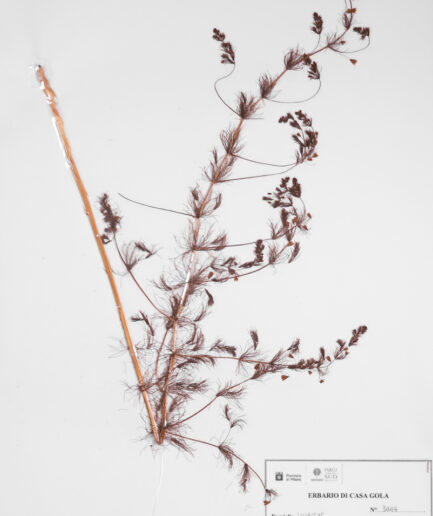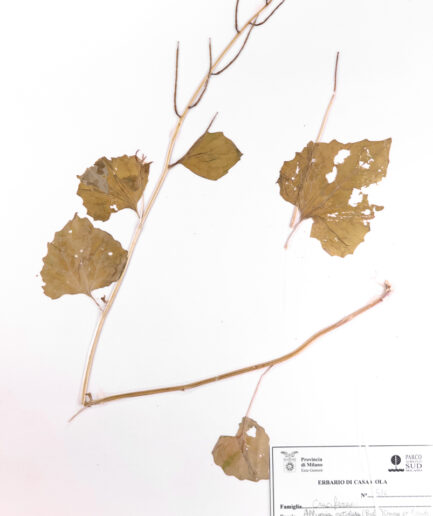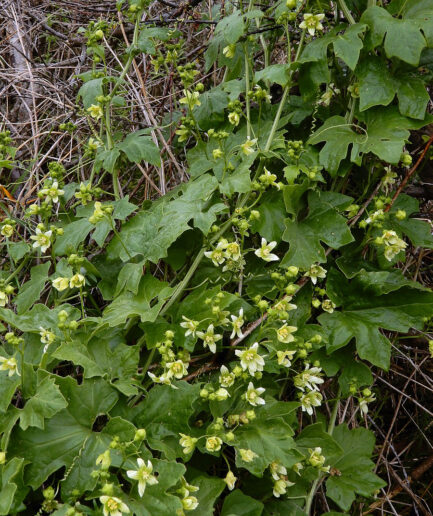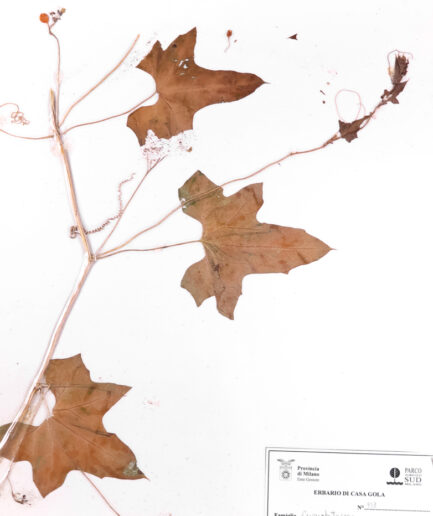



Rough Chervil
Scientific name: Chaerophyllum temulum L.
Family: Apiaceae
MORPHOLOGY
Habit and dimensions: An annual or biennial herb, ranging from 30(50) to 90(100) cm in height, with a slender, spindle-shaped root.
Stems: Erect, solid stems, striated, hairy, often purple-spotted at the base, and swollen at the internodes at the junction of the leaf petiole.
Leaves: Compound and velvety especially on the upper surface, dark green in color; the lower leaves (10-15 x 4.5-10 cm) are tripinnate-set, long-petiolate, with an ovate-triangular outline and shallow, oval-obtuse divisions of the last order; the upper leaves are smaller, sessile, less divided, with sheathing bases.
Flowers: Inflorescence in a compound umbel of 6-10(12) rays, lacking involucre and pendulous before anthesis; umbels with an involucel of 4-8 lanceolate bracteoles, ultimately reflexed, ciliate, and scarious at the margin. Calyx without teeth; petals white, occasionally pink or yellowish, with a bifid, glabrous limb, not ciliate at the margin. Blooms from April to July.
Fruits and seeds: The fruit is a diachene (schizocarp) of 4-6(8) x 0.9-1.7 mm, spindle-shaped, gradually tapered into the stylopodium, usually glabrous.
DISTRIBUTION AND HABITAT
Present throughout Italy. It grows in fallow lands, hedges, ruins, semi-shaded forest edges, from sea level up to 1200 m.
INTERESTING FACT
A toxic plant, ingestion of which causes a state of confusion equivalent to a severe intoxication.
Photo: under the free license of Saxifraga and Ed Stikvoort, Marijke Verhagen