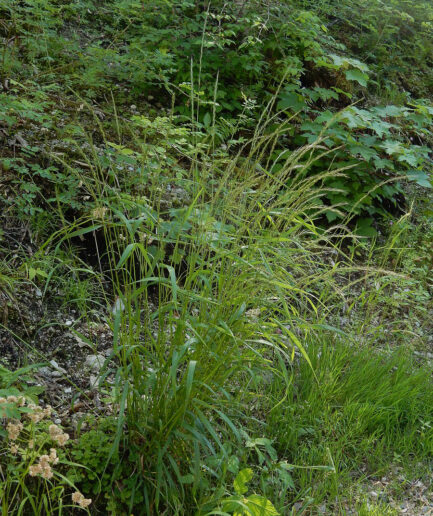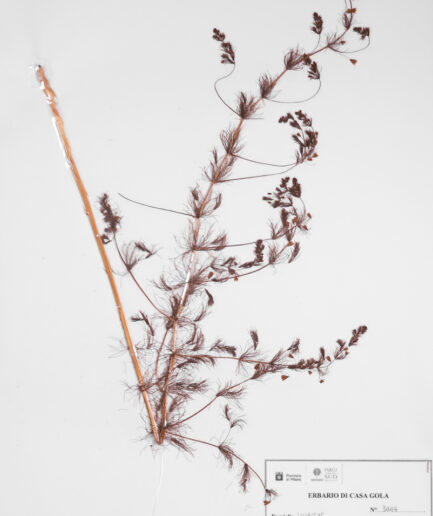



Wood avens
Scientific name: Geum urbanum L.
Family: Rosaceae
MORPHOLOGY
Habit and size: Herbaceous plant, covered with stiff hairs, with a short, hard, rough, and robust rhizome, surrounded by light brown rootlets, up to 100 cm tall.
Stem: Hairy, erect, dichotomous, and branched stem.
Leaves: The basal rosette consists of leaves with short petioles, irregularly pinnate with the terminal leaflet having an acute base, but all are oval and toothed. The cauline leaves, sessile, consist of three leaflets or a single leaf divided into three lobes.
Flowers: The terminal inflorescence is variably branched and consists of deciduous, fragrant, hermaphroditic flowers, up to 2 cm in size with 5 triangular sepals and 5 yellow-gold, pale-yellow petals. Blooms from April to July.
Fruits and seeds: The fruits are a mass of achenes covered with spreading hairs, dark red in color, each terminating with a curved spine, similar to a hook.
DISTRIBUTION AND HABITAT
Present throughout Italy in deciduous forests, shrubs, abandoned lands, walls, and generally in cool and shady places, from 0 to 1,600 m.
USE
Stimulates appetite and digestion and is used in case of loss of appetite and intestinal atony. Its astringent power comes from its tannin content, recommending its use in case of diarrhea, intestinal catarrh, and digestive tract inflammations. Externally, it is used for mouthwash and gargles for mouth inflammations, toothaches, and bad breath. It is also attributed with febrifugal, cardiotonic, and antineuralgic properties. Before taking any plant-based product (medicine or non-medicine) for therapeutic or similar purposes, it is always advisable to consult your doctor. The tender leaves collected in spring are consumed mixed with other herbs, in salads, or boiled for other preparations. The dried root, due to its characteristic odor, is also used instead of cloves to flavor broths and stews, as well as beer, wine, and liqueurs. Considering its strong astringent properties, moderate consumption of this plant is recommended, as in high doses it can cause stomach and intestinal disturbances.
Photo: under free license from Saxifraga and Ed Stikvoort, Marijke Verhagen, Jan van der Straaten, Rutger Barendse