

Carice rigonfia

Nome scientifico: Carex rostrata Stokes

Famiglia: Cyperaceae 


MORFOLOGIA


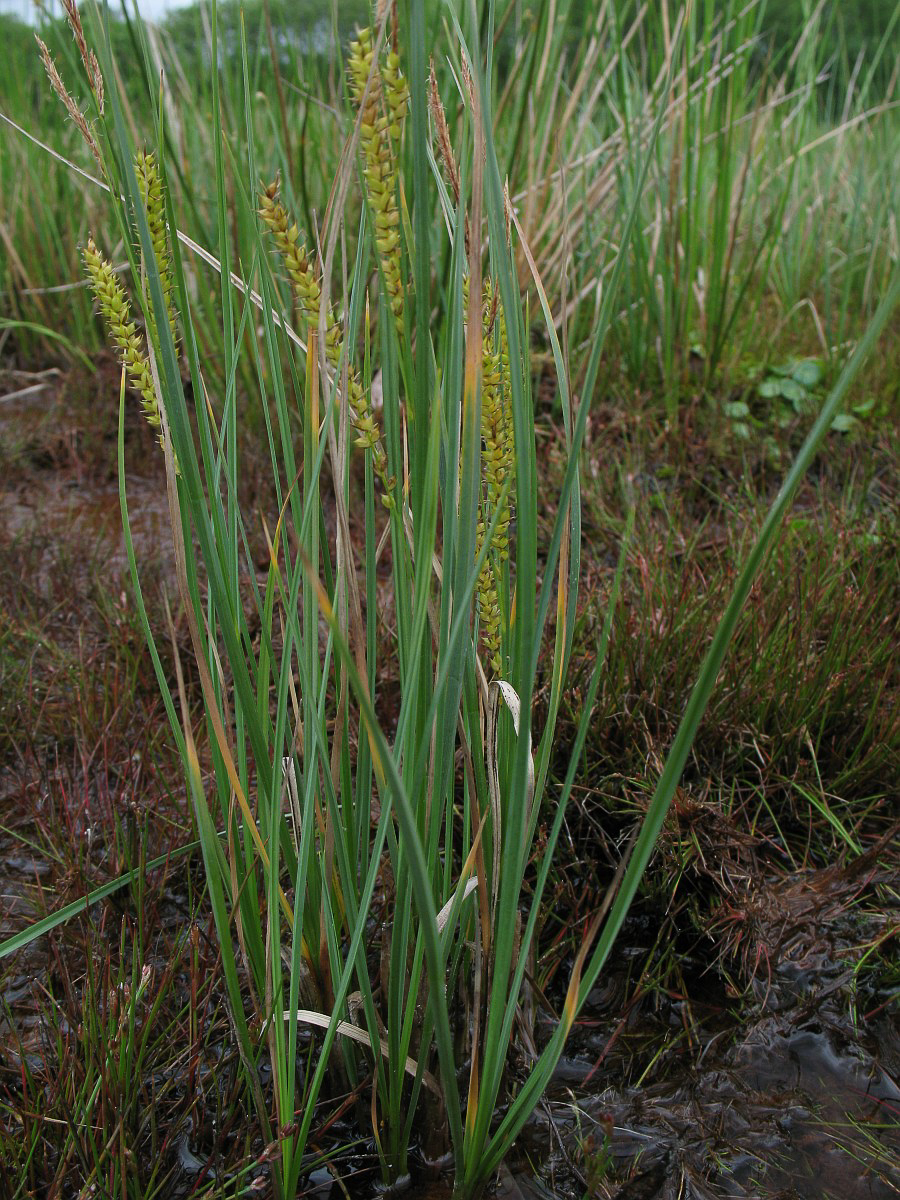
Portamento e dimensioni: pianta erbacea perenne alta 30-80 cm; rizoma molto robusto con internodi piuttosto lunghi.


Fusto: fusto liscio, raramente un po scabro verso l’alto, ottusamemte trigono o cilindrico. Guaine basali squamiformi, intere poi fibrose, di colore bruno scuro spesso macchiate di rosso.


Foglie: foglie rigide, glauche, larghe 2-7 mm, più o meno canalicolate, scabre ai margini, più lunghe del fusto.


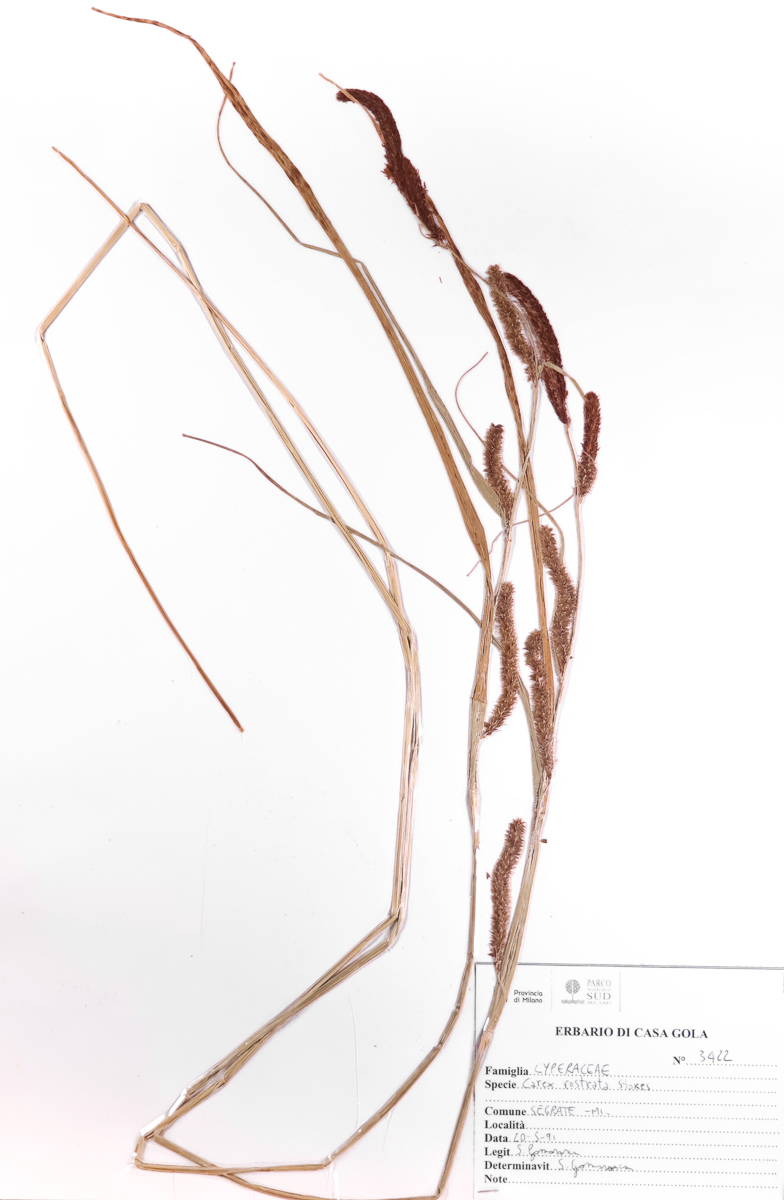
Fiori: infiorescenza  allungata, di colore verde chiaro, lunga (10) 20-25 cm, composta da 2-4 spighe maschili e (2) 3-5 spighe femminili. Spighe maschili lunghe 2-7 cm, da lineari a strettamente fusiformi; glume 5-6 mm, brune, strettamente oblunghe, con margine scarioso stretto, apice ottuso o subacuto.

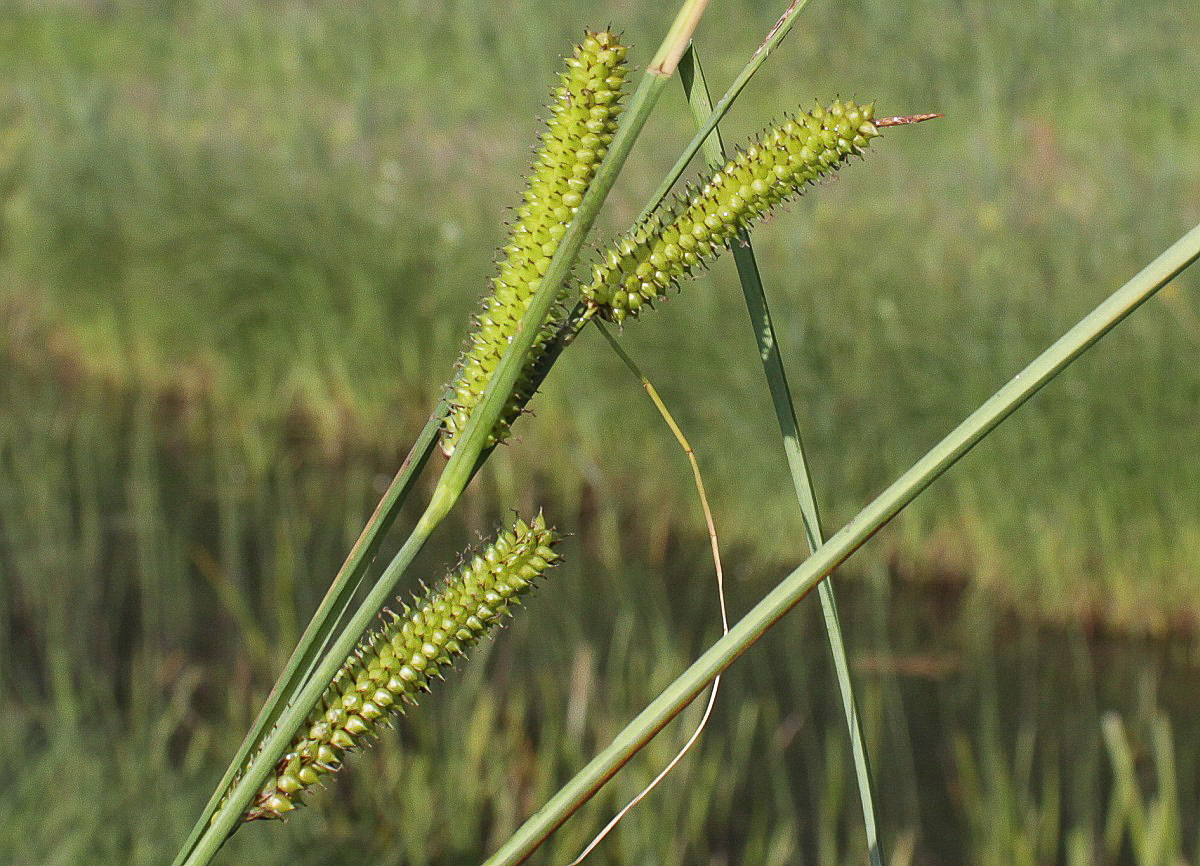
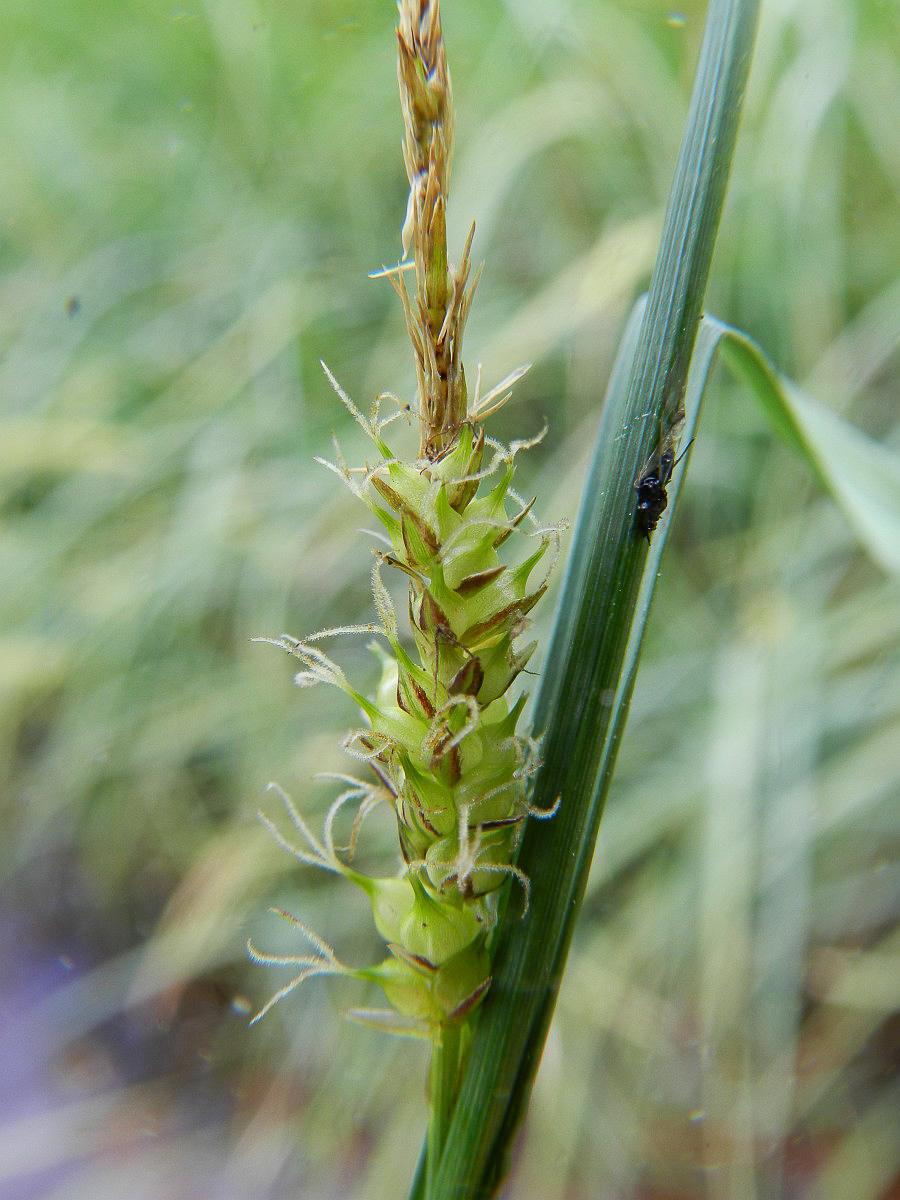
Spighe femminili lunghe 3-8 cm, larghe 6-8 (10) mm, generalmente cilindriche, spaziate, densiflore, quella superiore spesso androgina con fiori maschili all’apice, spighe superiori erette, quelle inferiori pendule, sessili; glume 3-5,5 mm, lanceolate o oblunghe, con apice acuto, molto più brevi dell’otricello, bruno-rossastre, quelle della zona mediana quasi sempre con margine scarioso. Fiorisce tra aprile e luglio.


Frutti e semi: i frutti sono pseudanteci (otricelli) di 4-5 x 2-2,5 a forma di fiasco con becco allungato di 1,1-1,3 mm, bifido, glabri, di colore verde pallido, con nervi evidenti.

Acheni di 1,3-1,7 x 1-1,2 mm, obovati, trigoni, bruni.


DISTRIBUZIONE E HABITAT


Presente in buona parte dell’Italia con l’esclusione delle isole maggiori, di Campania, Puglia, Basilicata, Umbria e Marche. Comune in ambienti acquatici, lungo le rive e sponde di canali, corsi d’acqua, fossi e paludi. Si trova tra  0 e 2.200 m.


Foto: su licenza gratuita di Saxifraga e Rutger Barendse, Peter Meininger

Famiglia

Cyperaceae

Specie

Carex rostrata Stokes

Tipologia

Pianta erbacea

Habitat

Boschi e boscaglie, Rive, Zone umide

Swollen Sedge


Scientific Name: Carex rostrata Stokes 

Family: Cyperaceae


MORPHOLOGY


Habit and Dimensions: Herbaceous perennial plant, 30-80 cm tall; rhizome very robust with rather long internodes.


Stem: Smooth stem, rarely somewhat rough towards the top, obtusely triangular or cylindrical. Basal sheaths squamiform, entire then fibrous, dark brown often spotted with red.


Leaves: Stiff, glaucous leaves, 2-7 mm wide, more or less channelled, rough at the margins, longer than the stem.


Flowers: Elongated inflorescence, light green, (10) 20-25 cm long, composed of 2-4 male spikes and (2) 3-5 female spikes. Male spikes 2-7 cm long, from linear to narrowly fusiform; glume 5-6 mm, brown, narrowly oblong, with narrow scarious margin, obtuse or subacute apex. Female spikes 3-8 cm long, 6-8 (10) mm wide, generally cylindrical, spaced, densely flowered, the upper one often androgynous with male flowers at the apex, upper spikes erect, lower ones pendulous, sessile; glume 3-5.5 mm, lanceolate or oblong, with acute apex, much shorter than the utricle, reddish-brown, those of the middle zone almost always with scarious margin. Blooms between April and July.


Fruits and Seeds: The fruits are utricles (pseudanthecia) 4-5 x 2-2.5 flask-shaped with elongated beak of 1.1-1.3 mm, bifid, glabrous, pale green, with prominent veins. Achenes 1.3-1.7 x 1-1.2 mm, obovate, trigonous, brown.


DISTRIBUTION AND HABITAT


Present in much of Italy excluding the major islands, Campania, Puglia, Basilicata, Umbria, and Marche. Common in aquatic environments, along the banks and shores of canals, watercourses, ditches, and marshes. Found between 0 and 2,200 m.


Photo: Under the free license of Saxifraga and Rutger Barendse, Peter Meininger.

Famiglia

Cyperaceae

Specie

Carex rostrata Stokes

Tipologia

Pianta erbacea

Habitat

Boschi e boscaglie, Rive, Zone umide