

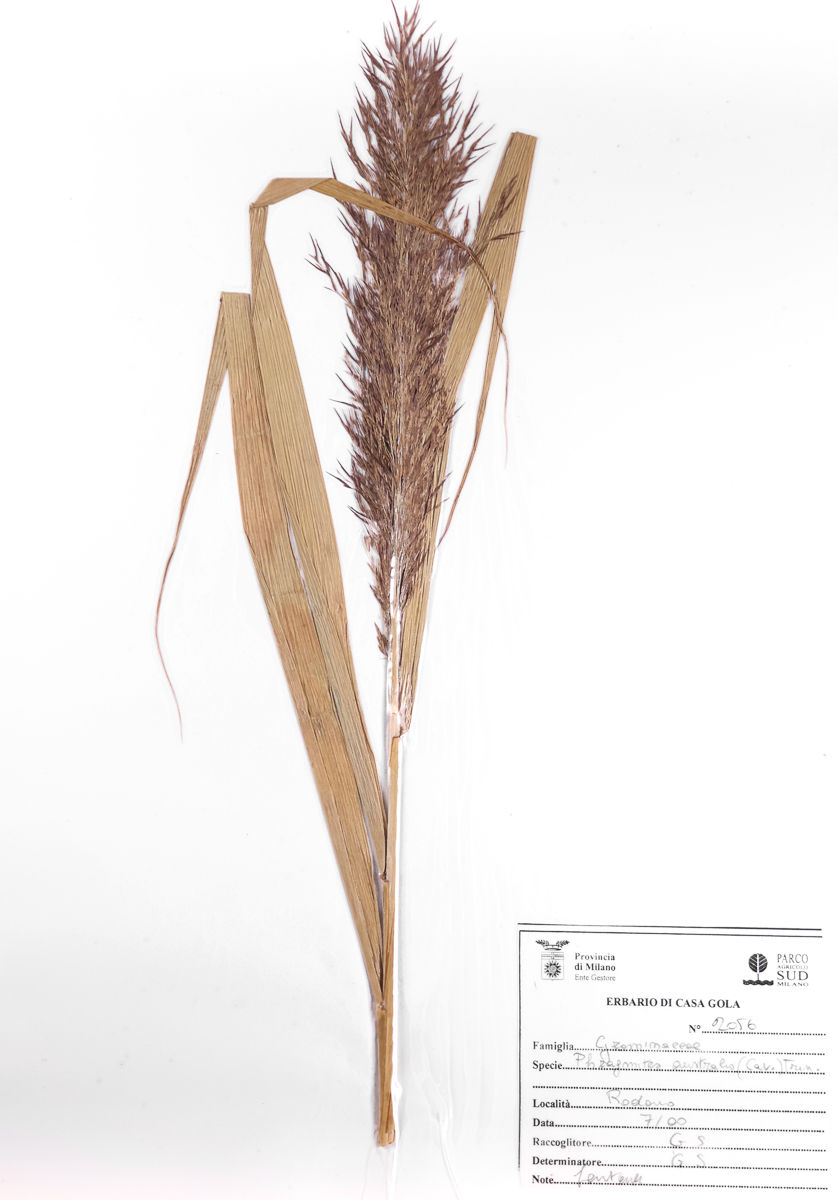

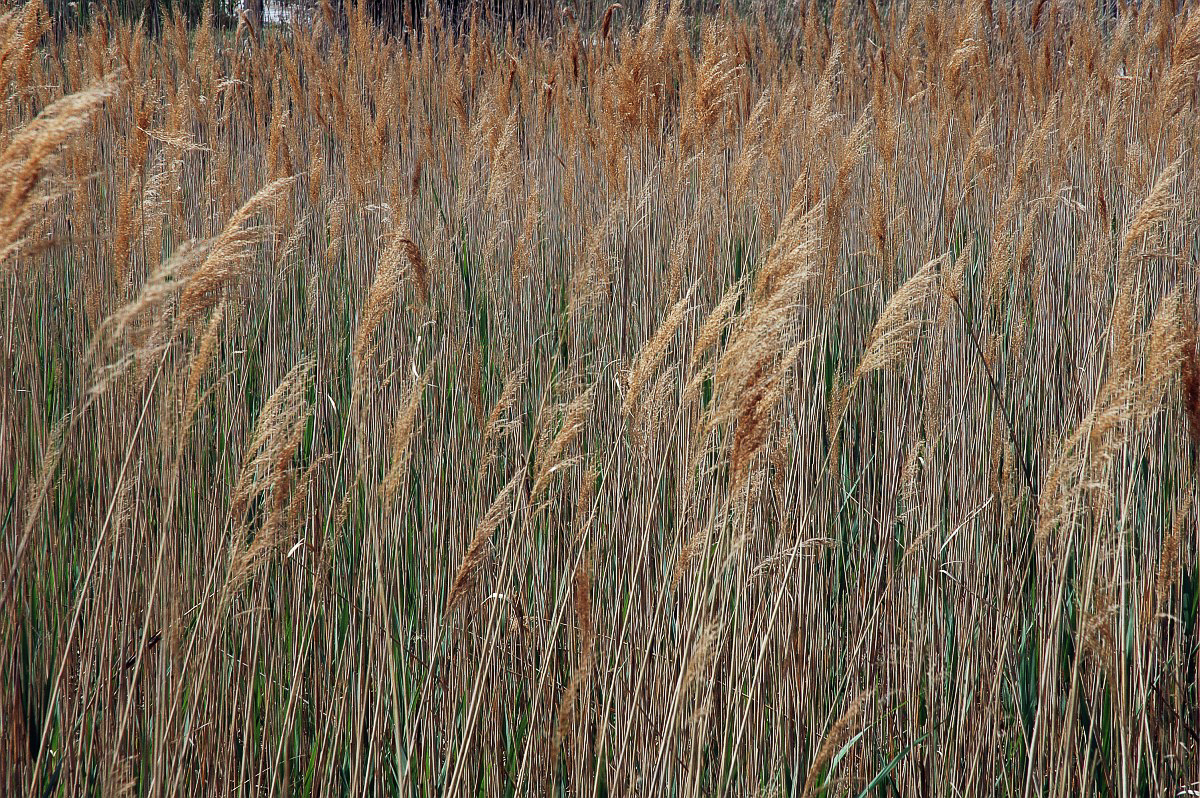

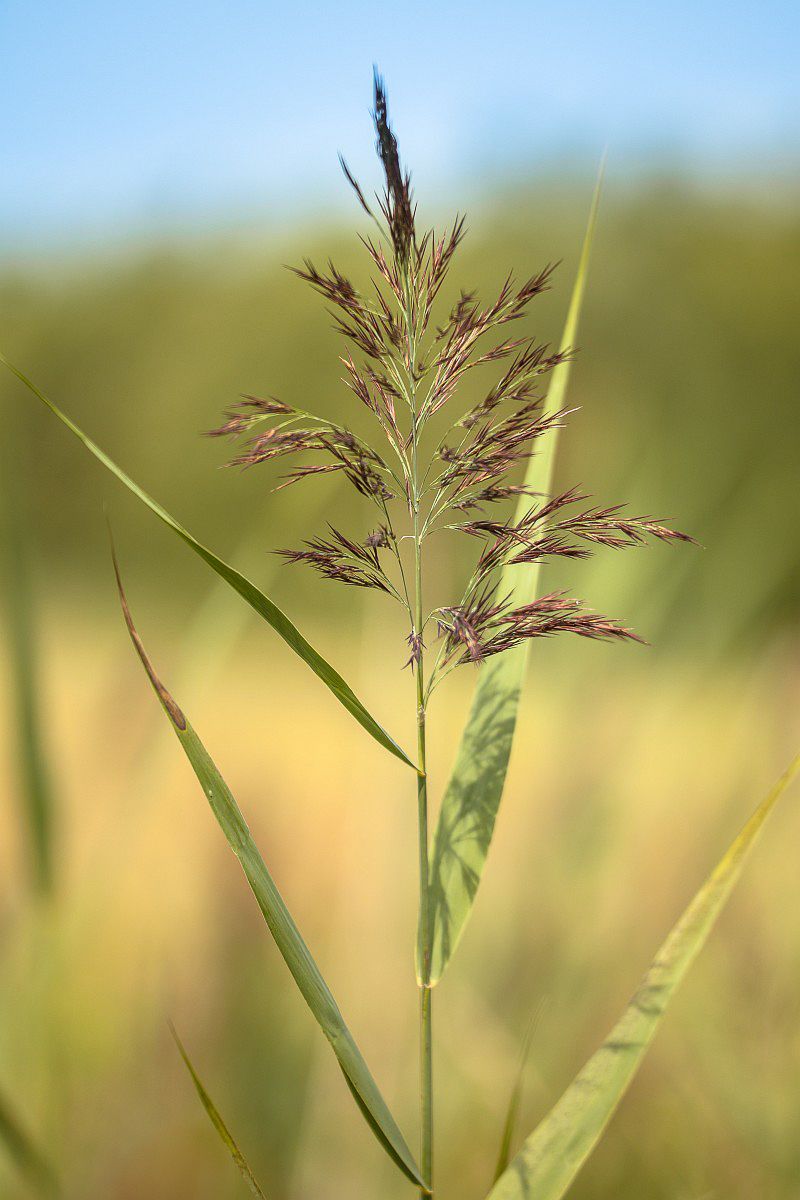
Common Reed
Scientific Name: Phragmites australis (Cav.) Trin. ex Steud.
Family: Poaceae
MORPHOLOGY
Habit and dimensions: perennial herbaceous plant, equipped with a large underground horizontal
rhizome generally with elongated stolons up to 6-10 m, sometimes epigeal and rooting at the nodes. It can grow up to 3 m tall.
Stem: erect stems, smooth, cylindrical, and fragile, 1(2) cm in diameter, hollow at the internodes and leafy up to the inflorescence, not persistent during winter.
Leaves: lanceolate-linear leaves, up to 2-3 cm wide, grayish-green in color, cartilaginous in texture, often spinescent at the apex, and with rough and sharp margins due to the presence of small downward-pointing prickles. They are often arranged perpendicularly at the apex of the stem.
Flowers: the inflorescence is gathered in a rich, wide panicle, brownish-violet in color, generally unilateral, 10-40 cm long, inclined during maturation. Spikelets are 3-9 flowered, 6-10(17) mm long. Blooms from May to October.
Fruits and seeds: The fruit is a small caryopsis with an adherent pericarp.
DISTRIBUTION AND HABITAT
Present throughout Italy in marshes, lake shores, riverbanks, ponds, ditches, shallow waters, and slightly brackish environments, from 0 to 1.200 (max 2.000) m.
USE
The rhizome contains bitter substances, small amounts of alkaloids, potassium salts, and resins. It has sudorific and diuretic properties and is used to treat fever, influenza, colds, bronchitis, and to reduce edema. In China, the rhizome and roots are recommended for treating nausea, urinary problems, and arthritis. Before taking any plant-based product (medicinal or non-medicinal) for therapeutic or similar purposes, it is always advisable to consult your doctor. Native Americans used the reddish-brown thin seeds to make flour, boiled young shoots as vegetables, ground roots into flour, and drank the sweet sap. Young shoots are often consumed both raw and cooked. Furthermore, the hard and rigid stems that persist throughout winter and the wide and leathery leaves provide ideal material for making thatched roofs, mats, screens, baskets, paper, and even pipes. The panicles are often used to make brooms. Plants growing near brackish waters seem to produce better and more resistant stems. The plant also has an important ecological role in the treatment of polluted water as it absorbs all types of impurities from the water.
INTERESTING FACTS
It provides shelters and nesting places for many species of birds.
Photo: freely licensed by Saxifraga and Mark Zekhuis, Jan van der Straaten, Rutger Barendse