

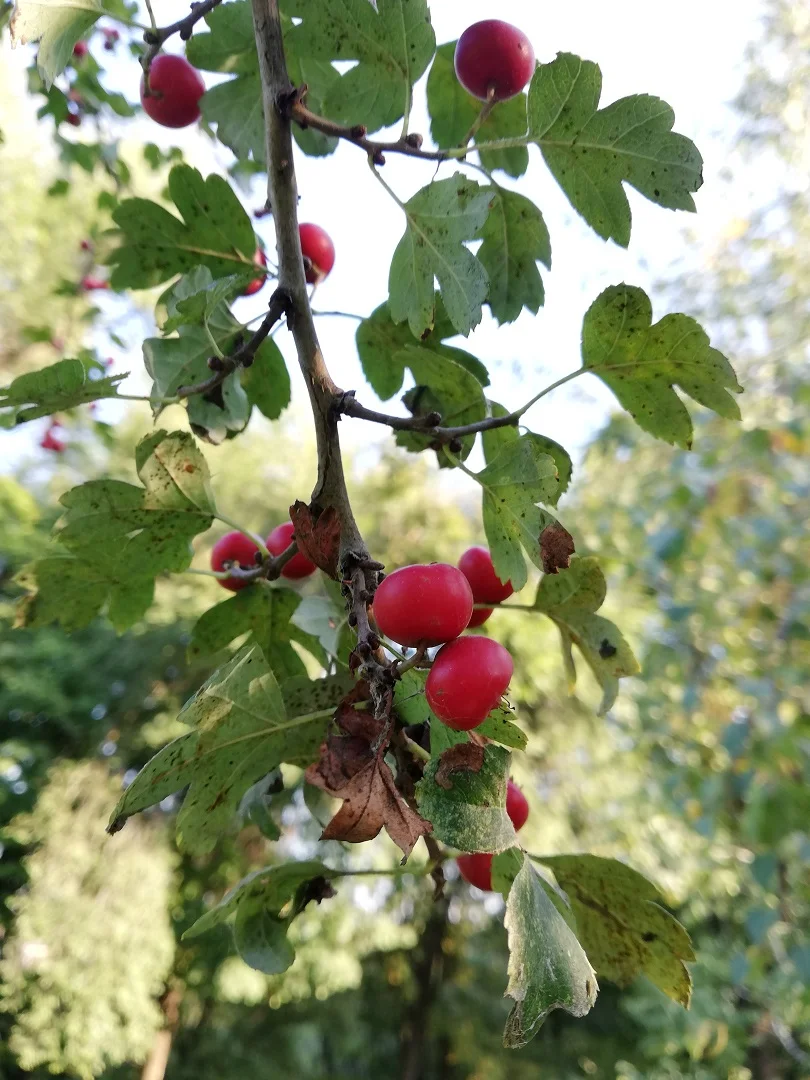
Hawthorn
Scientific name: Crataegus monogyna Jacq
Family name: Rosaceae
MORPHOLOGY
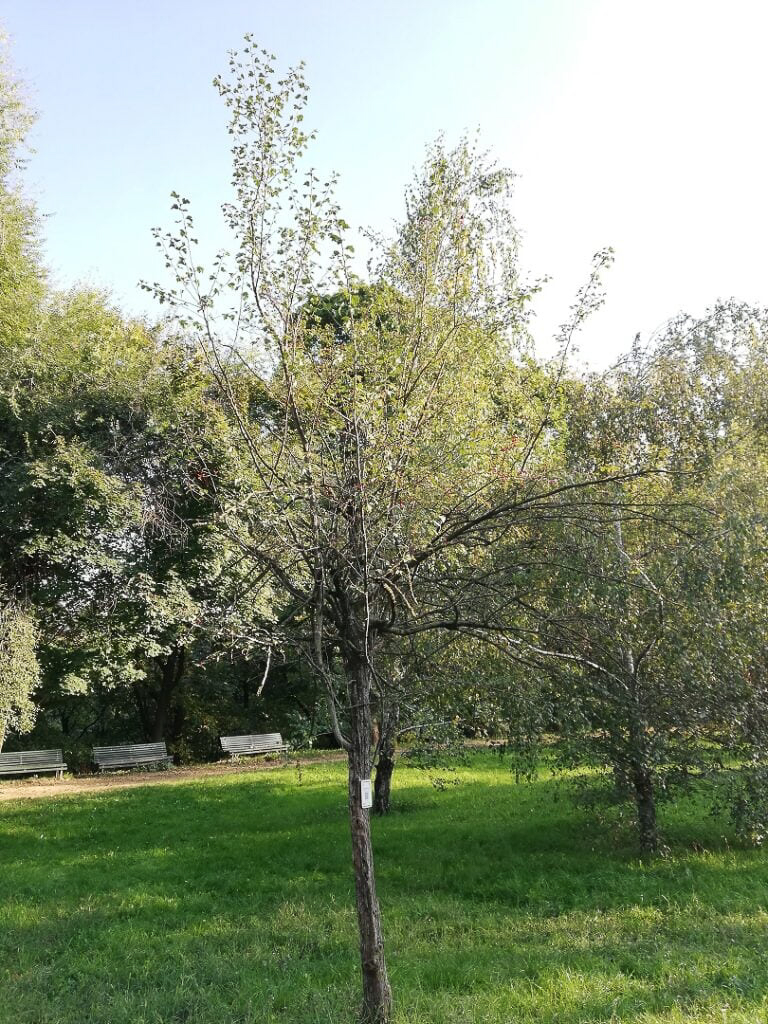
Habit and dimensions: deciduous shrub or small tree typically reaching an average height of 2 to 3 meters. It grows very slowly and is long-lived, reaching up to 500 years. It has a globular or elongated crown and a branched, spiny trunk. The thorns are sharp, dark, and up to 2 centimeters long, borne on lateral twigs.
Bark: light gray and smooth in young specimens. It tends to flake into plates in adult specimens, becoming brownish.
Leaves: small, simple, alternate, and leathery. They are rhomboid or oval-shaped with serrated margins. They are divided into 5 deep lobes, and are bright green in color.
Flowers: white or pink and highly fragrant, arranged in erect corymbs. They have deciduous bracts and appear between March and May.
Fruits and seeds: hawthorn fruits are small, red, fleshy drupes at maturity, clustered densely. Each contains a single yellow-brown seed and is highly appreciated by birds and small mammals.
DISTRIBUTION AND HABITAT
Native to the northern hemisphere, present in all regions of the Italian peninsula up to 1500 meters altitude. It is found mainly in forests, scrublands, fallows, and shrublands. It is indifferent to soil type but does not tolerate waterlogging.
USE
Hawthorn is cultivated for ornamental purposes due to its abundant and colorful flowering. The wood, being dense and heavy, is not used in carpentry but is valued as fuel. The therapeutic use of the species has been documented since ancient times, particularly for combating various circulatory disorders by improving blood flow and reducing cholesterol levels. It is also used in cosmetics for its astringent action on oily skin and in cuisine to produce fermented beverages and mildly astringent jams.
Attention: Before taking any plant-based product (medicinal or non-medicinal) for therapeutic or similar purposes, it is always advisable to consult a doctor.
INTERESTING FACTS
The genus name derives from the Greek “kratos” (= strength) referring to the robustness of the plant and wood. The specific epithet, monogyna, indicates that the flower bears only one pistil as the female reproductive organ.
Photo: Kindly provided by Valentina Gussoni