
Aglio selvatico

Nome scientifico: Allium oleraceum L.

Famiglia: Liliaceae


MORFOLOGIA

Portamento e dimensioni: pianta perenne, alta 20-90 cm. Bulbo ovoide con tuniche membranose.

Fusto: fusto robusto, cilindrico, avvolto dalle guaine fino a metà.

Foglie: foglie fistolose, lineari, canalicolate, larghe 3-5 mm, di sotto generalmente scabre.

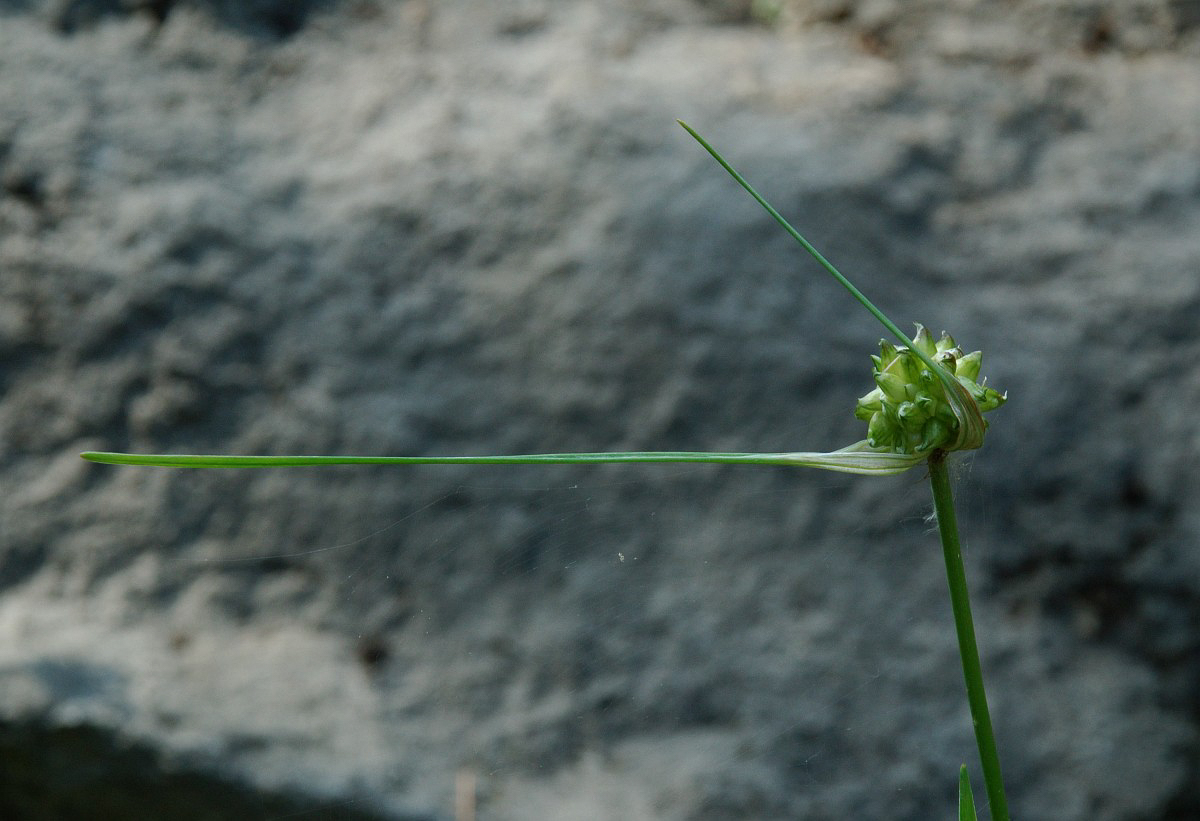
Fiori:  infiorescenza con pochi fiori e numerosi bulbilli allungati ed acuti. Peduncoli 1-3 cm, più o meno arrossati, curvati e spesso pendenti. Spata bivalve, persistente, con valve diseguali, la più lunga delle quali superante l’infiorescenza. Tepali rosei, verdastri o brunastri di 5-7 mm, ottusi o quasi bilobi, stami con filamenti diseguali, i più lunghi eguaglianti i tepali. Fiorisce da maggio a settembre.

Frutti e semi: follicoli di mezzo cm contenenti tre semi


DISTRIBUZIONE E HABITAT


Cresce in tutta Italia tranne che in Sardegna, Campania, Calabria e Puglia, dal livello del mare fino a 1.800 m. Preferisce terreni incolti aridi, pendii soleggiati, vigne, greti.

UTILIZZO


Foglie, fiori e bulbi vengono utilizzati nella cucina popolare come aromatizzante. L’intera pianta, ed in particolare il suo succo, viene usata come repellente. Nonostante manchino riferimenti specifici all’utilizzo medicinale di questa specie, bisogna tener presente che normalmente gli appartenenti al genere “Allium” contengono principi attivi da sempre utilizzati nella medicina popolare. Prima di assumere qualsiasi prodotto di origine vegetale (medicinale o non medicinale) a fini terapeutici o simili, è sempre consigliabile consultare preventivamente il medico.


Foto: su licenza gratuita di Saxifraga e Ed Stikvoort, Peter Meininger, Willem van Kruijsbergen, Rutger Barendse

Famiglia

Liliaceae

Specie

Allium oleraceum L.

Tipologia

Pianta erbacea

Habitat

Aree antropizzate, Incolti

Wild Garlic

Scientific Name: Allium oleraceum L.

Family: Liliaceae

MORPHOLOGY

Growth habit and size: Perennial plant, 20-90 cm tall; ovoid bulb with membranous tunics.

Stem: Robust, cylindrical stem, wrapped in sheaths up to the half.

Leaves: Hollow, linear, channelled leaves, 3-5 mm wide, generally rough underneath.

Flowers: Inflorescence with few flowers and numerous elongated and acute bulbils. Peduncles 1-3 cm, reddish, curved and often pendulous. Persistent bivalve spathe, with unequal valves, the longest of which exceeds the inflorescence. Rosy, greenish, or brownish tepals, 5-7 mm, obtuse or nearly bilobed, stamens with unequal filaments, the longest equaling the tepals. It blooms from May to September.

Fruits and seeds: Follicles about half a cm containing three seeds.

DISTRIBUTION AND HABITAT

It grows throughout Italy except in Sardinia, Campania, Calabria, and Puglia, from sea level to 1,800 m. It prefers dry uncultivated soils, sunny slopes, vineyards, and riverbanks.

USE

Leaves, flowers, and bulbs are used in popular cuisine as a seasoning. The entire plant, and especially its juice, is used as a repellent. Although there are no specific references to the medicinal use of this species, it should be noted that members of the genus “Allium” normally contain active principles long used in folk medicine. Before taking any plant-based product (medicinal or non-medicinal) for therapeutic or similar purposes, it is always advisable to consult a doctor.

Photo: Provided under a free license by Saxifraga and Ed Stikvoort, Peter Meininger, Willem van Kruijsbergen, Rutger Barendse
Famiglia

Liliaceae

Specie

Allium oleraceum L.

Tipologia

Pianta erbacea

Habitat

Aree antropizzate, Incolti