
Field maple
Scientific name: Acer campestre L.
Family name: Sapindaceae
MORPHOLOGY
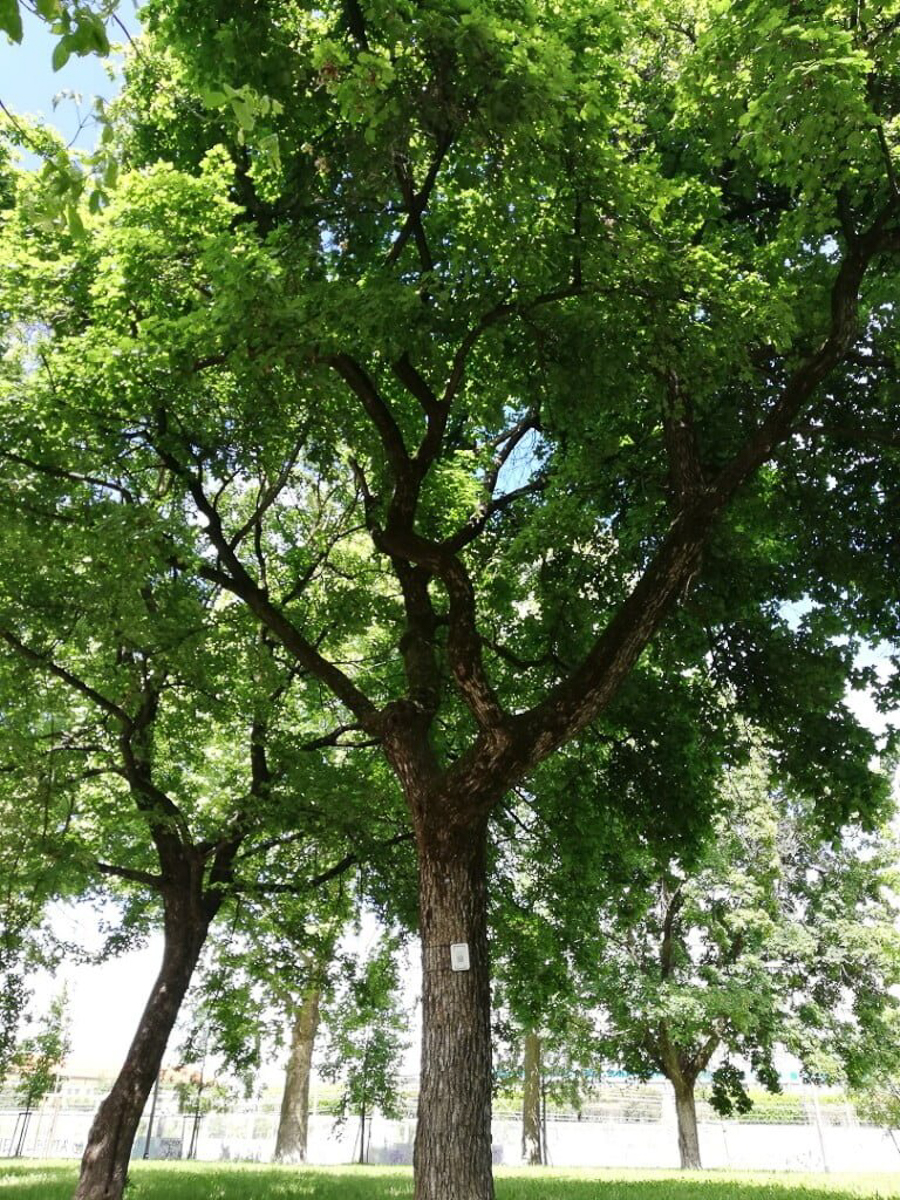
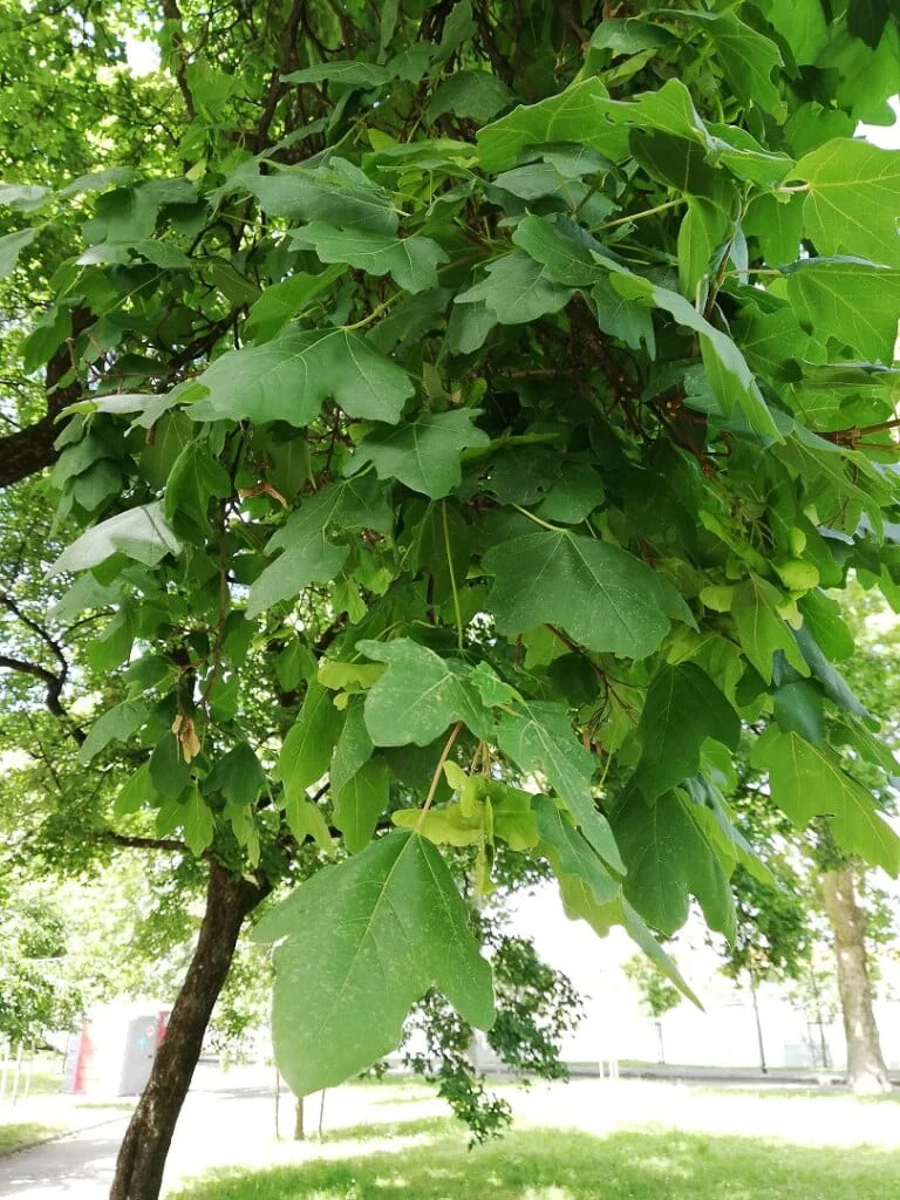
Habit and dimensions: deciduous tree of small to medium size, reaching up to 20 m, with sinuous trunk and fairly dense canopy. It has slow growth and is relatively short-lived, reaching a maximum of 150 years.
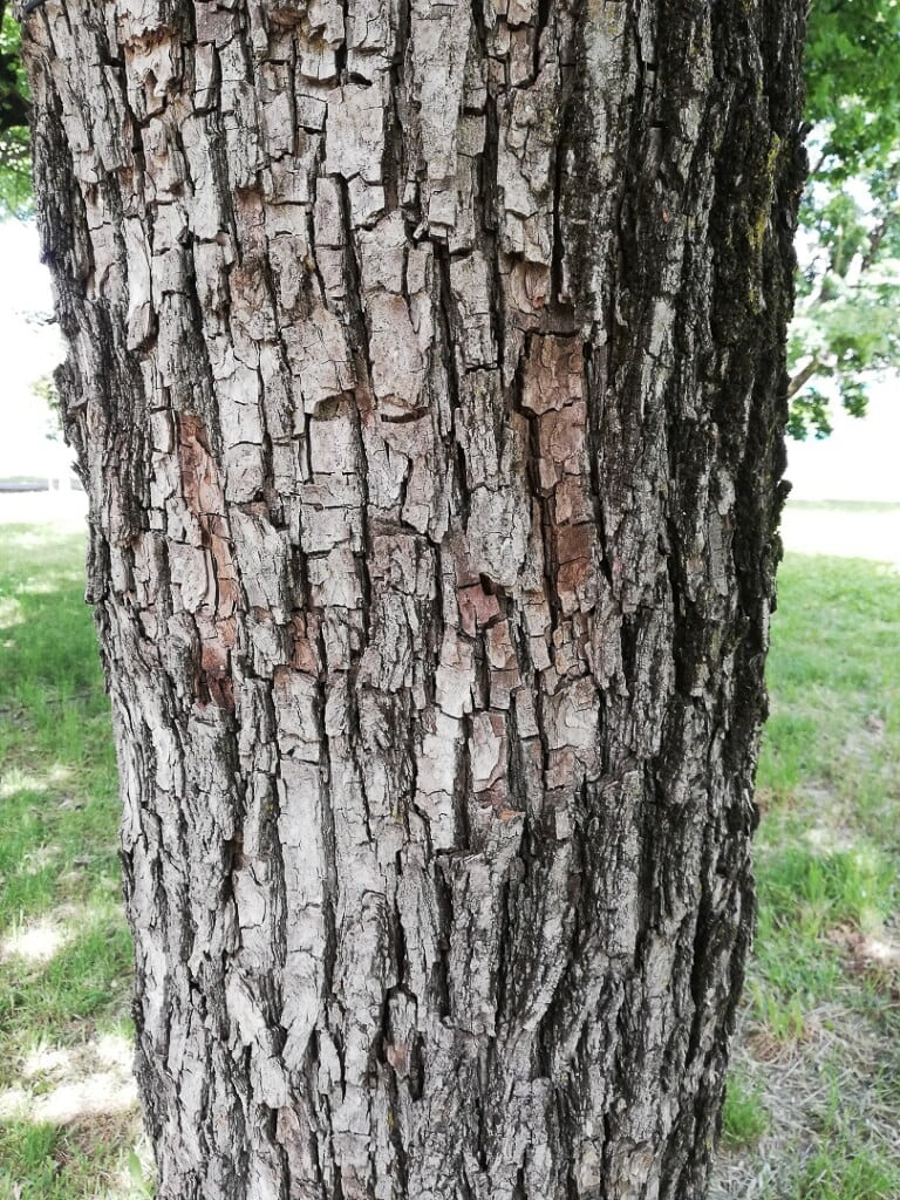
Bark: yellowish in young specimens, turning brownish-gray with age.
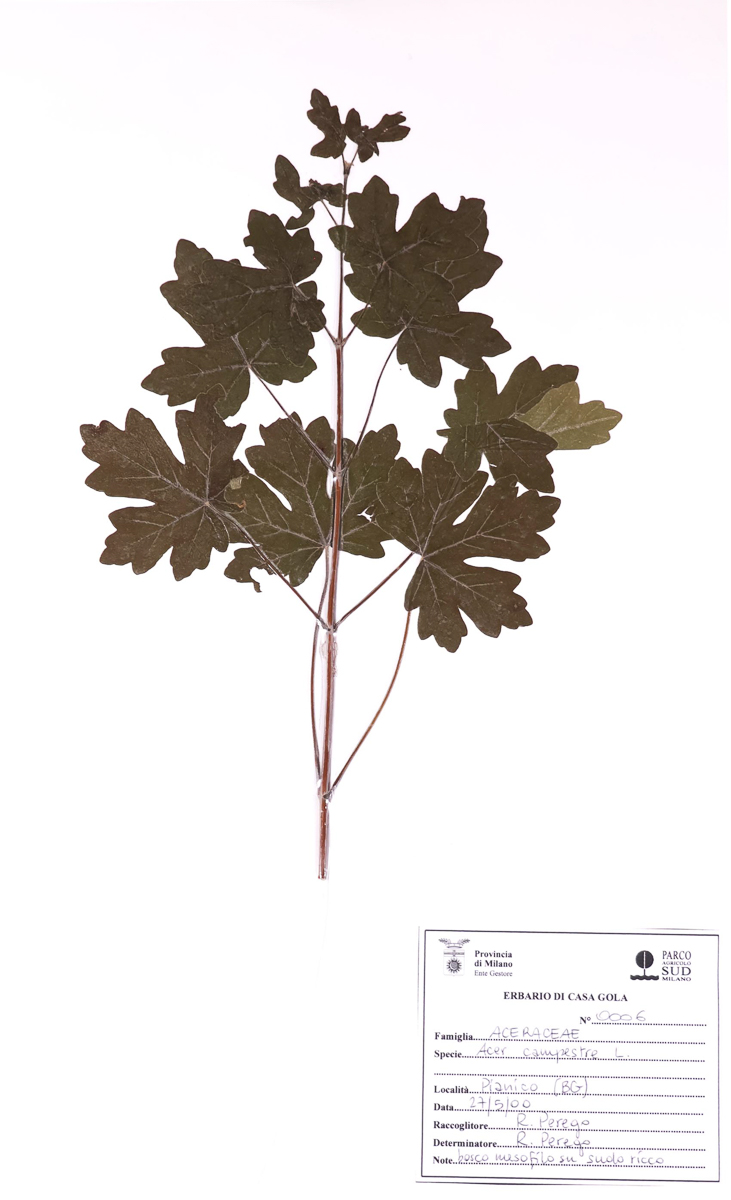
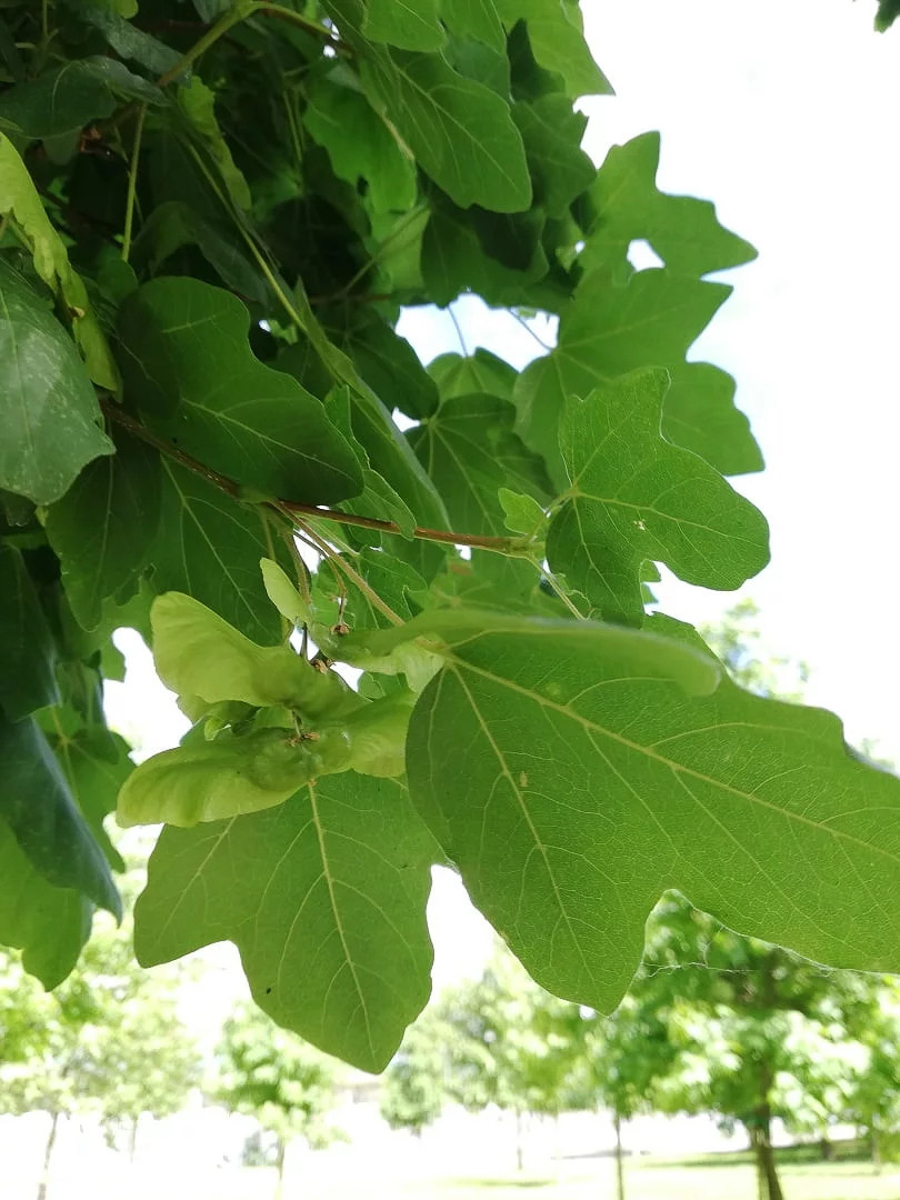
Leaves: opposite, small, with 5 lobes. Dark green on the upper surface, lighter on the lower surface. In autumn, on cold nights, they take on a particular golden-yellow color with reddish hues.
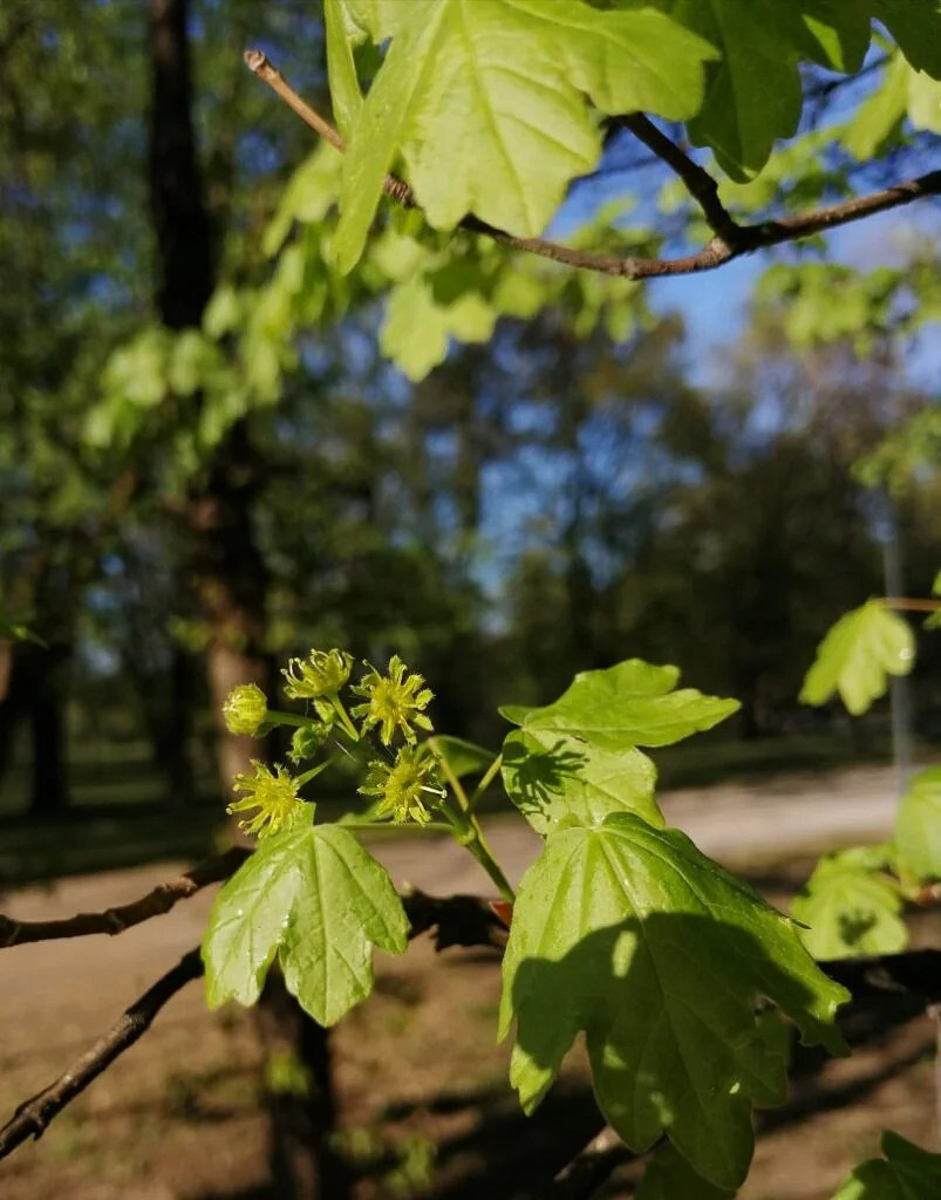
Flowers: clustered in terminal corymbs, appearing simultaneously with the leaves in April-May; the sepals are slightly shorter than the petals, both greenish-yellow.
Fruits and seeds: paired winged seeds ripen in September-October. Reddish in color, with wings spread so widely they are almost aligned, a feature unique to this species. The seeds have a long dormancy period and require 3-6 months for germination.
DISTRIBUTION AND HABITAT
Native to central Europe and the Caucasus, widespread throughout Europe in plains and forests up to 1,000 m. Often found associated with oak and beech, as well as black poplar and white willow. Requires intense sunlight and prefers soils fairly rich in nutrients.
USE
Field maple wood is prone to deformations, so it’s not commonly used for furniture but rather for finishes, small objects, toys, handles, gunstocks. It’s also a good fuel. The plant is very melliferous, and its leaves make excellent fodder for livestock.
It possesses mild anticoagulant properties, helps in the prevention of stones, and the bark decoction is also used as an intestinal refresher and against skin erythema. Before taking any plant-derived product (drug or non-drug) for therapeutic or therapeutic-like purposes, it is always a good idea to consult your doctor in advance.
INTERESTING FACTS
The paired winged seeds, with their wide wings, may resemble miniature helicopters when they fall.
The name “campestre” literally means “of the fields”; the species tends to grow spontaneously especially in rural areas.
The 2016 APG IV classification does not recognize the family Aceraceae as a valid grouping and assigns the species included in it, including American maple, to the family Sapindaceae.
Photo: Kindly provided by Valentina Gussoni