
Garofanina annuale

Nome scientifico: Petrorhagia prolifera (L.) P.W.Ball & Heywood

Famiglia: Caryophyllaceae 


MORFOLOGIA 


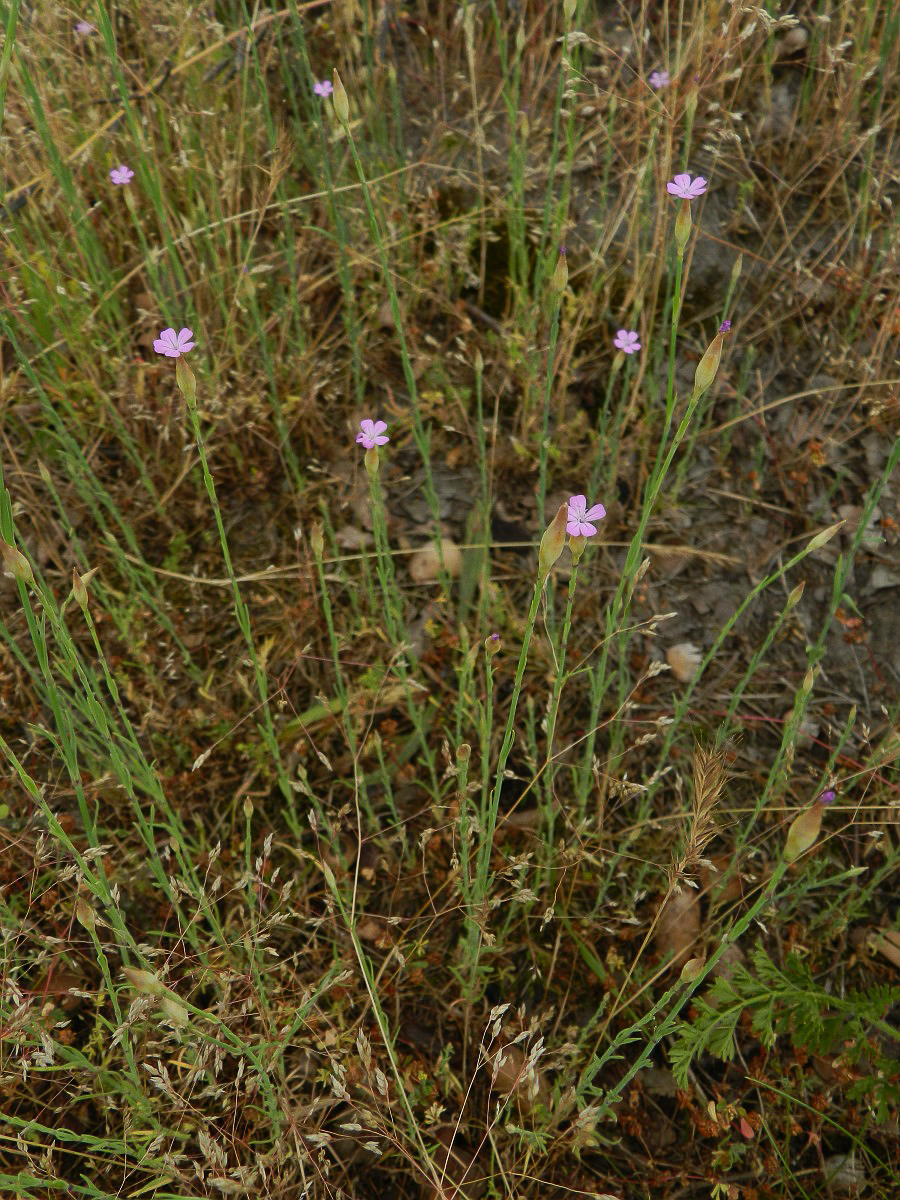
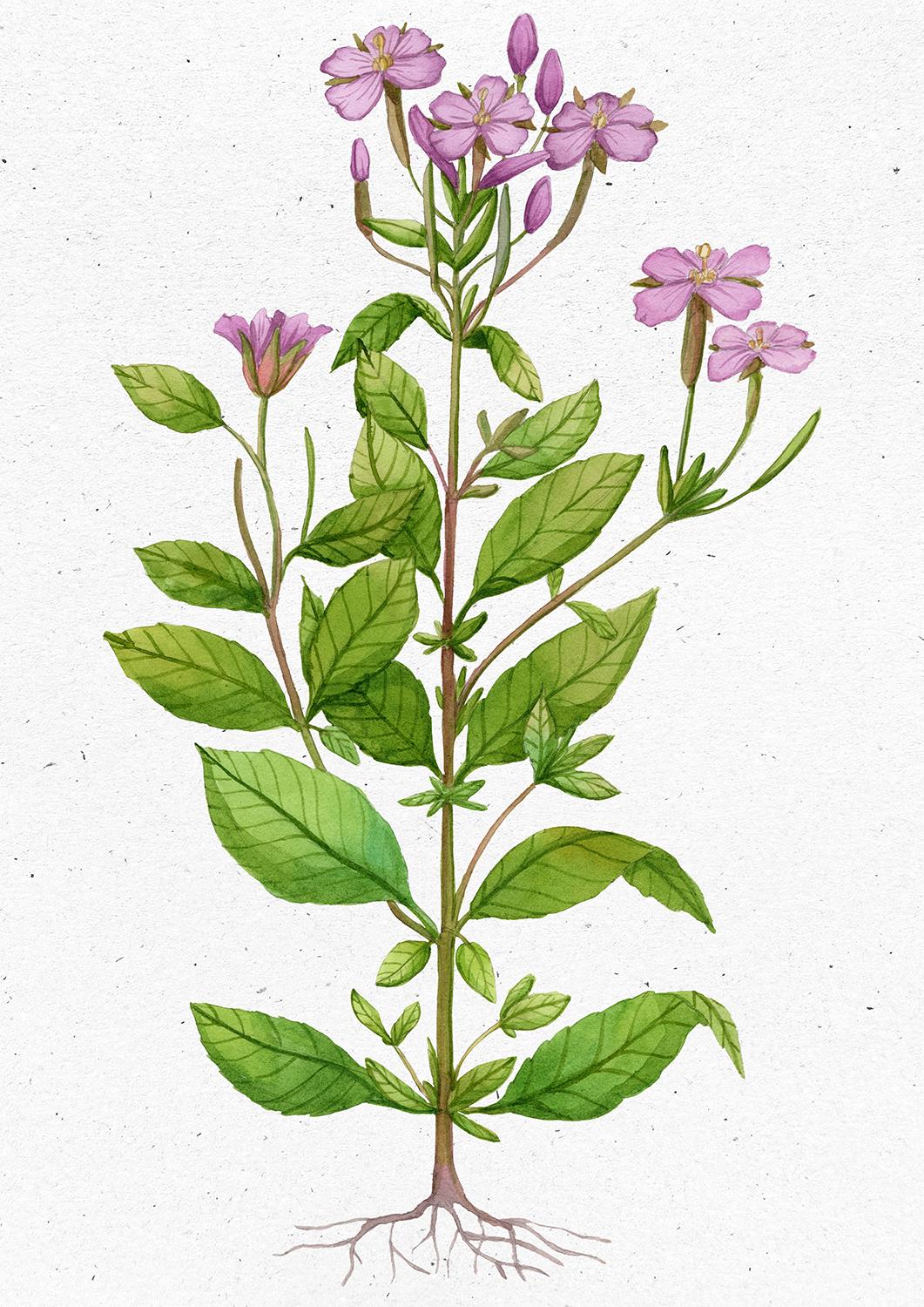
Portamento e dimensioni: pianta erbacea annuale, alta 10-20(50) cm.


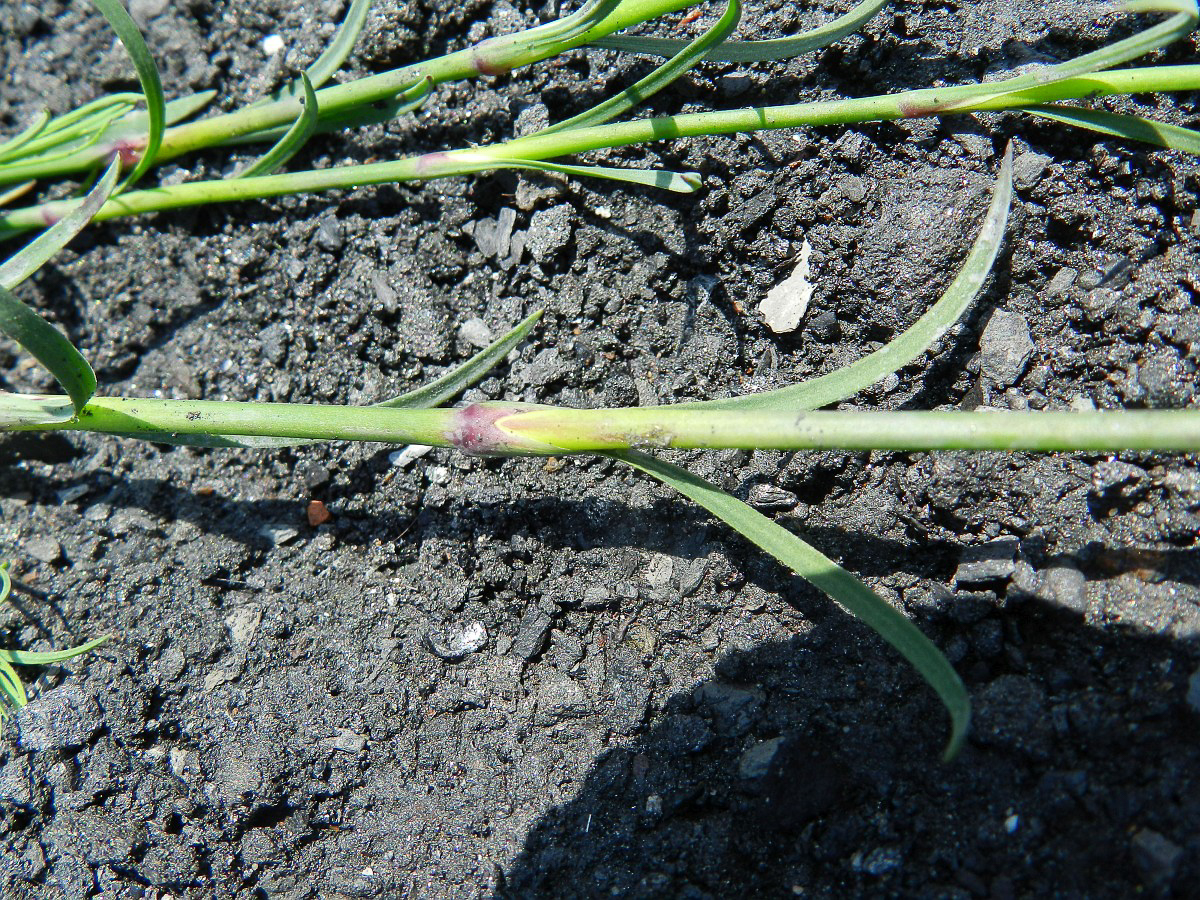
Fusto:  fusti eretti, semplici o ramificati alla base, generalmente glabri agli internodi mediani.


Foglie: foglie opposte, senza stipole, lineari, di 1(2) x 30(45) mm, cigliato-scabre al margine; le guaine con la parte basale a saldatura breve, meno di 3 mm, amplessicaule, circa tanto lunga che larga.


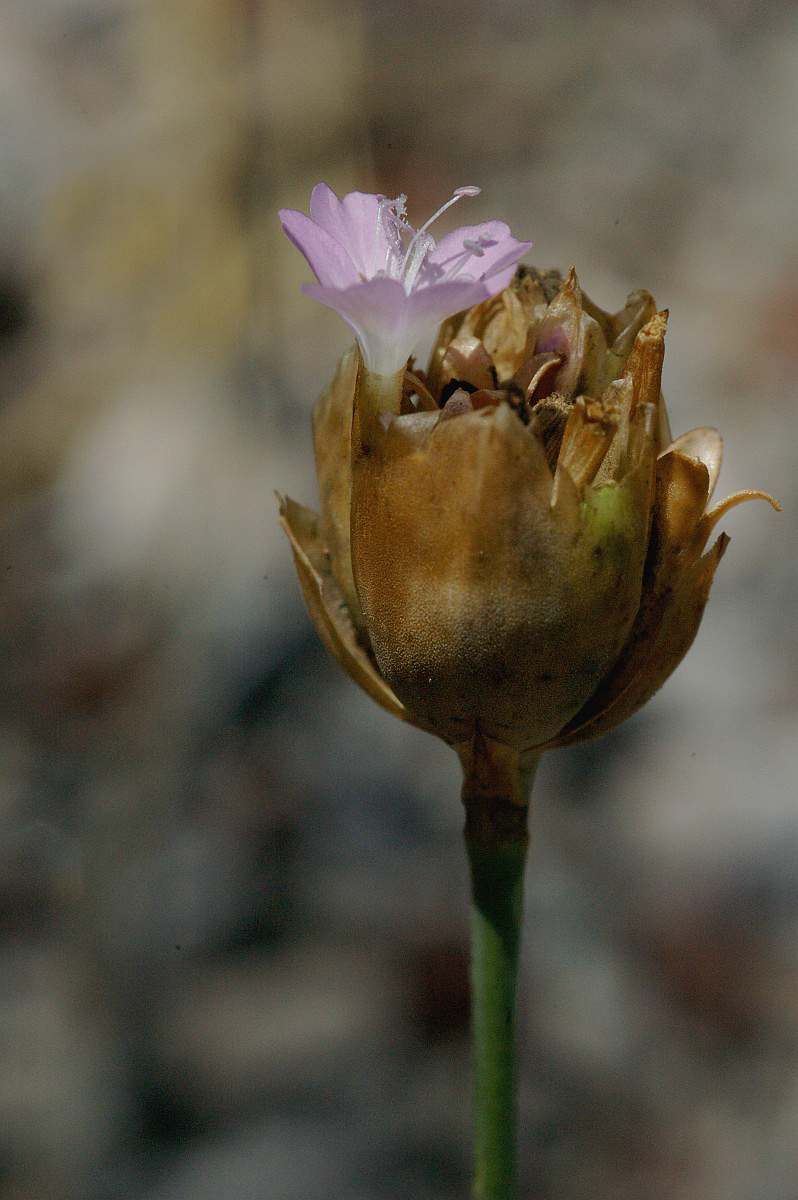
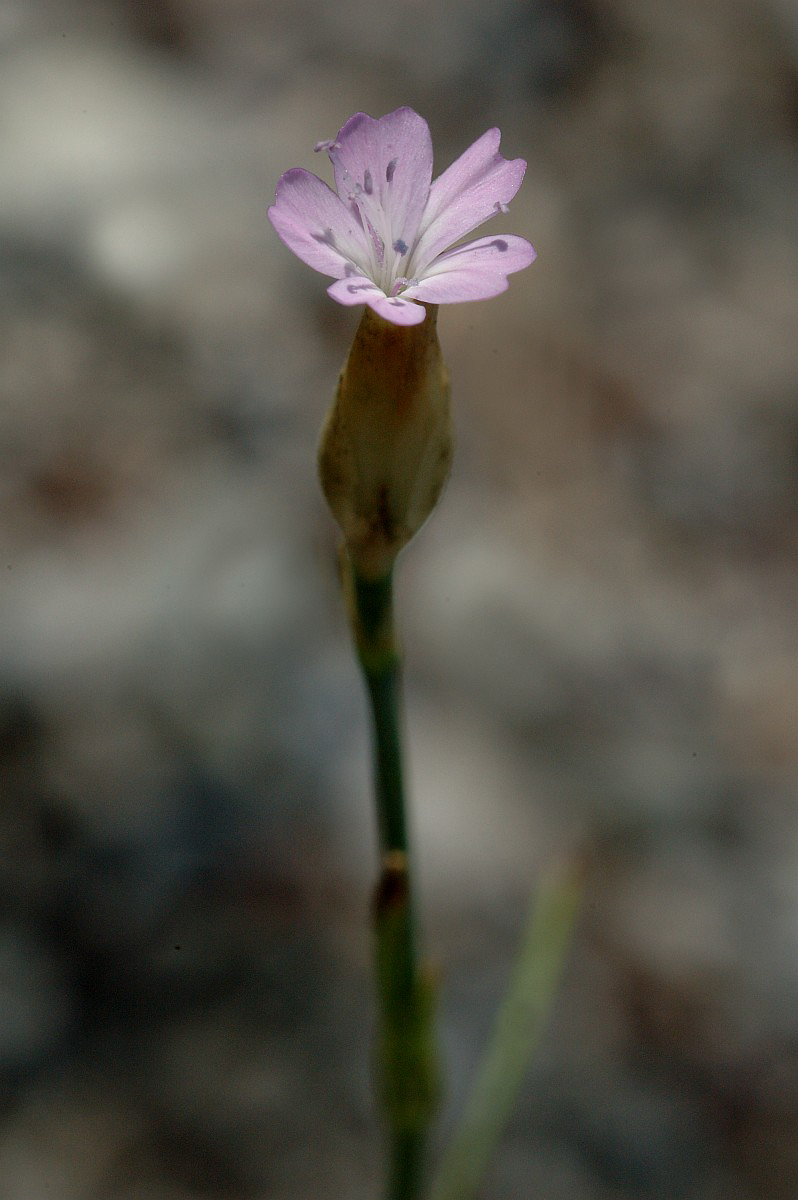
Fiori: inflorescenza in cime compatte apicali con 2-12 fiori ermafroditi, subsessili, talvolta con un solo fiore, che si aprono uno alla volta. Calice (8-10 mm) gamosepalo tubuloso, glabro, con 5 angoli, circondato da un involucro rigonfio di brattee appressate, scariose e brune, senza nervo carenale; esse sono largamente ovato-ottuse, spesso le esterne mucronate, avviluppanti completamente il calice o i calici in gruppetto. Corolla dialipetala con 5 petali (10-14 mm) roseo pallidi o porporini, raramente bianchi, obcordati o smarginati, ristretti in un’unghia lunga, senza scaglie alla fauce, generalmente omocromi, privi di una macchia scura sul nervo centrale del lobo.  Fiorisce da aprile a ottobre.


Frutti e semi: il frutto è una capsula ovoide di 7 mm, senza carpoforo, deiscente per 4 denti, contenente numerosi semi di 1,2-1,9(2,3) mm, compressi e scudiformi, con superficie reticolata, neri a maturità.


DISTRIBUZIONE E HABITAT


Presente in tutta Italia in incolti, prati e ruderi fra 0 e 1.400 m.


Foto: su licenza gratuita di Saxifraga e Rutger Barendse, Jan van der Straaten

Famiglia

Caryophyllaceae

Specie

Petrorhagia prolifera (L.) P.W.Ball & Heywood

Tipologia

Pianta erbacea

Habitat

Aree antropizzate, Incolti, Prati

Childing pink


Scientific Name: Petrorhagia prolifera (L.) P.W.Ball & Heywood 

Family: Caryophyllaceae


MORPHOLOGY


Habit and dimensions: annual herbaceous plant, reaching heights of 10-20(50) cm.


Stem: erect stems, simple or branched at the base, generally glabrous at the median internodes.


Leaves: opposite leaves, without stipules, linear, 1(2) x 30(45) mm, ciliate-scabrous at the margin; the sheaths with the basal part with a short fusion, less than 3 mm, amplexicaul, approximately as long as wide.


Flowers: inflorescence in compact terminal clusters with 2-12 hermaphrodite flowers, subsessile, sometimes with a single flower, opening one at a time. Calyx (8-10 mm) tubular gamosepalous, glabrous, with 5 angles, surrounded by a swollen involucre of appressed, scarious, and brown bracts, without a keel nerve; they are broadly ovate-blunt, often the outer ones mucronate, completely enveloping the calyx or the calyces in a cluster. Corolla dialypetalous with 5 petals (10-14 mm) pale pink or purplish, rarely white, obcordate or emarginate, narrowed into a long claw, without scales at the throat, generally homochromous, lacking a dark spot on the central nerve of the lobe. Blooms from April to October.


Fruits and seeds: the fruit is an ovoid capsule of 7 mm, without a carpophore, dehiscent by 4 teeth, containing numerous seeds of 1.2-1.9(2.3) mm, compressed and shield-shaped, with a reticulated surface, black when mature.


DISTRIBUTION AND HABITAT


Present throughout Italy in fallow lands, meadows, and ruins between 0 and 1,400 m.


Photo: licensed freely by Saxifraga and Rutger Barendse, Jan van der Straaten

Famiglia

Caryophyllaceae

Specie

Petrorhagia prolifera (L.) P.W.Ball & Heywood

Tipologia

Pianta erbacea

Habitat

Aree antropizzate, Incolti, Prati