



Hungarian Dodder
Scientific Name: Cuscuta campestris Yunck.
Family: Convolvulaceae
MORPHOLOGY
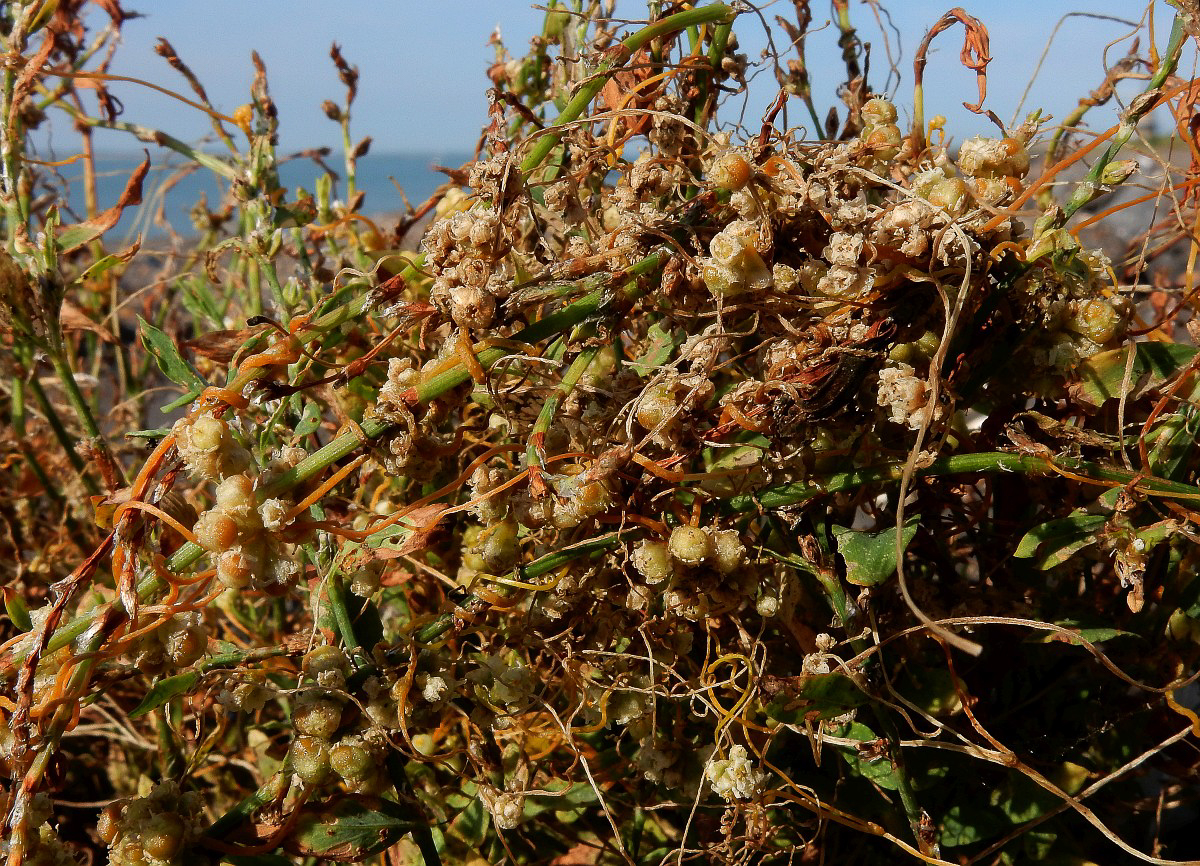
Habit and Size: A parasitic plant without leaves, with a rooting stem or developed roots.
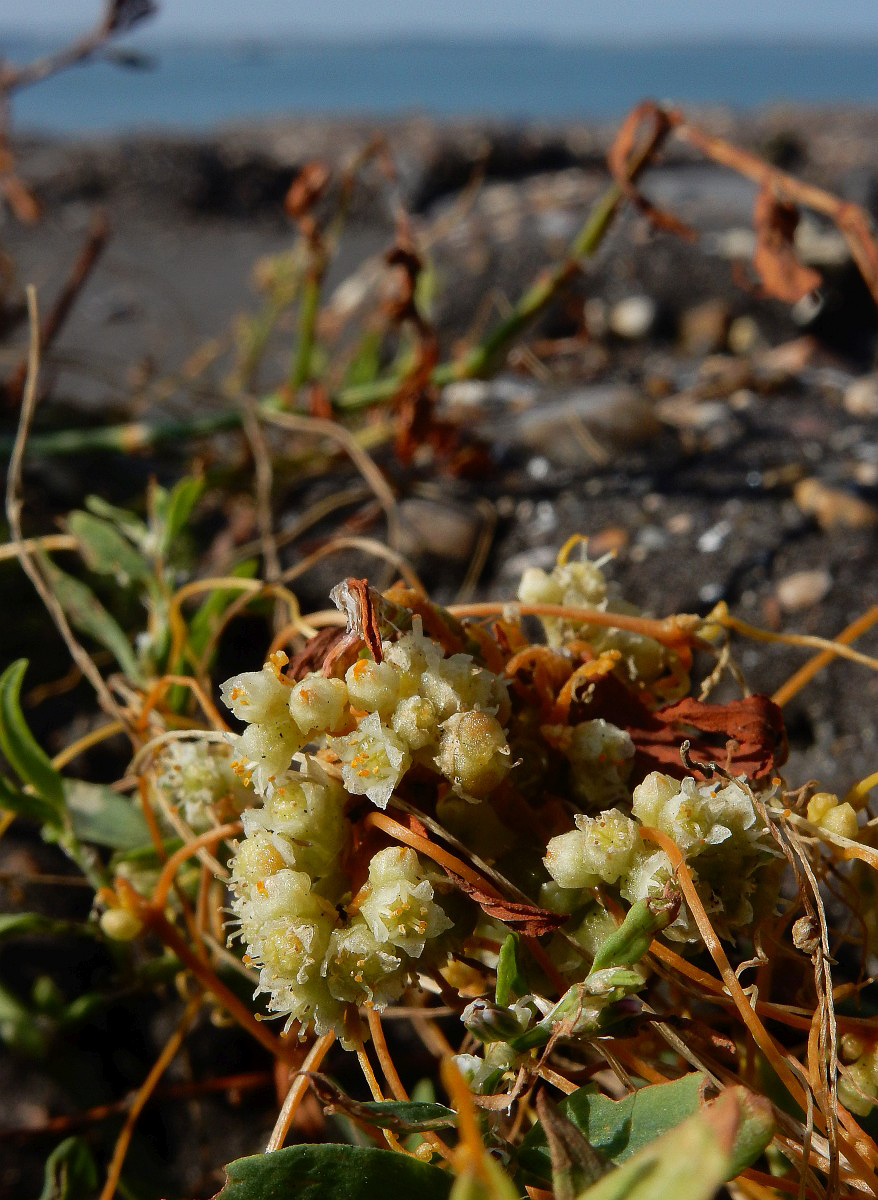
Stem: It only has slender, climbing stems of yellowish or orange color, which twine and climb on host plants.
Leaves: Absent.
Flowers: Small tubular or bell-shaped flowers, usually white or pink, arranged in small umbrella-shaped inflorescences. Blooms from April to September.
Fruits and Seeds: The fruits are rounded or ovoid capsules containing brown or black seeds, oval or elliptical in shape.
DISTRIBUTION AND HABITAT
An invasive allochthonous species of American origin present throughout Italy. It grows in agricultural environments and meadows, where it can cause damage to crops, from sea level up to 500 m.
INTERESTING FACT
An obligate parasitic plant, meaning it depends entirely on host plants for acquiring water, nutrients, and structural support. Its roots, called haustoria, penetrate the tissues of the host plant to extract the nutrients necessary for its growth and development. Its size varies greatly depending on the nutritional availability of the parasitic plant.
Photo: Under a free license by Saxifraga and Ed Stikvoort, Rutger Barendse.