
Carice irta

Nome scientifico: Carex hirta L.

Famiglia: Cyperaceae 


MORFOLOGIA


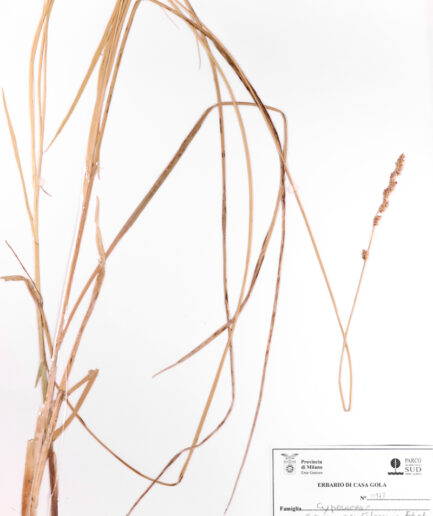
Portamento e dimensioni: pianta erbacea perenne alta 10-50 cm, con stoloni allungati generalmente sotterranei.


Fusto: fusto trigono, liscio, pubescente, robusto, avvolto alla base da guaine squamiformi di colore rosso-bruno più o meno intere, pubescenti.


Foglie: foglie piane larghe (2) 3-5 (7) mm, ± maggiori del fusto, scabre ai margini verso l’apice, con lunghi peli lanosi su entrambi i lati; la pelosità è variabile e talora può anche mancare del tutto.


Fiori: infiorescenza  verde lunga (8) 15-28 cm, composta da (1) 2-3 (4) spighe superiori maschili e (1) 2-3 spighe inferiori femminili. Spighe maschili lineari-lanceolate lunghe (1) 2-3 cm, di colore giallastro o bruno pallido; glume ovali di 4-5 mm, brune o bruno-rossastro scure, con margine scarioso e apice mucronato. Spighe femminili ascellari lunghe (1)1,5-3 (5) cm, erette, distanti, da cilindriche a oblunghe, subsessili, quella inferiore peduncolata; glume lanceolate o strettamente ovali, lunghe 6-8 mm, con una lunga resta che talvolta supera gli otricelli, di colore verdastro o bruno chiaro. Fiorisce tra marzo e giugno.


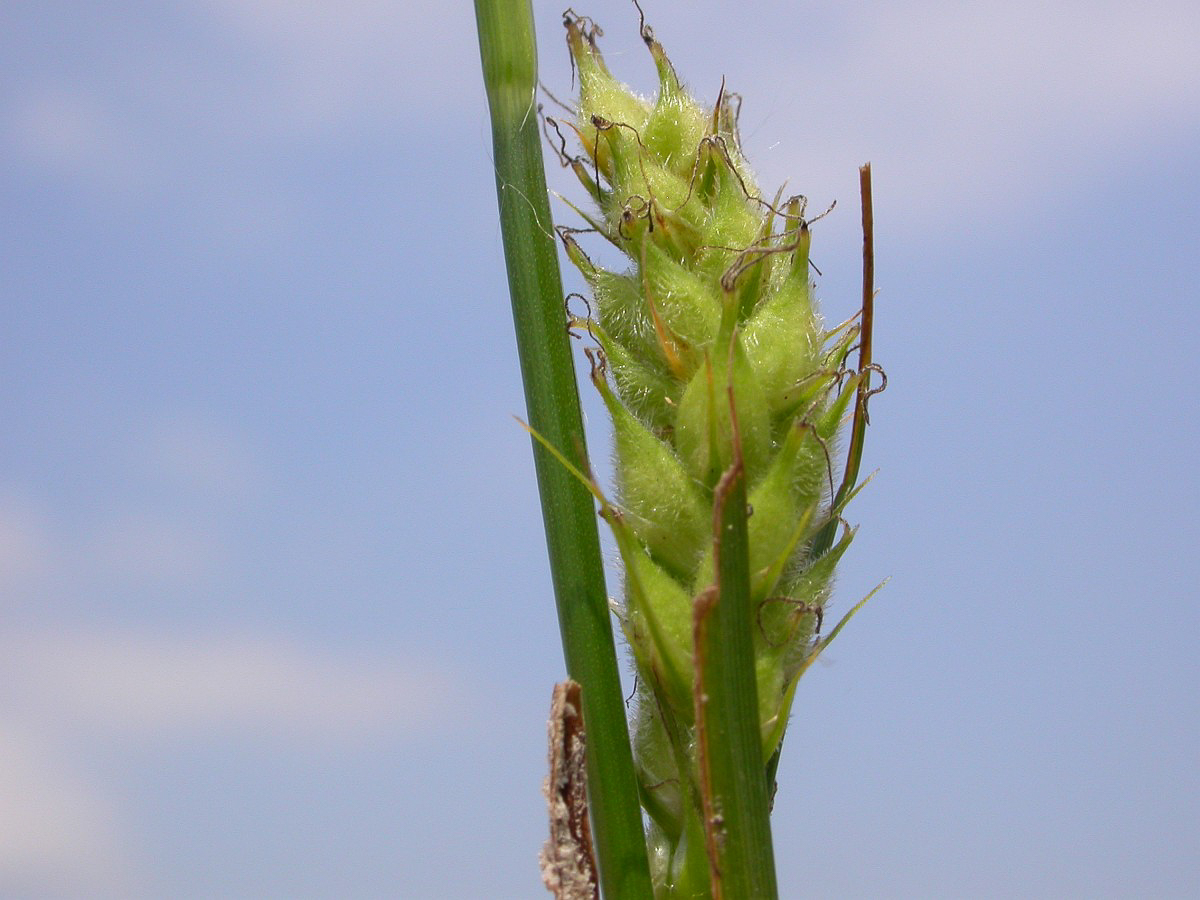
Frutti e semi: i frutti sono pseudanteci (otricelli) di 5,5-6,6 (8) x 1,5-2 mm, suberetti, ovali, trigoni, densamente pubescenti, verdi o brunastri, con nervature prominenti, gradualmente attenuati in un becco di 2-2,5 mm, bifido, scabro. Acheni di 2,5-3 x 1-1,5 mm, ovali, trigoni, bruni.


DISTRIBUZIONE E HABITAT


Presente in tutta Italia tranne le isole maggiori, in prati umidi, incolti, rive di fossi, tra  0 e 1.600 m


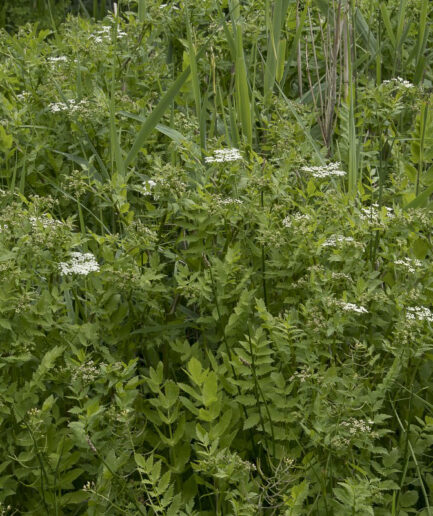
Foto: su licenza gratuita di Saxifraga e Peter Meininger, Jasenka Topic

COD: 1017 Categoria: Tag: , , , ,
Famiglia

Cyperaceae

Specie

Carex hirta L.

Tipologia

Pianta erbacea

Habitat

Incolti, Prati, Zone umide

Hairy Sedge


Scientific name: Carex hirta L. 

Family: Cyperaceae


MORPHOLOGY


Habit and size: Perennial herbaceous plant, 10-50 cm tall, with elongated generally underground stolons.


Stem: Triangular stem, smooth, pubescent, robust, wrapped at the base by reddish-brown more or less entire scale-like sheaths, pubescent.


Leaves: Flat leaves, (2) 3-5 (7) mm wide, ± larger than the stem, rough at the margins towards the apex, with long woolly hairs on both sides; the hairiness is variable and sometimes may even be completely absent.


Flowers: Green inflorescence, (8) 15-28 cm long, composed of (1) 2-3 (4) upper male spikes and (1) 2-3 lower female spikes. Male spikes linear-lanceolate, (1) 2-3 cm long, yellowish or pale brown; glumes oval, 4-5 mm long, dark brown or reddish-brown, with scarious margin and mucronate apex. 

Female spikes axillary, (1) 1.5-3 (5) cm long, erect, distant, from cylindrical to oblong, subsessile, the lower one pedunculate; glumes lanceolate or narrowly oval, 6-8 mm long, with a long awn that sometimes exceeds the utricles, greenish or light brown in color. Blooms between March and June.


Fruits and seeds: The fruits are oval-shaped pseudanthia (utricle), 5.5-6.6 (8) x 1.5-2 mm, suberect, trigonous, densely pubescent, greenish or brownish, with prominent veins, gradually tapered into a 2-2.5 mm, bifid, rough beak. Achenes 2.5-3 x 1-1.5 mm, oval, trigonous, brown.


DISTRIBUTION AND HABITAT

Present throughout Italy except for the major islands, in moist meadows, uncultivated land, ditch banks, between 0 and 1,600 m.


Photo: under free license from Saxifraga and Peter Meininger, Jasenka Topic

Famiglia

Cyperaceae

Specie

Carex hirta L.

Tipologia

Pianta erbacea

Habitat

Incolti, Prati, Zone umide